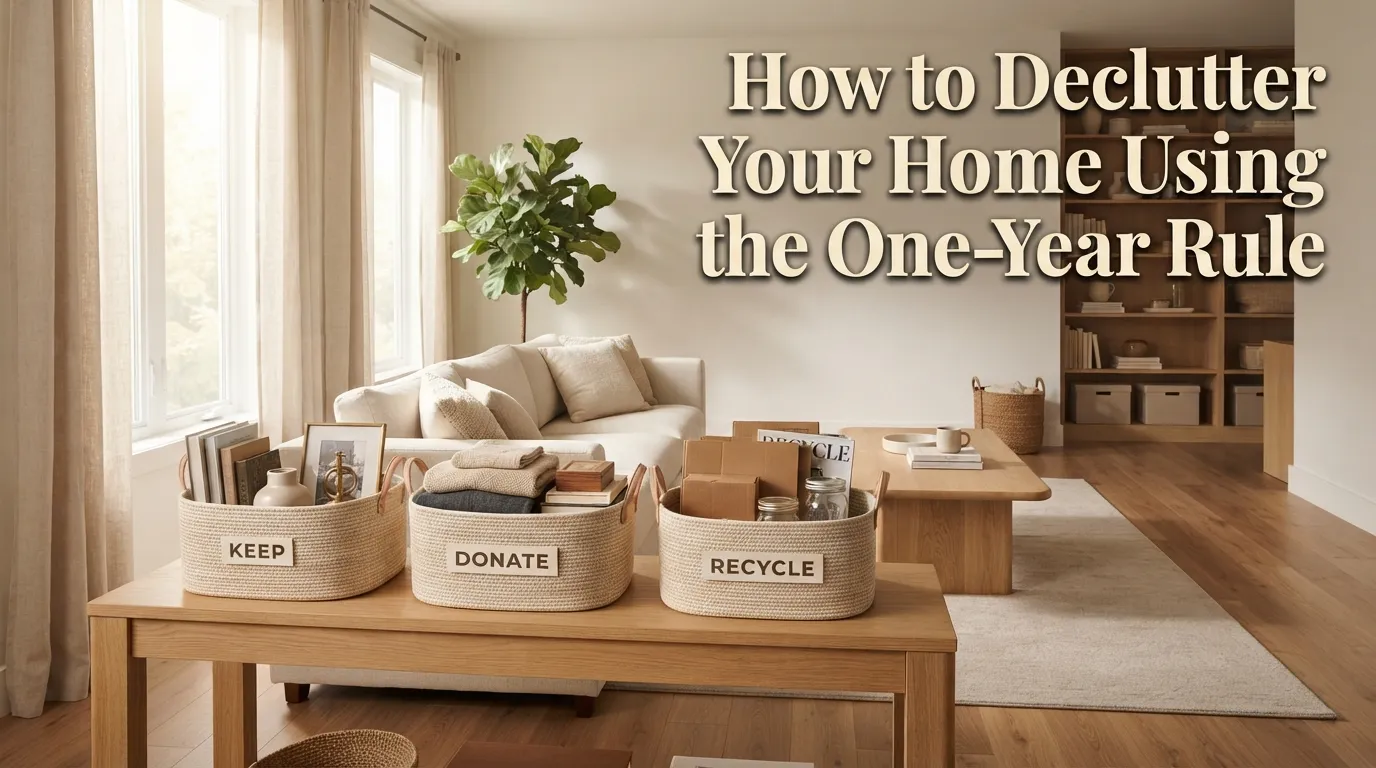
10 Ideas on How to Declutter Your Home Using the One-Year Rule
Decluttering can feel overwhelming when every item in your home seems to have a reason for staying.
Maybe you might need it someday. Maybe it was expensive. Maybe it belonged to someone you love. Maybe you used it once last year and aren’t sure whether that means you should keep it.
That’s where the one-year rule can make decluttering much easier.
The basic idea is simple: when you’re deciding whether to keep something, ask yourself whether you’ve actually used or needed it within the past year. A full year gives you enough time to account for seasonal clothing, holiday decorations, gardening supplies, entertaining pieces, and other belongings that naturally get used only occasionally.
Of course, the rule isn’t meant to be absolute.
Important documents, sentimental belongings, emergency supplies, specialized equipment, and items used for genuinely occasional needs may deserve a different decision.
Instead, think of the one-year rule as a practical filter.
I’ve noticed that decluttering becomes much less stressful when you stop asking, “Could I ever use this?” and start asking, “Did this actually serve me during the last year?”
That small change can reveal how much of your home is being occupied by things that no longer fit your lifestyle.
You also don’t need to declutter the entire house in one exhausting weekend.
A better approach is to work in categories and small zones.
Start with the easiest items. Build confidence. Then move toward areas that require more thought.
The following ideas will help you use the one-year rule in a realistic way, while still leaving room for sentimental items, seasonal belongings, and genuinely useful possessions.
The goal isn’t to create an empty home.
It’s to create a home where the things you keep have a purpose.
Table of Contents
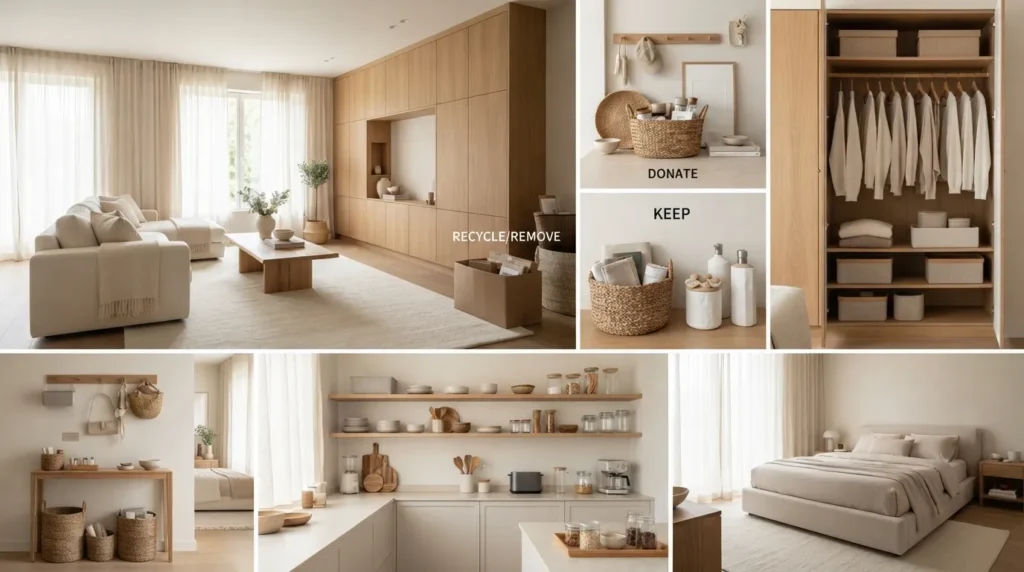
1. Start With Easy Wins
Begin with low-emotion belongings to build momentum.
2. Check Your Closet
Use the rule to identify clothing you no longer wear.
3. Clear Kitchen Extras
Reduce duplicate and rarely used kitchen items.
4. Sort Bathroom Products
Remove expired and forgotten personal-care products.
5. Review Home Decor
Evaluate decorative pieces that no longer fit your style.
6. Simplify Storage Areas
Apply the rule to forgotten items in closets and cabinets.
7. Examine Hobby Supplies
Keep supplies connected to hobbies you actually practice.
8. Question Duplicate Items
Reduce unnecessary backups and multiples.
9. Protect Sentimental Items
Separate memories from everyday clutter.
10. Create A Keep Box
Give uncertain belongings a defined decision period.
1. Start With Easy Wins
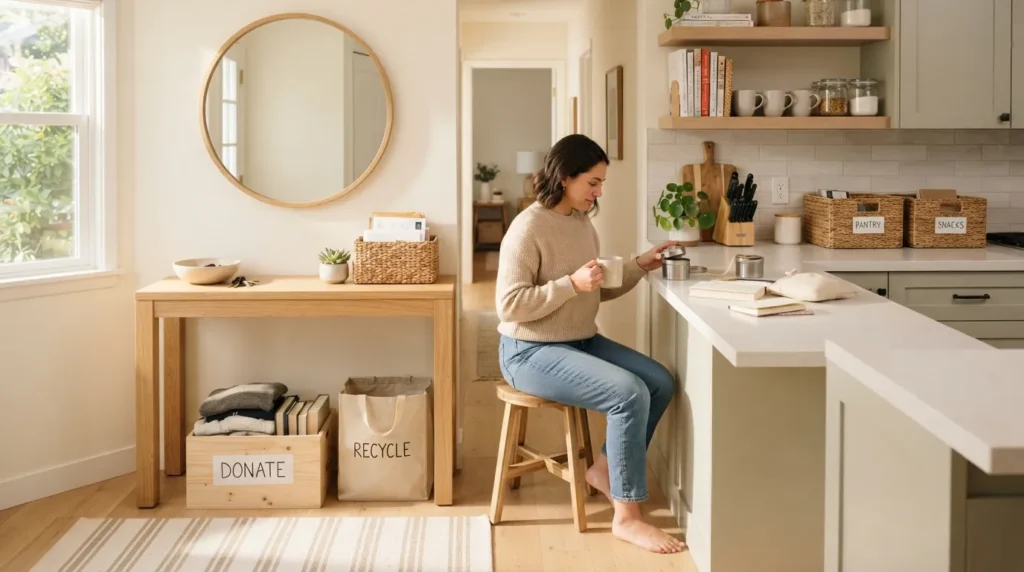
Quick Benefits
- Builds decluttering momentum
- Reduces decision fatigue
- Creates visible progress
- Makes the process less emotional
- Helps establish your personal rules
Why It Works
Starting with difficult sentimental belongings is one of the easiest ways to make decluttering feel impossible.
Instead, begin with things that carry little emotional weight.
Look for expired products, empty containers, duplicate kitchen utensils, worn-out linens, old catalogs, unused packaging, or clothing you already know you don’t wear.
The one-year rule becomes much easier to apply when the decision is obvious.
Once you see a bag of unnecessary items leave the house, the process starts feeling productive rather than overwhelming.
In my experience, visible progress creates motivation to continue.
How To Style It
Choose one small area.
A single bathroom drawer, kitchen cabinet, or hallway basket is enough.
Take everything out.
Create three groups:
Keep.
Remove.
Unsure.
Ask whether each questionable item was used or needed during the past year.
Don’t move immediately to another room.
Finish the small area first.
Bag donations and trash separately so they don’t remain sitting around your home.
2. Check Your Closet
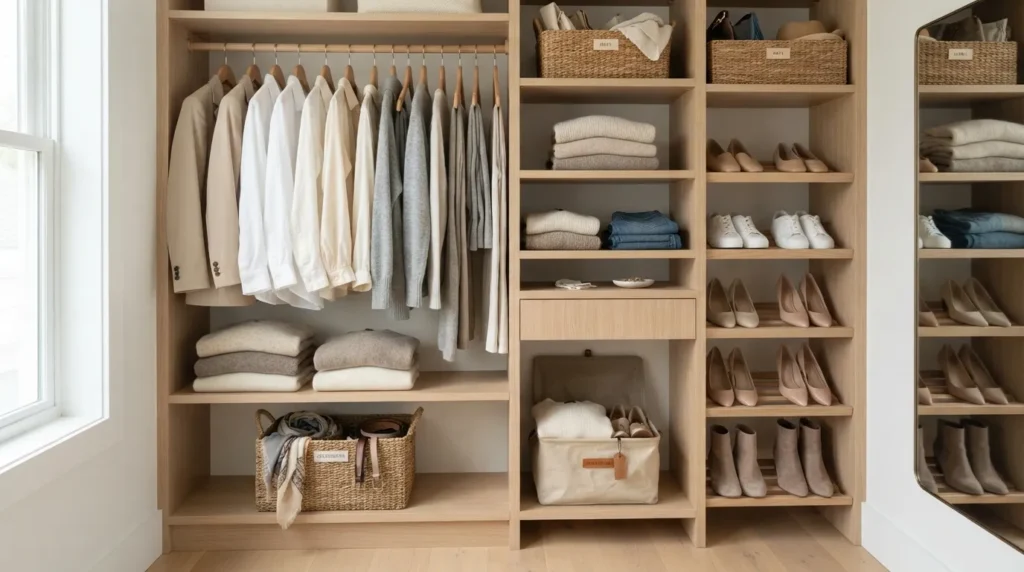
Quick Benefits
- Frees valuable storage
- Makes getting dressed easier
- Reveals unworn clothing
- Reduces visual clutter
- Makes favorite pieces easier to find
Why It Works
Closets are one of the easiest places for unused belongings to accumulate.
A shirt can sit untouched for years because it still fits.
A pair of shoes may remain because they were expensive.
A dress might stay because you’re waiting for the “right occasion.”
The one-year rule gives you a practical starting point.
If you’ve gone through every season without wearing something, it’s worth asking why.
There may be a fit problem, style change, comfort issue, or simple lack of opportunity.
How To Style It
Take clothing out by category instead of emptying your entire closet at once.
Start with tops.
Then pants.
Then dresses.
Then shoes.
Ask yourself when you last wore each item.
Be careful with seasonal clothing.
Something worn only during winter may still be useful even if you haven’t touched it for several months.
Keep clothing that fits your current lifestyle, body, comfort preferences, and actual routines.
3. Clear Kitchen Extras
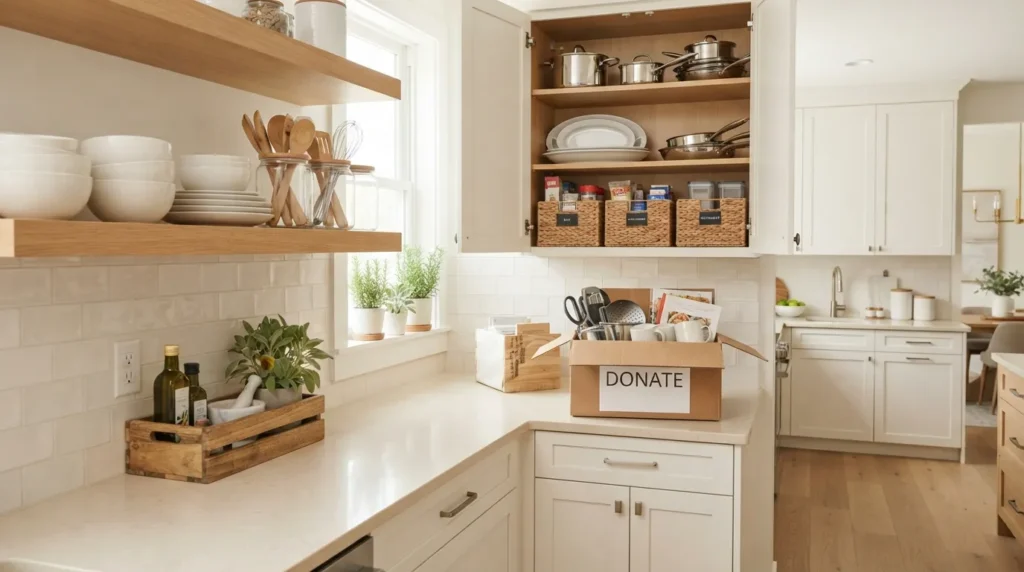
Quick Benefits
- Creates cabinet space
- Makes cooking easier
- Reduces duplicates
- Improves organization
- Makes countertops feel calmer
Why It Works
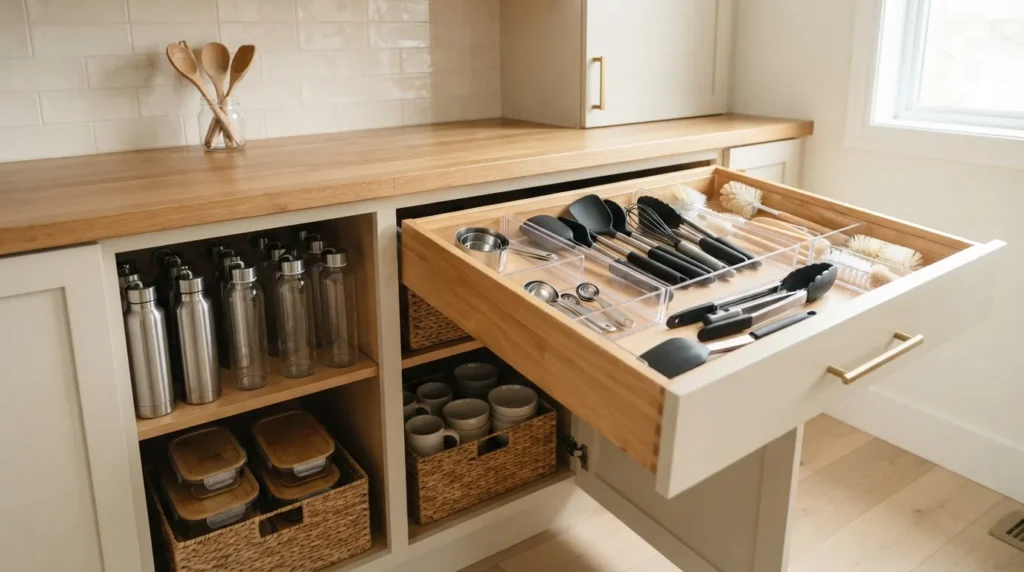
Kitchen clutter often comes from having too many versions of the same thing.
You may have several spatulas, mixing bowls, water bottles, travel mugs, serving dishes, or specialty gadgets.
The question isn’t whether each individual item could theoretically be useful.
The better question is whether the item has actually earned its storage space.
If you haven’t used a gadget in a year and don’t have a realistic reason to use it, it may be time to let it go.
How To Style It
Work through one cabinet or drawer at a time.
Remove everything and group similar items together.
Duplicates become easier to spot when they’re sitting beside each other.
Keep the versions you reach for most often.
For seasonal entertaining pieces, consider actual usage rather than applying the rule too rigidly.
A holiday serving platter may be used once a year and still be worthwhile.
4. Sort Bathroom Products
Quick Benefits
- Creates cleaner storage
- Removes expired products
- Makes routines easier
- Frees cabinet space
- Reduces product overload
Why It Works
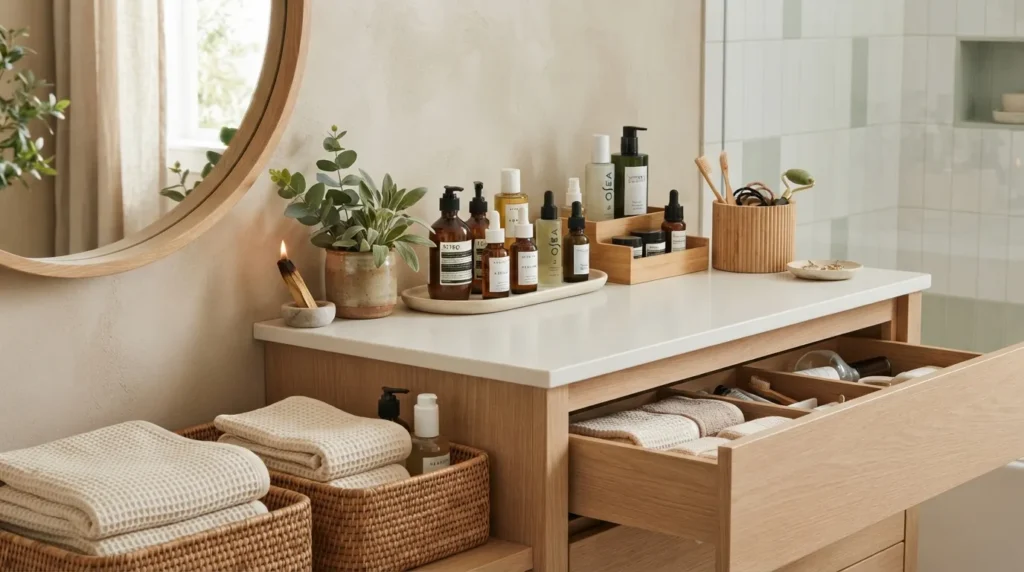
Bathroom cabinets often contain products purchased with good intentions but barely used.
Old skincare, makeup, hair products, hotel toiletries, samples, and duplicate items can quietly accumulate.
Some personal-care products also have recommended shelf-life or expiration guidance, so this category deserves more than simply asking whether you’ve used something within the last year.
If you don’t use it, don’t like it, or it is no longer appropriate to use, keeping it only creates clutter.
How To Style It
Take products out of one drawer or cabinet.
Check labels and manufacturer guidance for expiration or recommended-use information.
Dispose of products according to applicable local disposal guidance.
Group the remaining products by function.
Keep everyday items easy to reach.
Move occasional-use products to secondary storage.
The goal is to make your daily routine easier, not simply to create an empty cabinet.
5. Review Home Decor
Quick Benefits
- Refreshes your style
- Creates breathing room
- Reduces visual noise
- Makes favorite pieces stand out
- Helps your home feel intentional
Why It Works
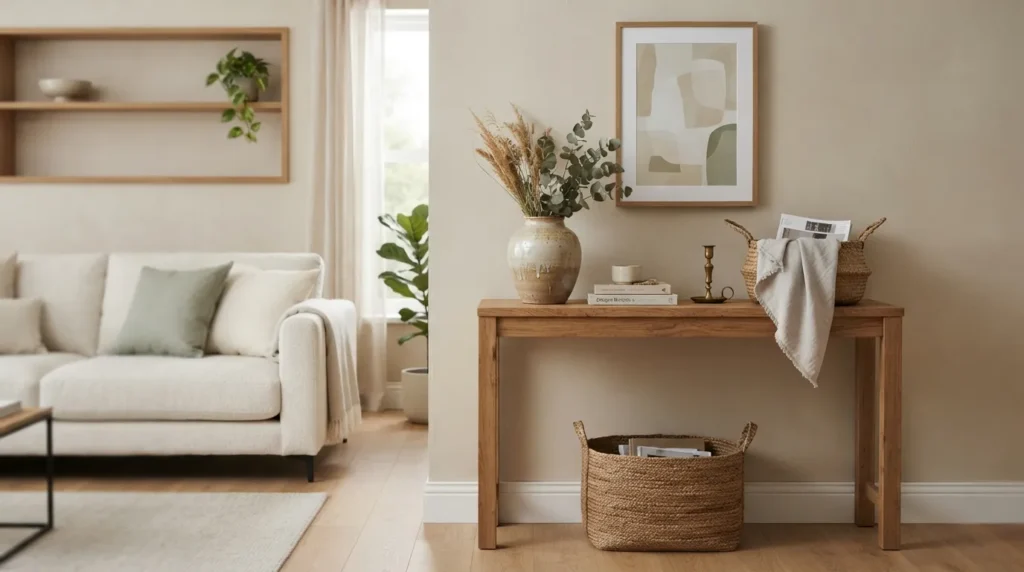
Decorative objects can be particularly difficult to declutter because they’re often connected to changing tastes.
You may have purchased something because it was trendy several years ago.
You may have moved and discovered that it no longer works in your current home.
Or you may simply have accumulated too many small accessories.
The one-year rule can help you identify pieces that have been sitting untouched.
But style matters too.
An item doesn’t necessarily need to be used to have value.
If you genuinely love looking at it, that’s a reason to keep it.
How To Style It
Walk through each room and identify decor that hasn’t been displayed or enjoyed during the past year.
Ask:
Does it fit my current style?
Do I genuinely like it?
Does it have sentimental meaning?
Could another piece serve the same decorative purpose?
Keep the pieces that contribute something meaningful.
Give yourself permission to leave shelves and surfaces partially empty.
6. Simplify Storage Areas
Quick Benefits
- Reveals forgotten belongings
- Creates usable space
- Makes storage easier
- Prevents repeated purchases
- Improves accessibility
Why It Works
Storage spaces can create the illusion that clutter is under control.
Everything gets placed into a closet, basement, garage, attic, or storage bin.
But hidden clutter is still clutter.
The one-year rule is particularly useful here because forgotten belongings often reveal themselves quickly.
If you haven’t opened a box since your last move, it’s worth examining what’s inside.
You may discover things you completely forgot you owned.
How To Style It
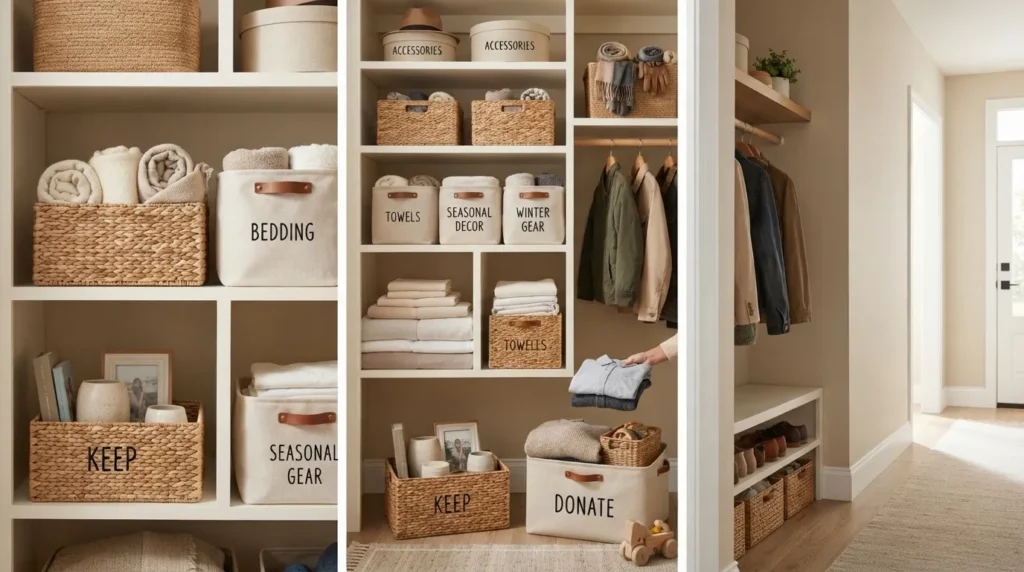
Choose one storage zone.
Remove boxes one at a time.
Open everything rather than deciding based only on labels.
Ask when each item was last used.
Keep genuinely useful seasonal or emergency belongings separate.
Donate or responsibly dispose of items that no longer have a purpose.
Label the remaining storage clearly so you don’t create another forgotten pile.
7. Examine Hobby Supplies
Quick Benefits
- Reduces unfinished-project clutter
- Frees shelves and cabinets
- Clarifies current interests
- Makes active hobbies easier
- Prevents duplicate purchases
Why It Works
Hobbies can change.
You may once have loved painting, sewing, scrapbooking, crafting, baking, gardening, or another creative activity.
The supplies remain long after your interest has moved elsewhere.
The one-year rule doesn’t mean you have to abandon a hobby permanently.
Instead, it asks whether the supplies still reflect the life you’re actually living.
If you haven’t touched the materials in a year and don’t have a concrete plan to return to the hobby, they’re worth reconsidering.
How To Style It
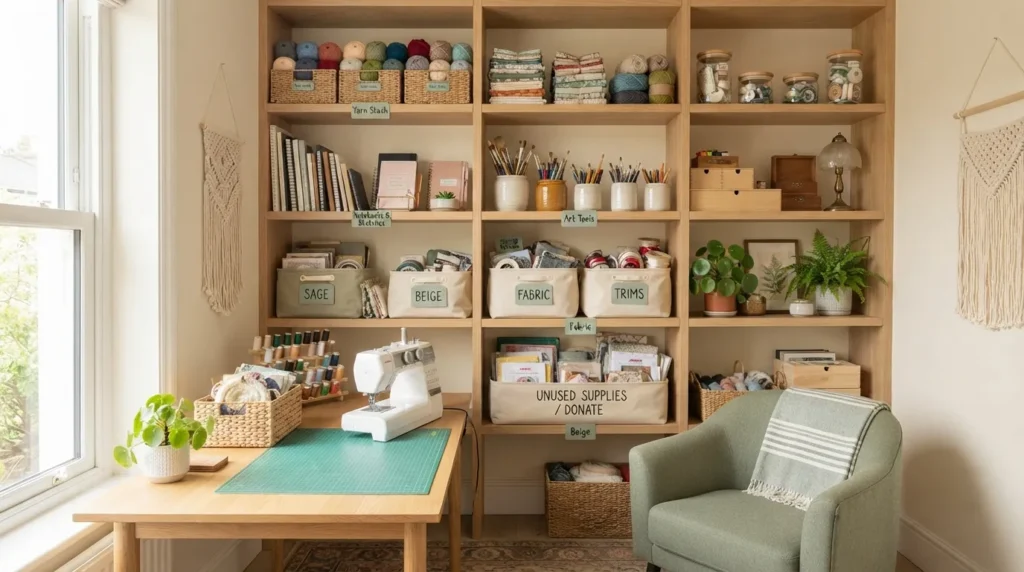
Group supplies by hobby.
Separate active projects from abandoned ones.
Keep high-quality materials you know you’ll use.
Combine partial supplies where practical.
Donate usable materials to community organizations, schools, or creative groups when appropriate.
Avoid keeping large quantities simply because you might become interested again someday.
8. Question Duplicate Items
Quick Benefits
- Frees storage
- Reduces decision fatigue
- Makes essentials easier to find
- Prevents unnecessary purchases
- Simplifies everyday routines
Why It Works
Duplicates aren’t automatically clutter.
Sometimes having multiples makes perfect sense.
Families may need several towels.
Entertainers may need extra dishes.
A household may need backup batteries or cleaning supplies.
The problem is unnecessary duplication.
If you own six versions of something but consistently reach for the same one, the others deserve closer consideration.
How To Style It
Gather duplicates together.
This is important because duplicates often hide in different rooms.
Collect similar items from closets, drawers, cabinets, and storage bins.
Choose the best versions based on quality, frequency of use, comfort, and practicality.
Keep reasonable backups for items that are genuinely important.
Then give the remaining pieces a new home through donation, recycling, or appropriate disposal.
9. Protect Sentimental Items
Quick Benefits
- Prevents emotional burnout
- Preserves meaningful memories
- Separates memories from clutter
- Makes decluttering more realistic
- Creates intentional keepsakes
Why It Works
The one-year rule has limits.
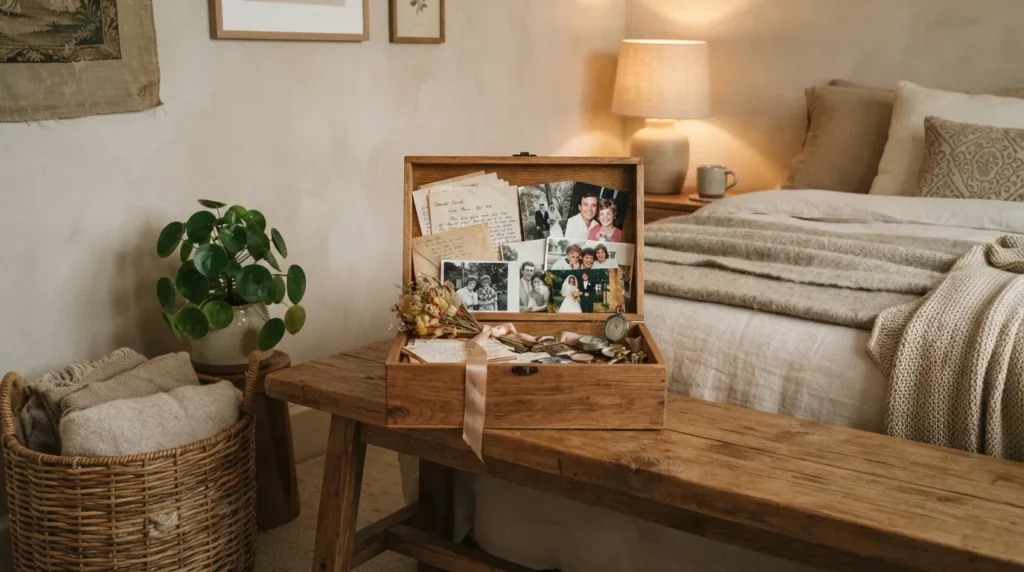
You may not use a wedding keepsake, family photograph, childhood letter, or inherited object every year.
That doesn’t mean it should be discarded.
Sentimental belongings should be evaluated differently because their purpose is emotional rather than practical.
The goal isn’t to force every possession through the same filter.
Instead, separate sentimental items from everyday clutter so emotional decisions don’t slow down the entire process.
How To Style It
Create a dedicated memory box or keepsake area.
Choose a reasonable amount of storage space.
Keep the items that tell an important story rather than preserving every object associated with the past.
For photographs and paper memories, consider digital copies where appropriate.
Display a few especially meaningful items rather than hiding everything in multiple boxes.
A smaller collection can make individual memories feel more significant.
10. Create A Keep Box
Quick Benefits
- Helps with difficult decisions
- Prevents rushed choices
- Creates a clear deadline
- Reduces decluttering anxiety
- Makes uncertainty manageable
Why It Works
Not every item produces an immediate yes or no.
That’s completely normal.
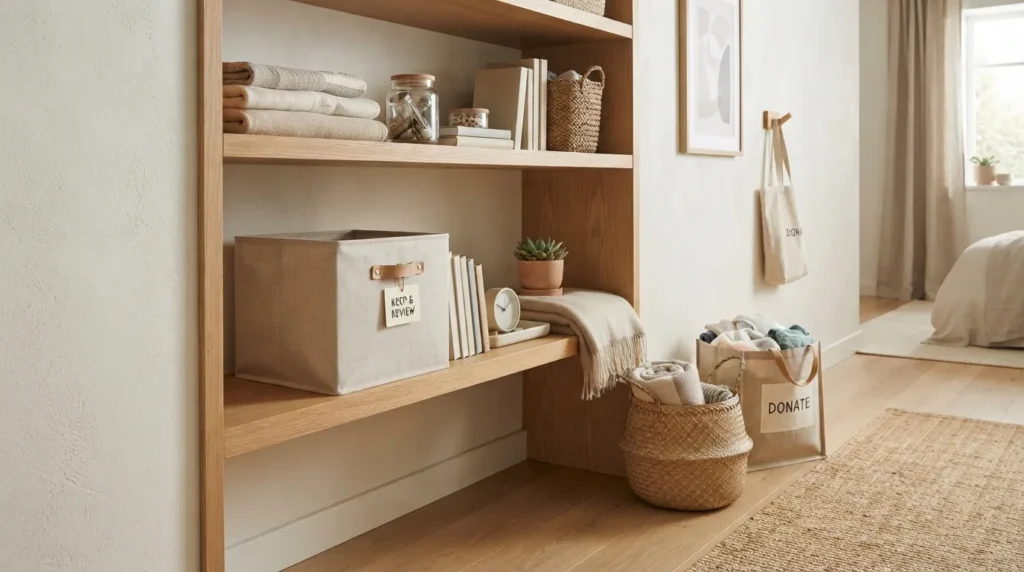
A temporary keep box gives uncertain belongings a defined place while you continue decluttering.
The important part is that the box should have a deadline.
Otherwise, it simply becomes another storage container.
The one-year rule can help you evaluate the contents later.
If you still haven’t needed or thought about an item after the review period, the decision may become much easier.
How To Style It
Choose one clearly labeled container.
Place only genuinely uncertain items inside.
Write the review date on the outside.
Avoid using the box for things you’re simply avoiding.
When the review date arrives, remove each item and make a final decision.
If you’ve needed something during the waiting period, take it out and return it to an appropriate location.
What The One-Year Rule Doesn’t Apply To
The one-year rule is a guideline, not a commandment.
Some belongings naturally have a low frequency of use.
Holiday decorations are an obvious example.
You may use them for only a few weeks each year but still consider them essential.
The same can apply to:
- Emergency supplies
- Important documents
- Seasonal sports equipment
- Camping gear
- Specialized tools
- Formal clothing
- Tax records
- Family heirlooms
- Sentimental belongings
- Occasional entertaining pieces
Instead of asking only whether you used something, consider whether it has a clear purpose.
A snow shovel may sit unused for an entire year in some climates and still be worth keeping.
The key is distinguishing “rarely used but necessary” from “rarely used and unnecessary.”
How To Declutter Without Regretting Decisions
One reason people hesitate to declutter is the fear of needing something later.
That concern is understandable.
A practical way to reduce regret is to make decisions based on evidence rather than hypothetical future scenarios.
Ask:
When did I last use this?
Where would I realistically use it again?
Would I replace it if I didn’t already own it?
Is it expensive or difficult to replace?
Do I have another item that does the same job?
Does keeping it cost valuable storage space?
These questions make decisions more objective.
For inexpensive, easily replaceable items, letting go is often easier.
For expensive, specialized, or difficult-to-replace items, take more time.
A Simple One-Year Decluttering Routine
You don’t need to tackle your entire house at once.
Try this sequence:
Week 1: Clothing and accessories
Week 2: Bathroom and personal-care storage
Week 3: Kitchen cabinets and drawers
Week 4: Living room and home decor
Week 5: Linen closets
Week 6: Hobby and craft supplies
Week 7: Garage, basement, or attic
Week 8: Miscellaneous storage
This slower approach gives you time to notice patterns.
You may discover that you repeatedly keep the same type of unnecessary item.
Once you recognize that pattern, future decluttering becomes much faster.
What To Do With Items You Remove
Decluttering isn’t finished when everything leaves the closet.
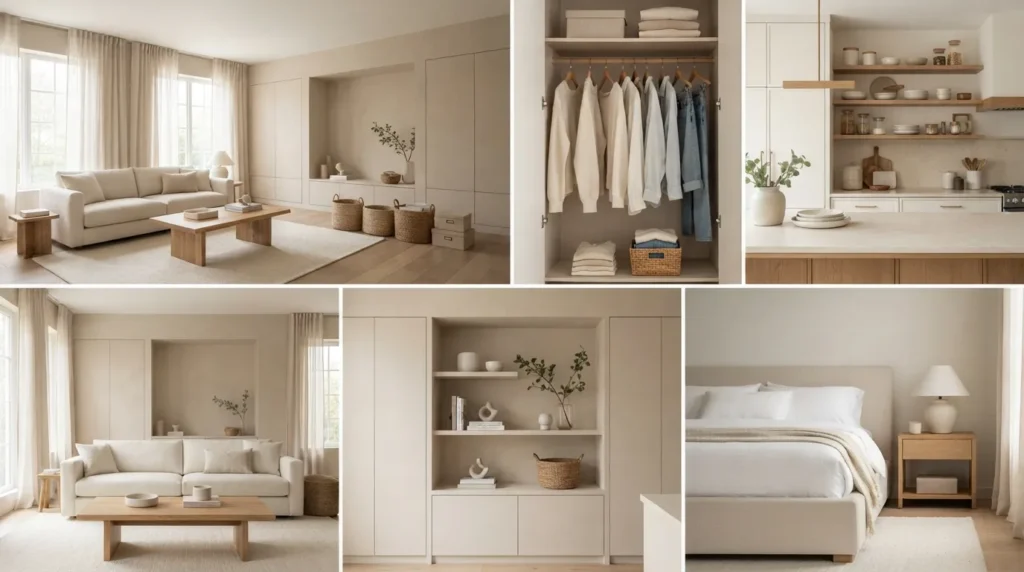
Decide where each category should go.
Useful belongings can often be donated.
Items in good condition may be sold.
Certain materials can be recycled through appropriate local programs.
Broken or unsafe items may need proper disposal rather than donation.
Avoid creating a “donation pile” that sits in your hallway for six months.
Schedule the drop-off or pickup as soon as practical.
The faster unwanted belongings leave the house, the easier it becomes to see the results of your work.
FAQ
What is the one-year rule for decluttering?
The one-year rule is a simple decluttering guideline that asks whether you’ve used or genuinely needed an item during the past year. If you haven’t, consider whether it has a clear seasonal, sentimental, emergency, or specialized purpose before deciding whether to keep it.
Does the one-year rule apply to everything?
No. Seasonal belongings, important documents, emergency supplies, sentimental items, specialized equipment, and occasional-use items may still deserve space even if they haven’t been used recently. The rule works best as a decision-making tool rather than an absolute requirement.
What should I declutter first?
Start with low-emotion items such as expired products, duplicate kitchen tools, old packaging, worn-out linens, unused containers, and clothing you already know you don’t wear. Easy wins can build confidence before you tackle sentimental or more complicated categories.
How do I know if I will use something again?
Think about your actual routines rather than an imagined future version of your life. Ask when you last used the item, whether you have another item that serves the same purpose, and whether you have a realistic reason to expect you’ll need it again.
Should I throw away sentimental items I haven’t used?
Not necessarily. Sentimental belongings serve an emotional purpose, so they shouldn’t automatically be judged by frequency of use. Instead, focus on keeping the memories that matter most and creating a reasonable amount of dedicated storage for them.
What if I regret getting rid of something?
To reduce regret, take more time with expensive, specialized, difficult-to-replace, or sentimental items. For inexpensive and easily replaceable belongings, the risk is usually lower. A temporary decision box can also help with genuinely uncertain items.
How often should I declutter my home?
A major decluttering session once or twice a year can be helpful, with smaller reviews throughout the year. The most effective approach is usually ongoing rather than extreme: deal with incoming clutter regularly so large accumulation becomes less likely.
Conclusion
The one-year rule can make decluttering feel much less complicated because it gives you a practical starting point.
Instead of staring at a crowded closet and wondering where to begin, you can ask one simple question:
Did I actually use or need this during the past year?
That question can quickly reveal clothing that no longer fits your lifestyle, kitchen gadgets you forgot you owned, duplicate household items, outdated decor, and hobby supplies connected to interests you’ve moved beyond.
But remember that the rule isn’t absolute.
A home isn’t a warehouse of frequently used objects.
Some things are worth keeping because they’re seasonal, necessary, difficult to replace, or deeply meaningful.
The goal is to create a home where the things you own support your current life.
Start small.
Choose one drawer, one shelf, one category, or one closet.
Separate obvious clutter from uncertain belongings.
Give yourself permission to make thoughtful exceptions.
Then make sure removed items actually leave the house instead of becoming another pile waiting for attention.
Over time, you’ll probably notice that decluttering becomes easier.
You learn what you use.
You understand what you value.
And you become more selective about what enters your home in the first place.
That may be the biggest benefit of the one-year rule: it isn’t just about getting rid of things.
It’s about becoming more intentional about what you choose to keep.
Related Articles
- How to Declutter Your Home in One Weekend
- How to Declutter Your Home Before Spring
- How to Organize a Small Bedroom Without Buying Storage
- How to Organize a Small Bedroom with Hidden Storage
- How to Make a Small Bedroom Feel More Functional