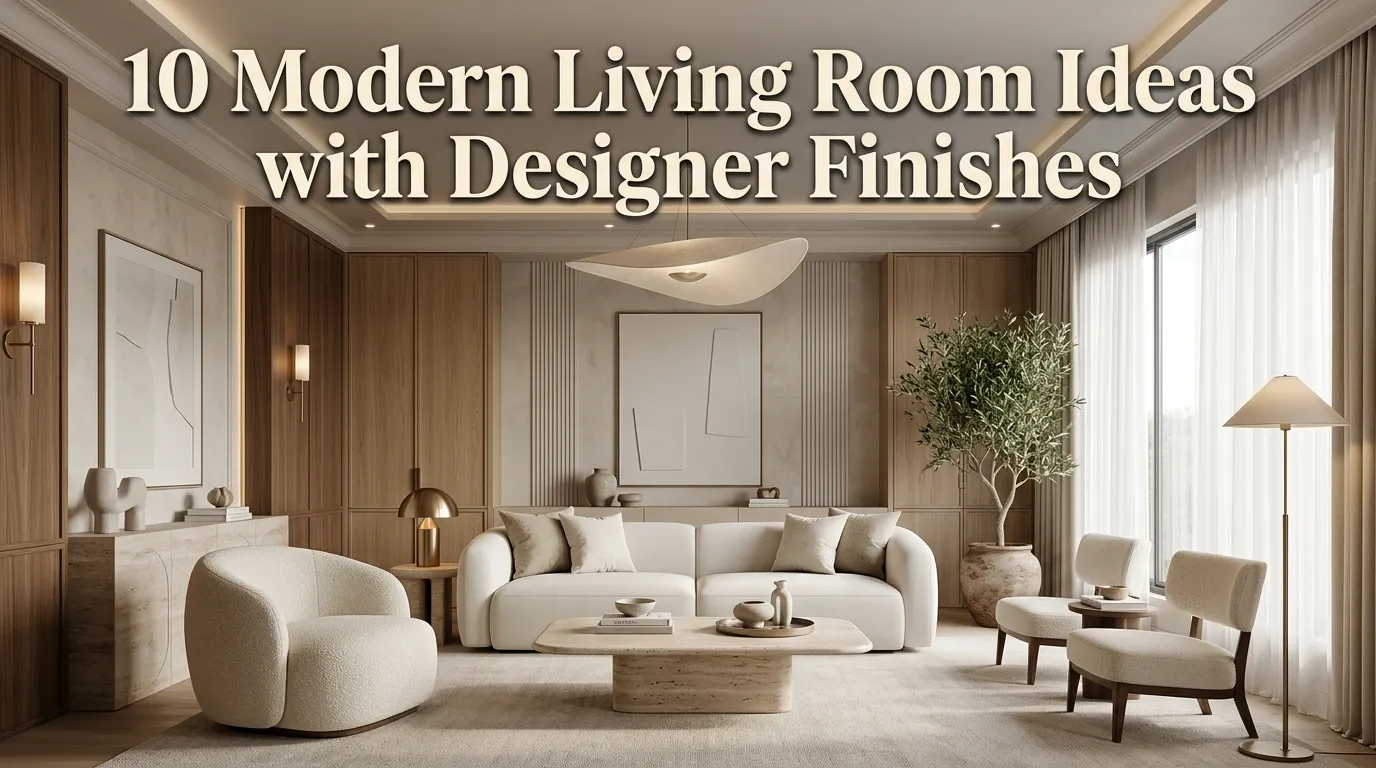
10 Modern Living Room Ideas with Designer Finishes
A modern living room can feel polished and expensive without looking cold, overly formal, or difficult to live in.
The secret is in the finishes.
When you look closely at a professionally designed room, the furniture is only part of the story. The real impact often comes from the details surrounding it: layered materials, carefully chosen lighting, substantial curtains, sophisticated hardware, tailored upholstery, natural stone, warm wood, and artwork that feels intentionally placed.
These details create the sense that every part of the room was considered.
That doesn’t mean you need a designer budget.
I’ve noticed that the most convincing high-end interiors usually combine a few quality-looking finishes with simpler everyday pieces. A modest sofa can feel much more elevated when it is paired with a beautiful rug, substantial coffee table, warm lighting, and properly hung curtains.
Modern design also doesn’t have to mean stark white walls and rigid furniture.
Today’s modern living rooms often mix clean lines with warm materials, soft upholstery, natural textures, and subtle color. The result is sophisticated but still comfortable enough for movie nights, conversations, family gatherings, and ordinary everyday life.
The key is restraint.
Instead of adding more decoration, focus on improving the visual quality of the elements already in the room.
Think about how the materials relate to one another.
Pair smooth stone with textured upholstery. Balance metal with wood. Use warm lighting against a neutral palette. Repeat a finish in small ways so the room feels cohesive.
Whether you’re updating a small apartment, open-concept home, townhouse, or spacious family room, these ideas can help you create a more refined modern interior.
You don’t have to copy a designer showroom.
Use these principles as a foundation, then add the colors, artwork, and personal pieces that make the room feel like your home.
Table of Contents
1. Layered Neutral Palette
Create a sophisticated foundation with warm, coordinated neutrals.
2. Statement Stone Table
Use natural-looking stone or stone-inspired surfaces to create a strong focal point.
3. Tailored Upholstery
Choose clean, well-proportioned furniture with refined fabric finishes.
4. Architectural Lighting
Use sculptural fixtures to add polish and visual interest.
5. Floor-To-Ceiling Curtains
Create a finished appearance with properly proportioned window treatments.
6. Warm Wood Details
Balance modern materials with natural wood for depth and warmth.
7. Oversized Artwork
Create impact with fewer, larger pieces rather than excessive wall decor.
8. Mixed Metal Accents
Add subtle metallic contrast without making the room feel flashy.
9. Textured Layering
Combine different surfaces and fabrics to prevent a modern room from feeling flat.
10. Custom-Look Styling
Use proportion, repetition, and editing to create a professionally finished appearance.
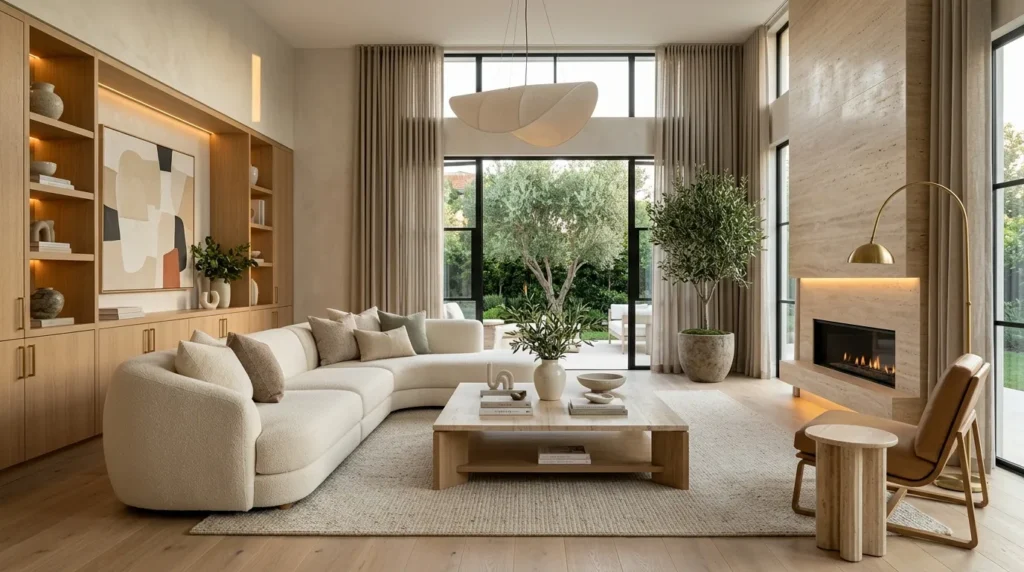
1. Layered Neutral Palette
Quick Benefits
- Creates a sophisticated foundation
- Makes materials more noticeable
- Works with many furniture styles
- Keeps the room visually calm
- Makes seasonal updates easier
Why It Works
A sophisticated modern living room often begins with color restraint.
That doesn’t mean everything needs to be the exact same shade. In fact, a room built entirely from one beige can feel flat.
Instead, designers often work with several related tones.
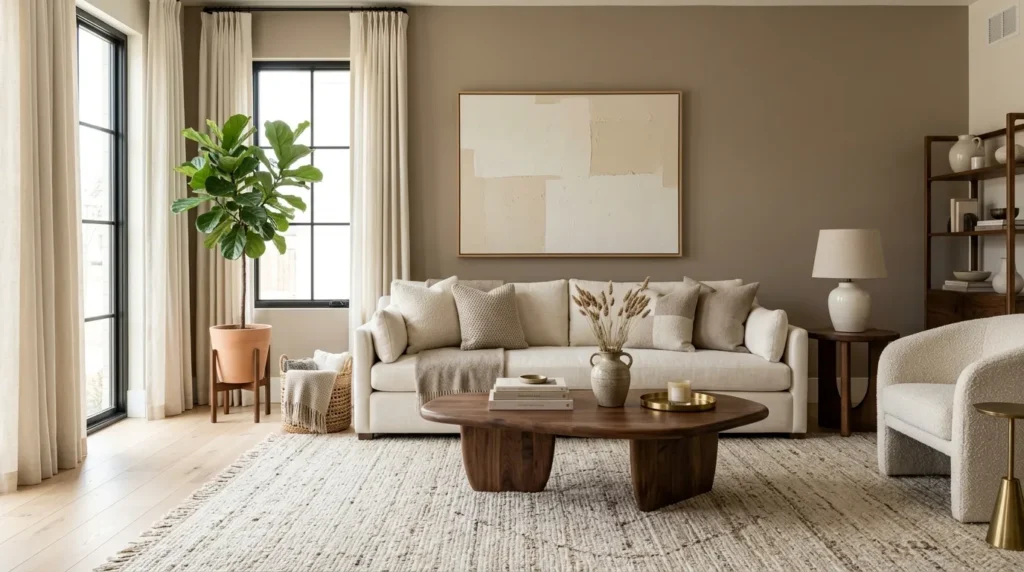
Warm white walls can sit behind a cream sofa, taupe rug, walnut furniture, and mushroom-colored cushions.
The subtle differences create depth without visual chaos.
This approach also makes architectural and material details more noticeable. A textured wall, stone coffee table, or sculptural lamp has more impact when it isn’t competing with several unrelated colors.
How To Style It
Choose one dominant neutral for the walls and largest surfaces.
Add two or three supporting shades through furniture and textiles.
For a warm modern look, combine ivory, beige, taupe, walnut, and muted brown.
For a cooler modern palette, use soft gray, off-white, charcoal, and natural oak.
Then introduce one restrained accent color.
Muted sage, dusty blue, terracotta, or olive can work beautifully.
Repeat the accent in at least two places so it feels intentional.
Keep bright colors limited to small decorative pieces unless you want a more dramatic design.
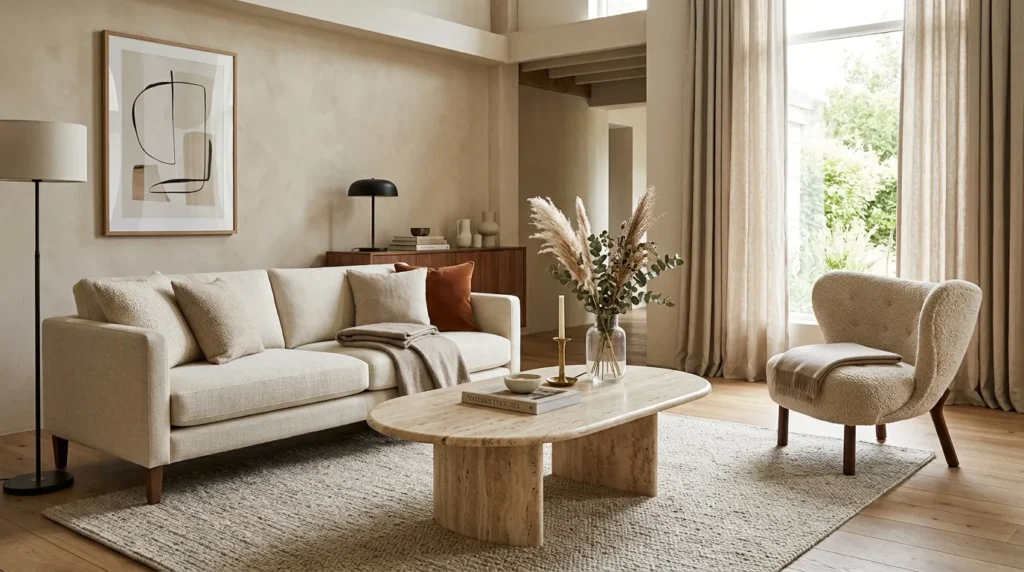
2. Statement Stone Table
Quick Benefits
- Creates an instant focal point
- Adds visual weight
- Introduces natural texture
- Makes simple furniture feel elevated
- Works with modern interiors
Why It Works
Coffee tables have a major influence on how a living room feels.
A lightweight table can create an airy look, but a substantial stone or stone-look table often gives a room a more architectural presence.
Marble, travertine, limestone-inspired finishes, and other natural-looking surfaces introduce subtle variations that make the room feel richer.
The beauty comes from the material itself.
You don’t need a complicated table design.
A simple silhouette with a beautiful surface can have much more impact than an ornate piece.
How To Style It
Choose a table proportionate to your sofa.
A large room can handle a substantial rectangular or oval table.
In a smaller living room, a rounded stone table may provide the same visual weight while making circulation easier.
Keep the tabletop styling minimal.
A shallow tray, a few design books, a ceramic vessel, or a small sculptural object may be enough.
Let the stone remain visible.
Pair it with softer upholstery and warm wood to prevent the room from feeling overly hard.
If natural stone isn’t practical for your budget or maintenance preferences, consider a high-quality stone-inspired alternative with a convincing finish.
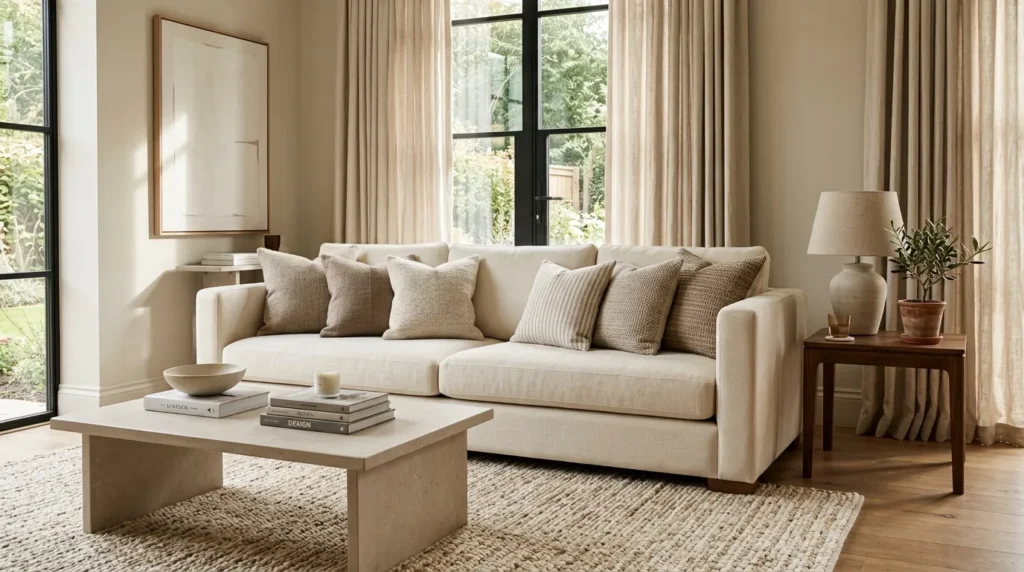
3. Tailored Upholstery
Quick Benefits
- Makes furniture look polished
- Creates clean visual lines
- Improves the room’s overall proportion
- Provides everyday comfort
- Works with both warm and cool palettes
Why It Works
Furniture can immediately reveal whether a room feels casually assembled or carefully designed.
Tailored upholstery tends to have clean seams, balanced proportions, and a deliberate silhouette.
That doesn’t mean the sofa needs to be stiff.
Modern interiors increasingly combine structured shapes with comfortable cushions.
The result is a sofa that looks refined but still feels inviting.
Fabric quality also matters visually.
A simple linen-look, textured cotton, performance fabric, or soft woven upholstery can look sophisticated when properly fitted.
How To Style It
Look for a sofa with proportions suited to your room.
Avoid choosing the largest possible sofa simply because the room can technically fit it.
Pay attention to arm width, cushion depth, leg style, and back height.
For a modern look, consider low-profile upholstery with clean lines.
Add cushions in two or three related textures.
Instead of filling the sofa with pillows, use a restrained arrangement that leaves plenty of seating space.
For busy households, performance upholstery can provide a practical combination of appearance and everyday usability.
4. Architectural Lighting
Quick Benefits
- Creates a designer focal point
- Improves nighttime ambiance
- Adds sculptural interest
- Highlights architectural details
- Creates multiple lighting levels
Why It Works
Lighting is one of the most overlooked elements of modern interior design.
A beautiful room can lose much of its impact when it relies entirely on one ceiling fixture.
Designer-looking spaces usually have several layers of illumination.
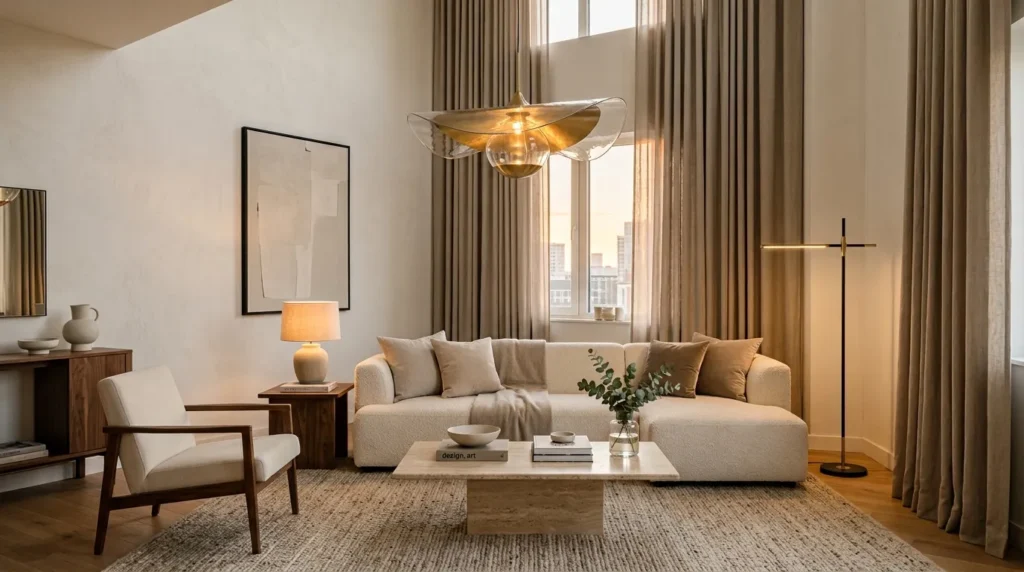
A sculptural pendant or chandelier can become a focal point.
A floor lamp can define a reading corner.
Table lamps can create lower pools of light.
Accent lighting can highlight artwork or architectural features where appropriate.
How To Style It
Think of lighting in layers.
Start with general illumination.
Then add task lighting where people read, work, or perform activities.
Finally, add accent lighting where it improves the atmosphere.
Choose fixtures with shapes that complement the furniture.
A large sculptural pendant can work beautifully above a substantial coffee table or seating zone.
For a smaller room, choose a fixture with visual impact but appropriate scale.
Keep the metal finish consistent with other hardware when possible.
Warm light can soften modern materials and make the room feel more inviting after sunset.
5. Floor-To-Ceiling Curtains
Quick Benefits
- Makes windows feel more substantial
- Adds softness
- Creates vertical emphasis
- Improves privacy
- Gives the room a finished appearance
Why It Works
Curtains are one of those details that can quietly make a room look more expensive.
Poorly positioned curtains can make beautiful interiors feel unfinished.
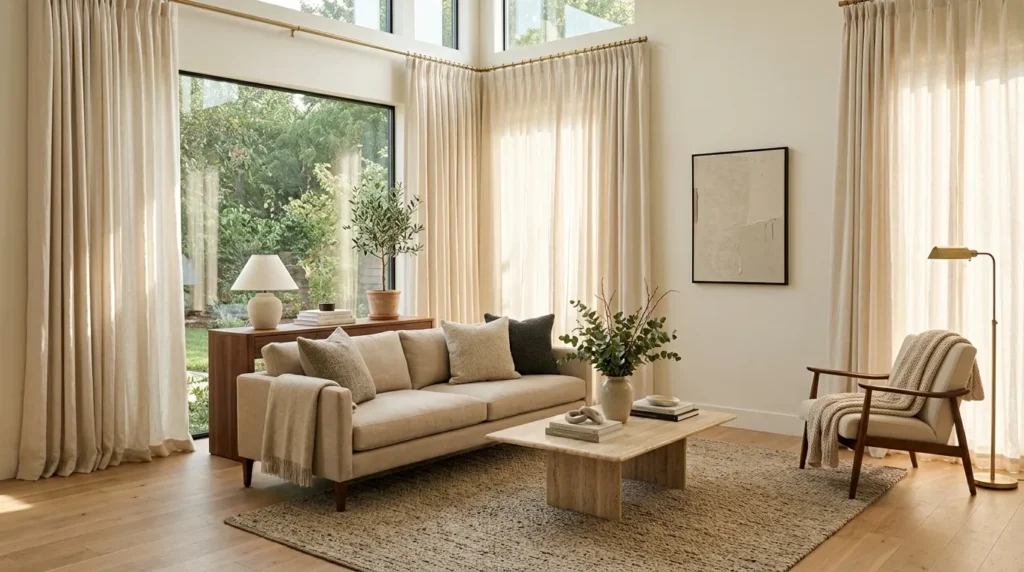
Properly proportioned curtains, on the other hand, create long vertical lines and add a substantial textile layer.
They can also soften the hard surfaces commonly found in modern rooms.
This contrast is important.
Modern design often contains glass, metal, stone, and clean architectural lines.
Fabric adds comfort.
How To Style It
When appropriate for the architecture, mount the rod higher than the window frame and extend it beyond the window width.
Use full-length panels that reach toward the floor.
Warm ivory, cream, oatmeal, and soft gray are versatile options.
Linen and linen-look fabrics work especially well with modern interiors because they provide subtle texture.
Avoid overly short curtains.
If light control is important, layer decorative panels with appropriate shades or blinds.
Keep the curtains relatively quiet if your artwork or furniture already makes a strong statement.
6. Warm Wood Details
Quick Benefits
- Prevents modern rooms from feeling cold
- Adds natural texture
- Creates contrast
- Complements stone and metal
- Introduces timeless character
Why It Works
Modern interiors can easily become too dependent on hard surfaces.
Glass, polished stone, metal, and glossy finishes may look beautiful individually, but too many together can make a living room feel sterile.
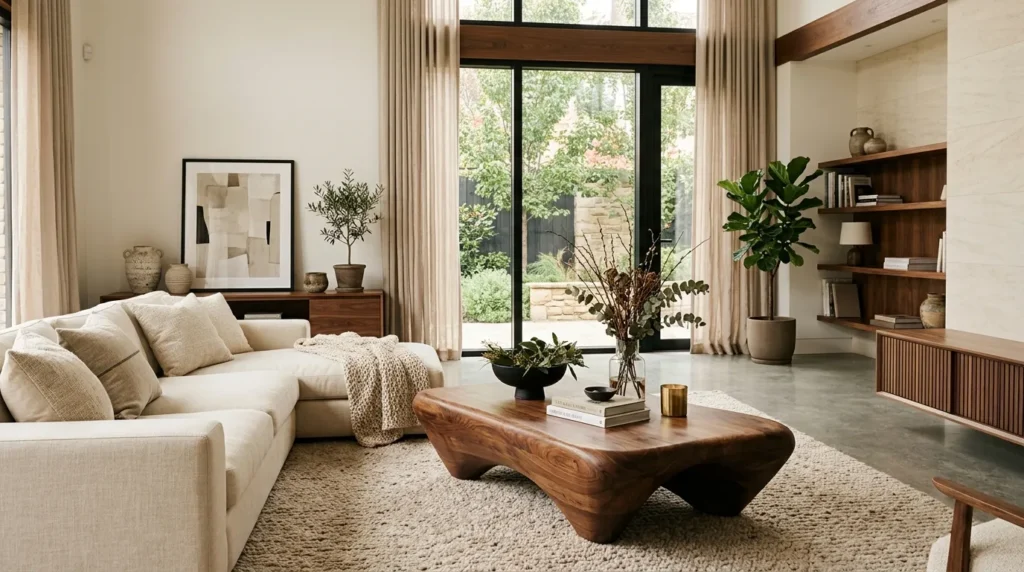
Wood brings the temperature back down.
Natural wood has visual variation, subtle grain, and organic warmth.
It can soften an otherwise minimalist room without making it look rustic.
This balance is one reason warm contemporary interiors feel more livable than strictly minimalist spaces.
How To Style It
Use wood strategically.
A walnut coffee table can become the main warm element.
Oak shelving can provide a lighter contrast.
A wood media console can soften a large television wall.
Small details such as picture frames, trays, or decorative objects can repeat the same finish.
Don’t worry about matching every piece perfectly.
Instead, aim for compatibility.
Choose wood tones that have similar warmth and avoid introducing too many competing finishes in a compact room.
7. Oversized Artwork
Quick Benefits
- Creates a strong focal point
- Reduces visual clutter
- Adds personality
- Makes walls feel intentional
- Can transform simple furniture
Why It Works
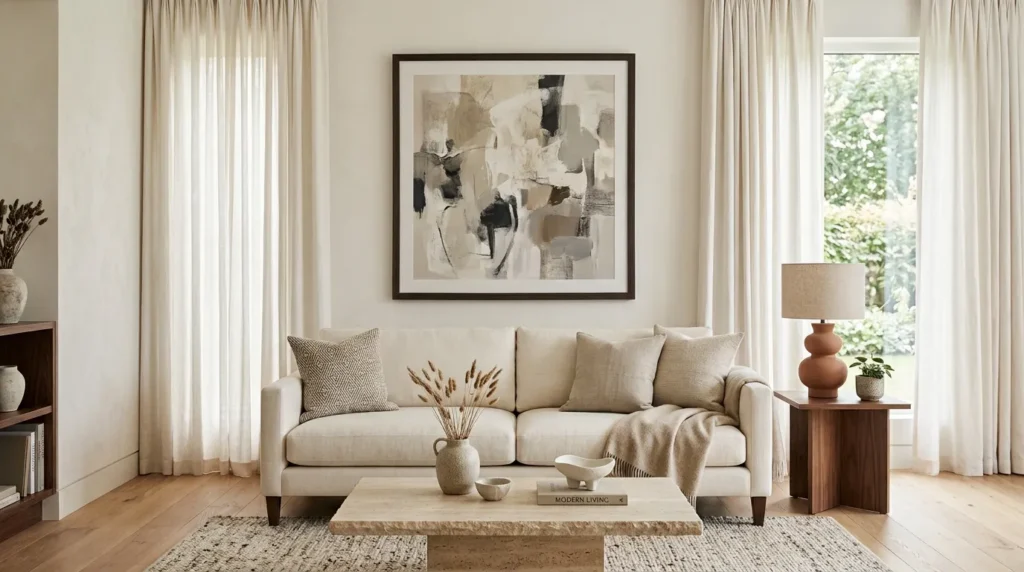
One large piece of art can have more impact than a collection of tiny frames.
This is especially effective in modern living rooms because clean architecture provides a strong backdrop.
Large artwork creates a visual anchor.
It can also introduce color without requiring colorful furniture.
Abstract paintings, oversized photography, graphic prints, textured canvas, and sculptural wall pieces can all work.
The goal isn’t necessarily to find expensive art.
It is to choose something with appropriate scale and a relationship to the rest of the room.
How To Style It
Choose artwork that picks up at least one color already present in the room.
Hang it at a comfortable viewing height.
Above a sofa, make sure the artwork is proportionate to the furniture rather than appearing like a small isolated rectangle.
A large horizontal piece can work beautifully over a wide sofa.
For narrower walls, consider a tall vertical work.
Keep the surrounding wall relatively clear.
Modern styling often benefits from giving artwork visual breathing room.
8. Mixed Metal Accents
Quick Benefits
- Adds subtle contrast
- Creates visual sophistication
- Connects lighting and hardware
- Prevents the palette from feeling flat
- Introduces a refined accent
Why It Works
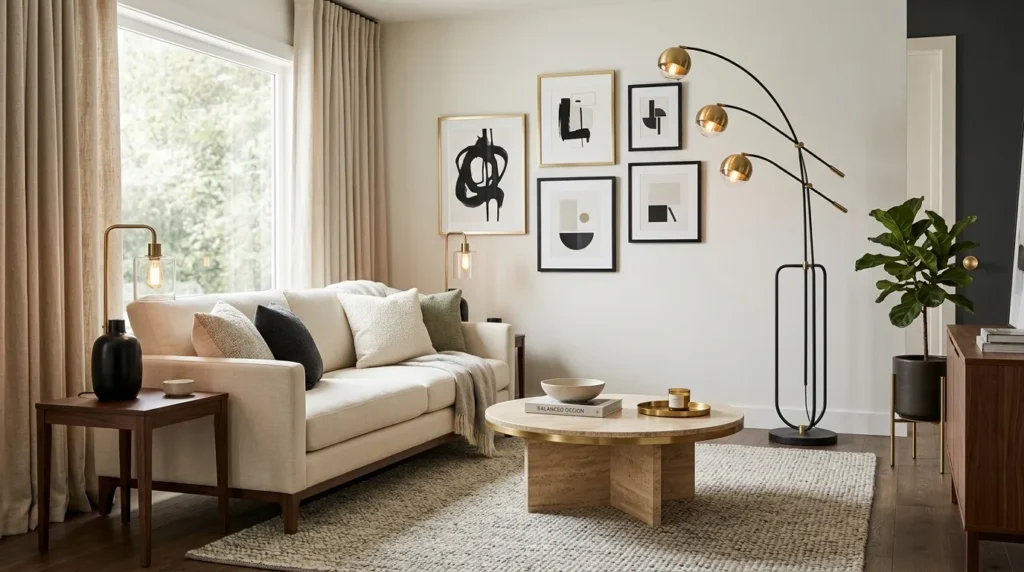
Metal finishes can add a surprisingly strong layer of sophistication.
Black metal creates crisp contrast.
Brushed brass introduces warmth.
Nickel and chrome can provide a cooler modern appearance.
You don’t necessarily need every metal finish to match perfectly.
What matters is that the combination feels intentional.
A carefully controlled mixture can make the room feel collected rather than overly coordinated.
How To Style It
Choose one dominant metal finish.
Then introduce a second finish in smaller quantities.
For example, black lighting fixtures can be paired with subtle brushed brass accessories.
Or warm brass can be balanced with a small amount of black through frames and hardware.
Repeat each finish at least twice when possible.
Avoid adding five different metallic colors.
In a small living room, one primary metal and one supporting accent are usually enough.
9. Textured Layering
Quick Benefits
- Adds depth
- Softens modern lines
- Prevents flatness
- Makes neutral colors more interesting
- Improves visual comfort
Why It Works
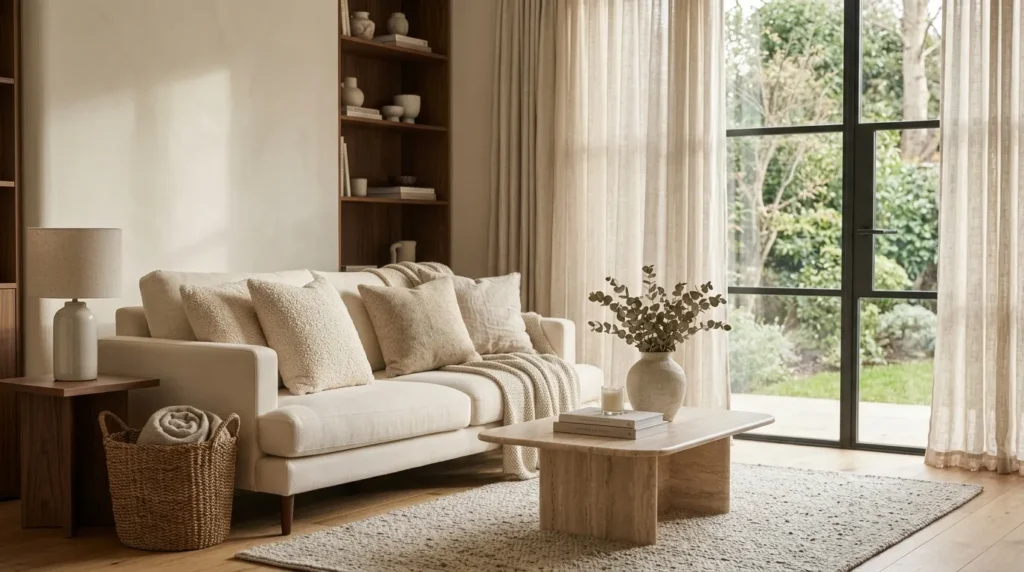
Texture is what keeps a neutral modern room from feeling like a showroom.
Imagine cream walls, a cream sofa, and a cream rug.
Without texture, the room could look flat.
Now add a boucle cushion, linen curtain, wool-style rug, natural wood table, ceramic vase, and woven basket.
The color palette remains restrained, but the room suddenly has depth.
This is especially useful when you prefer minimal decoration.
Texture allows you to create richness without adding visual clutter.
How To Style It
Mix several materials across different scales.
Use a soft rug underfoot.
Add linen or cotton cushions.
Introduce a woven basket.
Choose a ceramic vase.
Bring in wood furniture.
If the room contains stone, balance it with upholstery and textiles.
Avoid making every surface heavily textured.
The contrast between smooth and tactile finishes is what creates sophistication.
10. Custom-Look Styling
Quick Benefits
- Makes the room feel professionally designed
- Improves visual consistency
- Highlights quality details
- Reduces clutter
- Creates a finished appearance
Why It Works
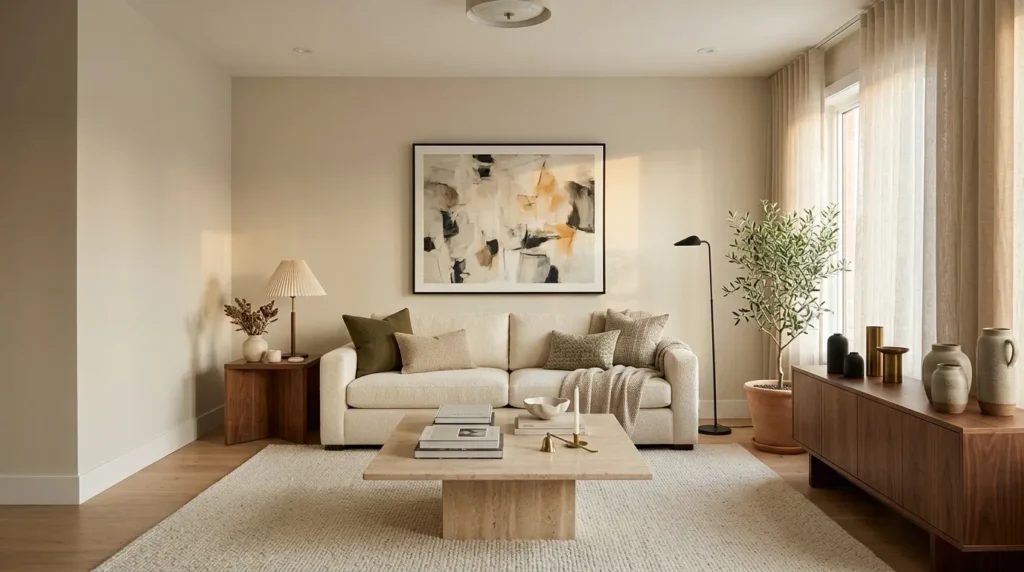
The final designer effect usually comes from editing.
A room can contain beautiful furniture and still feel unfinished if accessories are randomly positioned, proportions are inconsistent, and surfaces are crowded.
Professional-looking rooms tend to have clear focal points.
Furniture is appropriately scaled.
Colors repeat.
Materials relate.
Negative space is protected.
This doesn’t require everything to be custom-made.
It requires thoughtful decisions.
How To Style It
Step back and look at the entire room from the doorway.
Identify the first thing your eye sees.
That should ideally be something intentional, such as artwork, a beautiful sofa, a fireplace, or an architectural feature.
Then look for visual repetition.
Does the wood tone appear more than once?
Does the accent color repeat?
Are the lamps appropriately scaled?
Are the curtains long enough?
Is the coffee table proportional to the sofa?
Remove accessories that don’t contribute.
Finally, conceal everyday clutter.
Remote controls, chargers, paperwork, and miscellaneous objects can quickly undermine an otherwise polished space.
How To Get Designer Finishes On A Budget
You don’t need to replace an entire living room to make it feel more refined.
Start with the details that affect the room most.
Improve The Lighting
Replace harsh or outdated bulbs with warmer options appropriate for your fixtures.
Upgrade The Curtains
Well-proportioned full-length curtains can have a surprisingly large visual impact.
Edit The Accessories
Remove anything that feels random or unnecessary.
Add Natural Materials
Wood, woven materials, ceramic, and linen-look fabrics can create richness.
Improve The Rug
A properly sized rug can make the entire seating arrangement feel more cohesive.
Choose One Statement Piece
Instead of buying ten small decorations, consider one substantial artwork, lamp, mirror, or coffee table.
Repeat Finishes
Use the same wood or metal finish in several places.
This creates a custom-look effect without custom furniture.
Modern Living Room Materials That Look Sophisticated
Some materials naturally create a refined appearance when used thoughtfully.
Natural Wood
Adds warmth and organic variation.
Stone
Creates substantial visual weight.
Linen
Adds relaxed texture.
Wool
Provides softness and depth.
Ceramic
Introduces handcrafted character.
Glass
Creates lightness and reflection.
Metal
Adds contrast and structure.
The goal is balance.
Too much stone can feel cold.
Too much wood can feel heavy.
Too much metal can feel commercial.
The most comfortable modern interiors combine hard and soft materials.
Common Modern Living Room Mistakes
Even beautiful furniture can lose its impact when the details are overlooked.
Furniture Is Too Large
A sofa or coffee table that overwhelms the room can make everything feel cramped.
Curtains Are Too Short
Short curtains can make the windows and walls feel disconnected.
Too Many Finishes
Combining excessive wood tones, metals, colors, and patterns creates visual noise.
Poor Lighting
One bright overhead fixture rarely creates a sophisticated atmosphere.
Tiny Artwork
Small art above large furniture can look disproportionate.
Overdecorating
Too many accessories hide the architectural qualities of the room.
No Texture
A neutral room without texture can feel flat.
Good design is often about removing what isn’t needed.
FAQ
How can I make my living room look professionally designed?
Focus on proportion, lighting, material combinations, and editing. Choose appropriately sized furniture, use a cohesive color palette, layer several light sources, add substantial curtains, and introduce natural materials. Then reduce unnecessary accessories. A professionally designed appearance usually comes from consistency rather than simply buying expensive products.
What finishes make a living room look expensive?
Natural wood, stone, linen, textured upholstery, ceramic, substantial rugs, carefully selected metals, and warm lighting can all create an elevated appearance. The important factor is how these finishes work together. Combining too many competing materials can have the opposite effect.
What colors are best for a modern luxury living room?
Warm white, ivory, cream, beige, taupe, soft gray, walnut brown, charcoal, muted sage, and earthy tones work well. A restrained palette allows architectural features and materials to become the focus. Add stronger colors sparingly through artwork or accessories.
Does modern design have to be minimalist?
No. Modern design can be comfortable and layered while still maintaining clean lines. The goal is intentionality. You can have books, artwork, cushions, plants, and personal objects while keeping the overall composition edited and balanced.
How do I make inexpensive furniture look high-end?
Pay attention to everything surrounding it. A simple sofa can look more sophisticated when paired with a properly sized rug, beautiful curtains, layered lighting, natural wood, substantial artwork, and carefully edited accessories. Improving the overall composition often matters more than replacing one individual item.
Should all metal finishes match in a modern living room?
Not necessarily. One dominant metal plus a smaller secondary finish can create a sophisticated layered appearance. For example, black lighting can be paired with subtle brass accessories. Repeat each finish where possible so the combination feels intentional.
What is the easiest designer upgrade for a living room?
Lighting and window treatments are among the most impactful upgrades. Properly positioned full-length curtains can change the room’s proportions, while layered lighting can dramatically improve the evening atmosphere. Both also influence how furniture, artwork, and materials appear.
Conclusion
A modern living room with designer finishes doesn’t have to feel untouchable or overly formal.
The best spaces combine sophistication with comfort.
Start with a restrained color palette and build from there.
Choose furniture with good proportions.
Add a substantial rug.
Introduce natural wood to soften stone and metal.
Use architectural lighting to create visual interest and warm evening ambiance.
Hang curtains properly so the windows feel integrated into the room.
Then bring in artwork and personal objects that give the space character.
The biggest lesson is that expensive-looking design is often about restraint.
You don’t need more accessories.
You need better relationships between the pieces already there.
A stone table looks more impressive when it has room around it.
Artwork looks stronger when the wall isn’t crowded.
A beautiful sofa looks more intentional when the rug and coffee table are correctly proportioned.
Warm wood feels richer when it contrasts with clean modern surfaces.
And lighting can make every material look better after sunset.
Take your time.
Choose one finish to improve at a time instead of trying to redesign the entire room in one weekend.
When color, proportion, texture, lighting, and materials begin working together, even a simple living room can develop that polished, designer-inspired quality you’re looking for.
The result should still feel like your home—just more intentional, comfortable, and beautifully finished.
Related Articles
- 10 Modern Living Room Ideas for Small Spaces
- 10 Small Living Room Ideas That Feel Warm All Year
- How to Decorate a Living Room Like a Professional Stylist
- How to Decorate a Living Room with Cozy Furniture
- 10 Cozy Living Room Ideas for a Warm and Inviting Home