Vinyl-Coated vs Non-Woven Wallpaper: Which Resists Bathroom Humidity?
Choosing the right wall covering for a high-moisture environment is a critical decision that impacts both the longevity of your design and the health of your home. When comparing vinyl-coated vs non-woven wallpaper, homeowners often find themselves weighing aesthetic appeal against practical performance. Because bathrooms experience frequent temperature fluctuations and high levels of steam, the material you select must withstand constant exposure to water.
Understanding the structural differences between these two common options will help you prevent issues like peeling, bubbling, and hidden mold growth. This analysis breaks down the performance metrics of each material to ensure your next renovation project remains durable, stylish, and free from moisture-related damage for years to come.
The Verdict on Bathroom Moisture Resistance
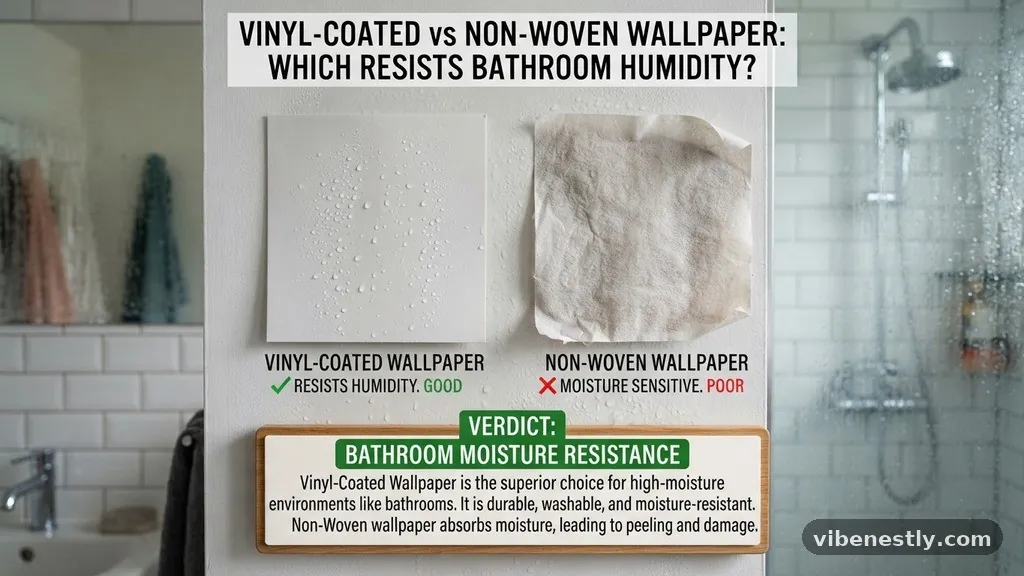
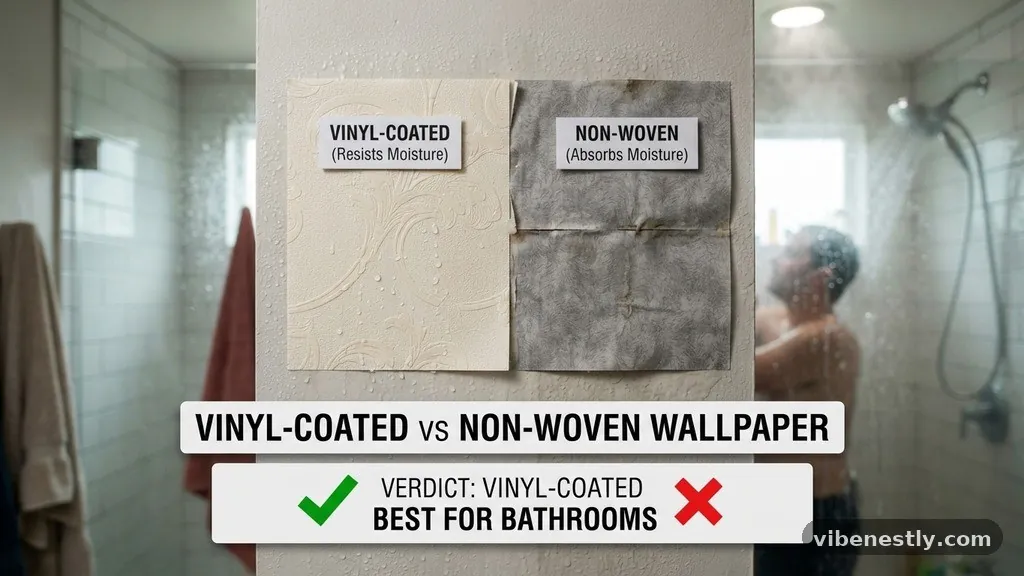
If you are looking for the most reliable option for a bathroom that features a shower or bathtub, solid vinyl wallpaper is the superior choice. While vinyl-coated and non-woven options serve different purposes, solid vinyl provides a fully impermeable barrier against water vapor. Non-woven wallpaper, despite being a popular choice for bedrooms and living areas, typically lacks the moisture-blocking properties required for a high-humidity space.
If you install non-woven paper in a room with poor ventilation, you risk moisture seeping into the adhesive. This leads to premature delamination and potential mold growth behind the paper. Always prioritize moisture resistance over texture or pattern when selecting materials for a bathroom environment.
Understanding Vinyl-Coated Wallpaper
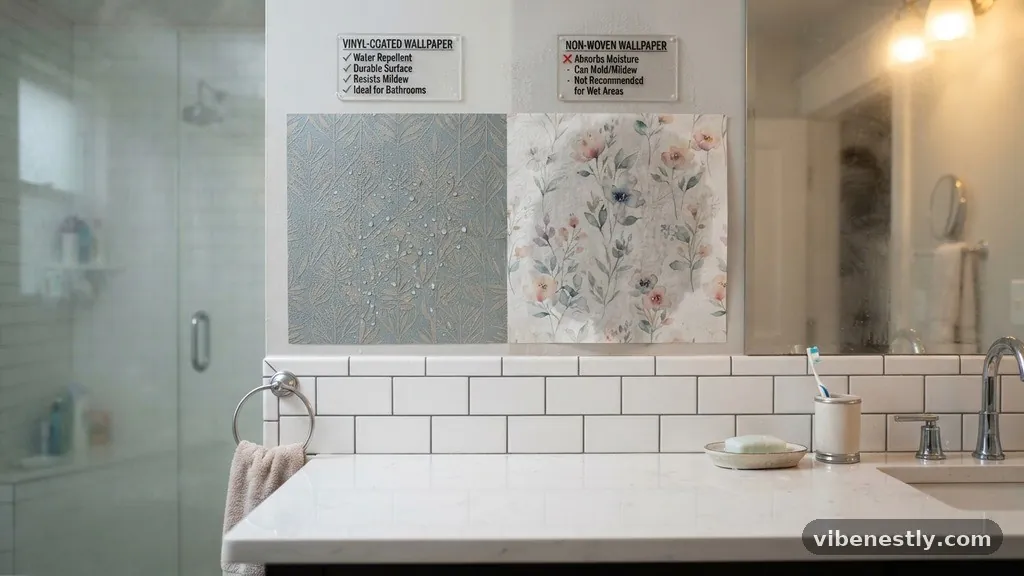
Vinyl-coated wallpaper consists of a paper substrate that has been treated with a thin layer of vinyl. This coating acts as a protective shield, making the surface scrubbable and resistant to occasional splashes. It is significantly more durable than traditional paper, allowing you to wipe away grime or soap scum without damaging the design.
However, it is important to distinguish this from solid vinyl, which is a thicker, entirely plastic-based product. Vinyl-coated options provide a middle ground for homeowners who want a specific aesthetic that only paper substrates can offer. They are generally easier to clean than non-woven varieties, which is a major advantage in a bathroom setting.
The Nature of Non-Woven Wallpaper
Non-woven wallpaper is crafted from a blend of natural and synthetic fibers, which makes it highly breathable and dimensionally stable. This material does not stretch or shrink during installation, which is a major reason why DIY enthusiasts favor it. Because it is breathable, it allows moisture to escape from the wall surface rather than trapping it behind the paper.
While this sounds ideal for preventing mold, it can be a disadvantage in a bathroom where steam is constantly present. If the wall itself becomes saturated, the non-woven fibers may struggle to maintain their integrity over time. It is a fantastic choice for hallways, dining rooms, or offices, but it is rarely the best fit for a steam-filled bathroom.
Comparing Performance in High Humidity
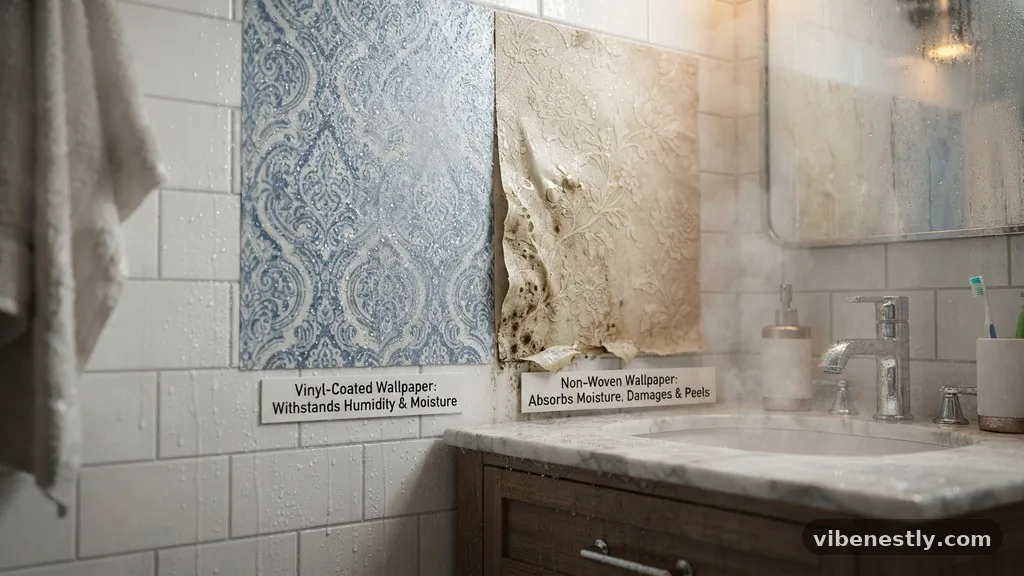
The performance of these materials varies drastically depending on the ventilation of your bathroom. If you have a powerful exhaust fan and keep the room dry, you might get away with non-woven paper. However, in most residential bathrooms, humidity levels spike during every shower.
Vinyl-coated materials provide a surface that water simply beads off of, whereas non-woven materials are more porous. Porosity is the enemy of any wall covering in a damp environment because it invites water vapor to settle into the substrate.
| Feature | Vinyl-Coated | Non-Woven |
|---|---|---|
| Moisture Resistance | High | Low to Moderate |
| Breathability | Low | High |
| Cleaning | Scrubbable | Damp wipe only |
| Installation | Standard paste | Paste-the-wall |
Installation Challenges in Damp Rooms
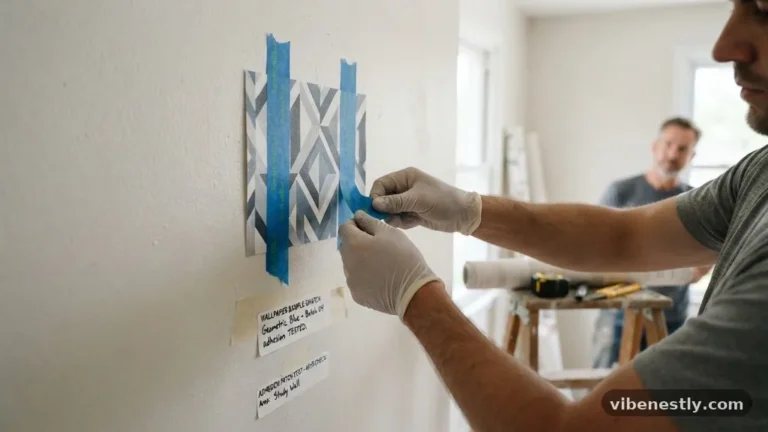
The way you apply these wallpapers is just as important as the material itself. Non-woven wallpapers are famous for their “paste-the-wall” installation, which is remarkably easy for beginners. You do not need to soak the paper, which prevents the material from expanding or tearing.
Vinyl-coated wallpaper usually requires traditional pasting techniques, where the back of the paper is coated and booked before hanging. In a bathroom, you must use a high-quality, moisture-resistant adhesive regardless of the paper type. If the glue is not formulated to handle humidity, the paper will fail at the seams long before the material itself degrades.
The Role of Ventilation and Maintenance
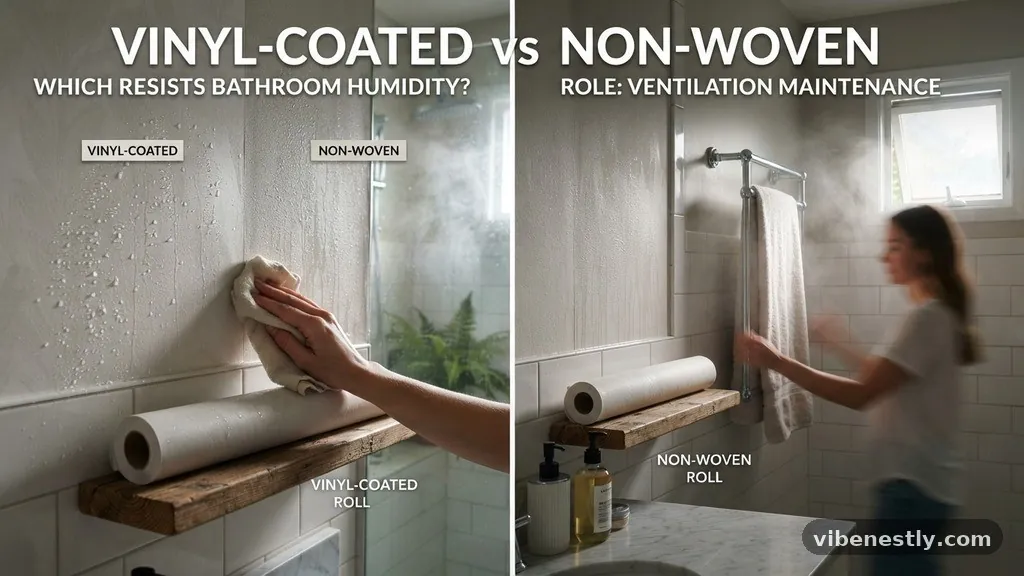
No matter which wallpaper you choose, the room’s ventilation system is the primary factor in its survival. A bathroom without a functioning exhaust fan will eventually damage even the most “waterproof” wall coverings. Steam that settles on walls creates a breeding ground for mildew.
You can find detailed advice on maintaining indoor air quality and moisture control at the Environmental Protection Agency’s guide on mold and moisture. Even with the best materials, you should regularly check for signs of peeling at the corners. Catching a loose seam early can save you from having to replace the entire wall covering later.
Aesthetic Versatility and Design
Designers often prefer non-woven options because they offer a matte finish that looks more like high-end paint or fabric. Vinyl-coated papers have come a long way, but they sometimes carry a slight sheen that can look artificial under bright bathroom lighting. If you want a specific textured look or a deep, rich matte color, you are often limited to non-woven materials.
You must weigh the risk of moisture damage against the visual payoff. Some homeowners choose to use wallpaper only on the upper two-thirds of the wall to keep it away from direct water contact. This allows you to use your preferred design while protecting the paper from the most humid zones.
Preventing Mold and Structural Damage
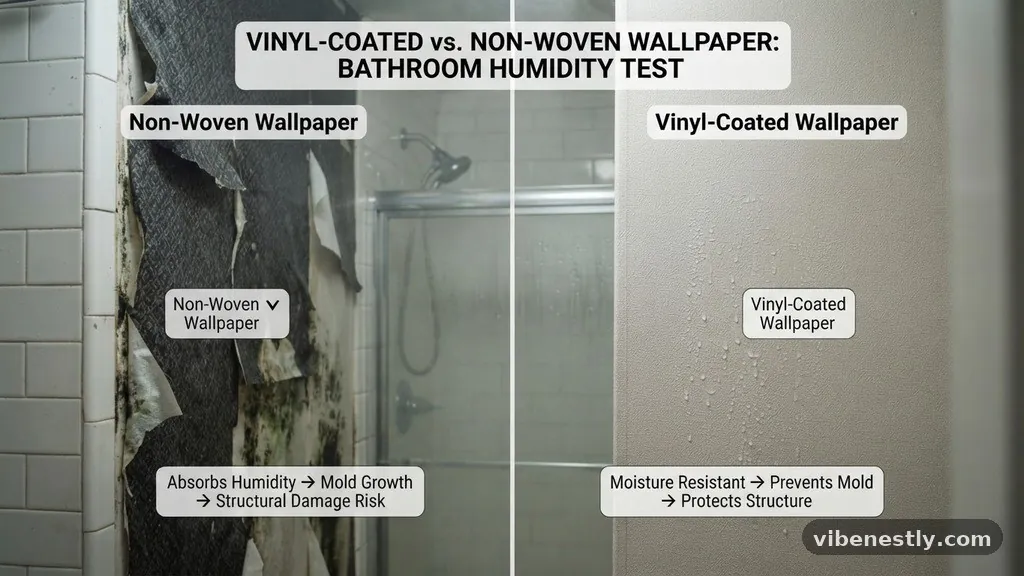
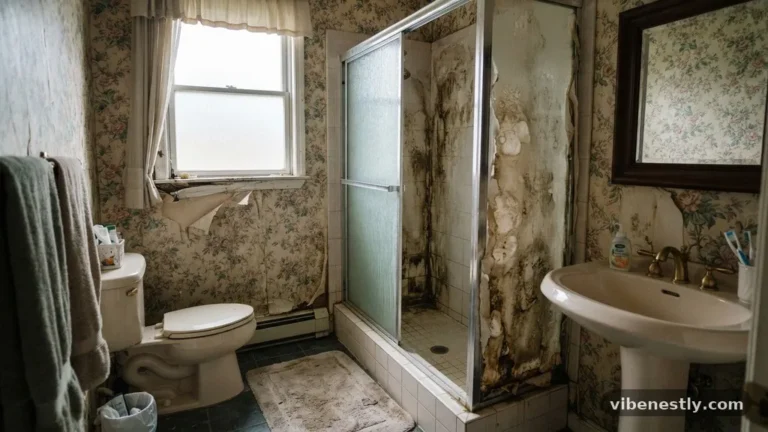
Mold growth behind wallpaper is often invisible until it is too late. Because non-woven wallpaper is breathable, it can actually allow moisture to move through it, which might seem like a benefit. However, if that moisture becomes trapped between the wallpaper and the wall surface, you have a problem.
Vinyl-coated wallpaper creates a seal that prevents moisture from entering the wall entirely. If you have any concerns about existing dampness in your walls, you should address those structural issues before applying any covering. Never attempt to cover up active mold with new wallpaper; always treat the wall surface with an antimicrobial primer first.
Key Considerations for DIY Renovators
If you are planning to install the wallpaper yourself, consider the ease of removal as well as installation. Non-woven wallpapers are generally designed to be stripped off in dry, full sheets, which makes future updates much simpler. Vinyl-coated wallpapers can be more stubborn to remove, often requiring a steamer or chemical stripper to break down the adhesive.
Think about how long you plan to keep this design in your bathroom. If you like to change your decor every few years, the removal process for non-woven paper is a significant advantage. If you want a long-term solution that you won’t touch for a decade, the durability of vinyl-coated options is more attractive.
Summary of Selection Factors
* Room Usage: Does the bathroom have a shower or is it a powder room with only a sink?
* Ventilation: Is there an exhaust fan that removes steam within minutes?
* Cleaning Needs: Do you have children or pets that might splash water or soap on the walls?
* Aesthetic Goals: Do you require a specific matte texture that non-woven paper provides?
* Longevity: How many years do you want this installation to last before a redesign?
Frequently Asked Questions
Is non-woven wallpaper truly waterproof?
No, non-woven wallpaper is not waterproof. While some varieties are coated for minor splash resistance, the fibers themselves are absorbent and will eventually soak up moisture in a high-humidity environment.
Can I use a special sealer to make non-woven wallpaper waterproof?
You can apply a clear, water-based acrylic sealer over the surface to add a layer of protection, but this is not a permanent solution. It may change the texture or finish of the paper and is not as effective as choosing a vinyl-based material from the start.
What is the most common cause of wallpaper failure in bathrooms?
The most common cause is the use of improper adhesive combined with poor ventilation. When the glue softens due to steam, it loses its bond, leading to peeling edges and moisture infiltration.
How do I know if my bathroom is too humid for wallpaper?
If you notice condensation lingering on mirrors, tiles, or walls for more than 15 minutes after a shower, your bathroom has high humidity. You must improve your ventilation before installing any type of wallpaper.
Is it better to tile the splash zone and wallpaper the rest?
Yes, this is the industry-standard approach for bathroom design. By using tiles near the sink, shower, and toilet, you protect the most vulnerable areas from direct water, allowing you to use wallpaper in the drier, upper sections of the room.
The debate between vinyl-coated vs non-woven wallpaper in a bathroom ultimately comes down to a choice between durability and breathability. While non-woven materials offer superior textures and easier installation, they simply cannot match the moisture-blocking capabilities of vinyl-coated options in a room prone to steam and condensation. If your bathroom is a high-traffic area with frequent shower use, choosing a vinyl-coated product or even a solid vinyl alternative is the safest path to a long-lasting finish.
By ensuring your walls are properly prepped and your ventilation is adequate, you can enjoy the aesthetic benefits of wallpaper without the risk of hidden moisture damage. Take your time to assess your specific bathroom environment, and don’t hesitate to prioritize the long-term integrity of your walls when making your final selection.