10 Ideas on How to Decorate a Living Room with Layered Textures
A living room can have beautiful furniture, a lovely color palette, and plenty of decorative pieces yet still feel a little flat.
Often, the missing ingredient isn’t another color or a new piece of furniture. It’s texture.
Layered textures give a room depth. They make a neutral sofa feel softer, a plain wall more interesting, and a simple seating arrangement feel thoughtfully designed. The best part is that you don’t need to completely redecorate to get the effect.
You can create a layered look with materials you already have, then add a few carefully chosen pieces such as a woven basket, boucle pillow, linen throw, textured rug, wood accent, ceramic vase, or soft curtain.
In my experience, the most inviting living rooms rarely rely on one texture repeated everywhere. Instead, they combine materials that feel different when you see or touch them.
Think smooth beside rough.
Soft beside structured.
Matte beside slightly reflective.
Natural beside polished.
That’s the secret to making texture feel intentional rather than cluttered.
Texture is also especially useful when decorating with neutrals. A room filled with cream, beige, ivory, taupe, and warm gray can look sophisticated, but without variation it may lack dimension. Adding linen, wool, wood, rattan, stone, leather, and ceramics creates visual interest without requiring a dramatic color change.
The ideas below are designed for everyday homes, including apartments, family rooms, open-concept spaces, and smaller living rooms. You can use several together or start with one area and gradually build the look.
The goal isn’t to fill every surface.
It’s to create enough variation that your living room feels warm, comfortable, collected, and visually rich.
Table of Contents
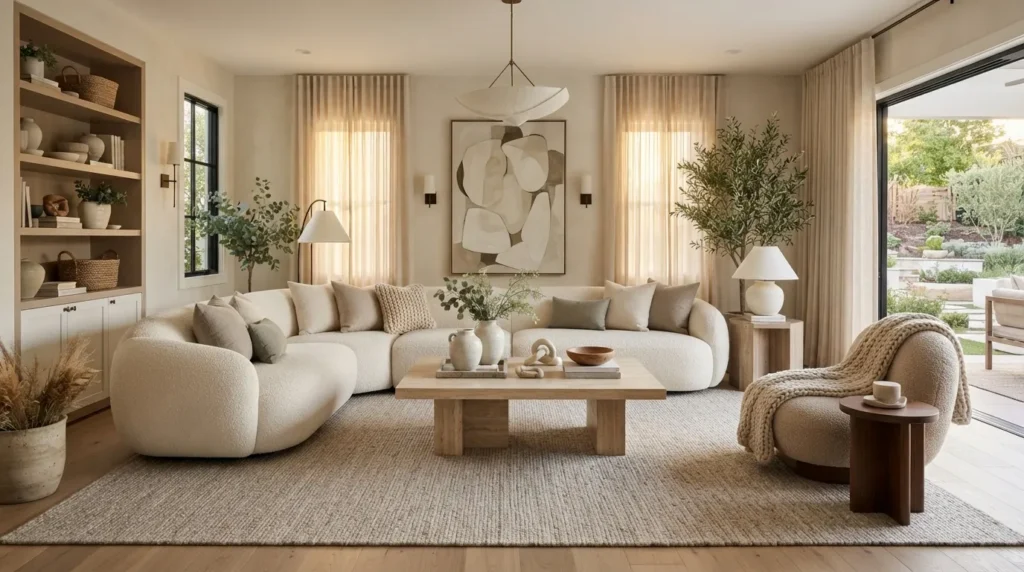
1. Layered Area Rugs
Combine complementary rugs to add depth underfoot.
2. Linen Window Treatments
Use soft fabric to frame windows naturally.
3. Woven Accent Pieces
Bring natural fibers into the room for warmth.
4. Boucle Soft Furnishings
Add plush materials for comfortable visual contrast.
5. Natural Wood Accents
Introduce warmth through organic wood grain.
6. Textured Throw Pillows
Mix fabrics and patterns across the sofa.
7. Ceramic Decorative Pieces
Add handcrafted-looking surfaces and subtle variation.
8. Leather Contrast
Balance soft materials with smooth leather.
9. Textured Wall Details
Give plain walls architectural interest.
10. Layered Cozy Lighting
Use light and shade to emphasize texture.
1. Layered Area Rugs
Quick Benefits
- Adds softness underfoot
- Defines seating areas
- Creates visual depth
- Works beautifully with neutral rooms
- Introduces multiple patterns and materials
Why It Works
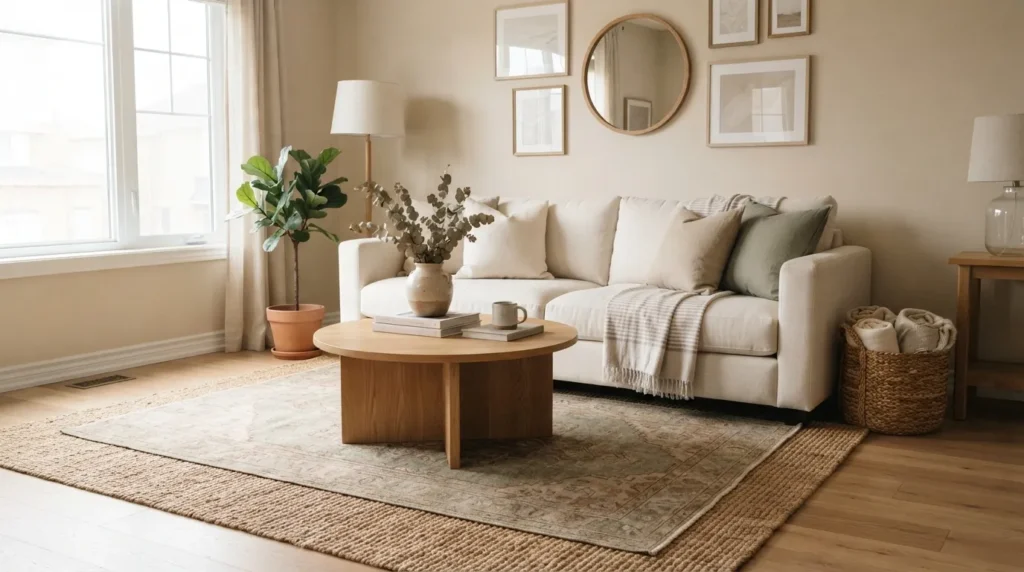
A rug is one of the easiest ways to introduce texture because it covers such a large visual area.
Instead of relying on a single flat rug, layering two complementary pieces can create a richer foundation beneath your furniture.
A larger natural-fiber rug can establish the base, while a smaller patterned or plush rug adds softness and personality.
This works particularly well in large living rooms where the seating arrangement needs stronger visual definition.
The different materials create subtle contrast without making the room feel busy.
How To Style It
Start with a large jute, sisal, or flatwoven rug.
Place a smaller wool, cotton, or vintage-inspired rug on top, keeping the upper layer centered within the seating area.
Choose patterns that share at least one color.
Keep the rest of the room relatively simple so the rugs become a deliberate foundation rather than visual competition.
For smaller rooms, use texture instead of dramatically overlapping multiple rugs.
A single high-pile rug can provide plenty of dimension.
2. Linen Window Treatments
Quick Benefits
- Softens windows
- Filters natural light
- Adds movement
- Creates an airy appearance
- Works with many decor styles
Why It Works
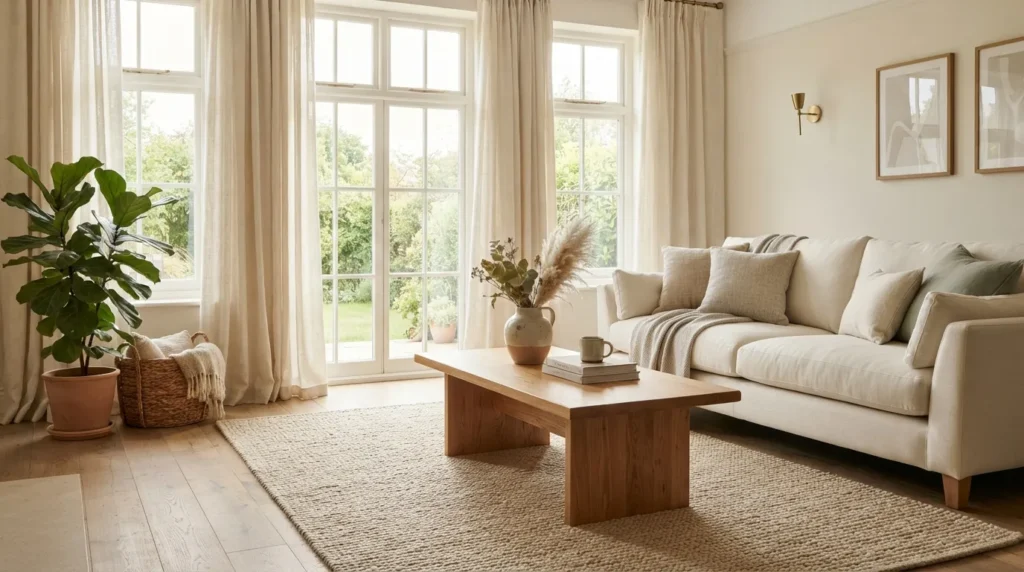
Windows occupy a large amount of visual space, yet they are often overlooked when decorating with texture.
Linen and linen-look curtains introduce softness without making the room feel heavy.
Their slightly irregular weave catches daylight beautifully, creating subtle variations throughout the day.
This is particularly effective in neutral living rooms because the curtains add dimension without introducing another strong color.
They can also make a room feel more finished and comfortable.
How To Style It
Choose curtains in ivory, oatmeal, warm white, beige, or soft taupe.
Hang the rod higher and wider than the window frame when appropriate to create a more expansive appearance.
Allow the fabric to fall close to the floor.
For a relaxed look, choose gently textured linen.
For easier maintenance, linen-blend fabrics can offer a similar visual effect.
Pair them with smooth walls and structured furniture to create contrast.
3. Woven Accent Pieces
Quick Benefits
- Adds organic texture
- Creates warmth
- Works with neutral palettes
- Provides practical storage
- Complements greenery
Why It Works
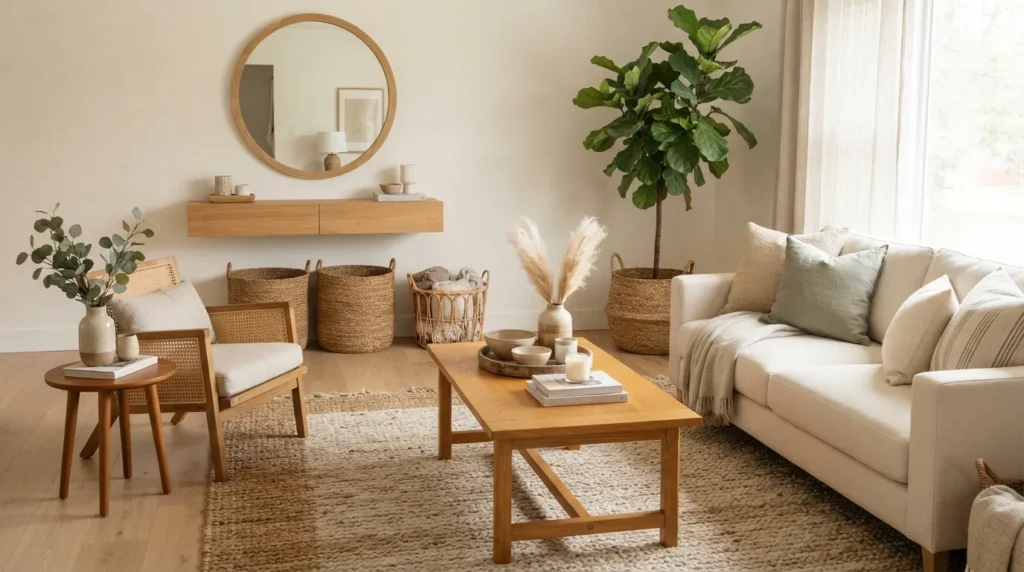
Woven materials instantly make a living room feel more relaxed.
Rattan, seagrass, cane, wicker, and other natural fibers have visible patterns that add texture without requiring bright colors.
They are especially useful in modern neutral spaces where furniture may otherwise feel too smooth or uniform.
A woven basket can also be functional, making this one of the easiest texture additions to justify in an everyday home.
How To Style It
Add a large woven basket beside the sofa for blankets.
Use smaller baskets on open shelving.
Consider a rattan side table, cane cabinet door, woven pendant light, or natural-fiber planter.
Don’t use every type of woven material at once.
Two or three coordinated pieces are usually enough.
Pair woven textures with smooth ceramics, linen, and natural wood for balanced contrast.
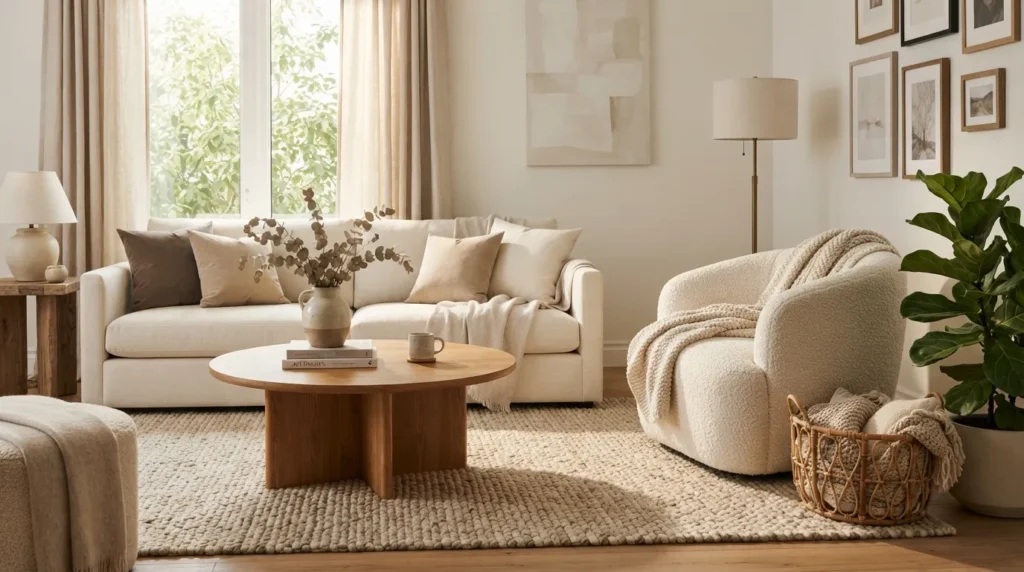
4. Boucle Soft Furnishings
Quick Benefits
- Adds plushness
- Creates cozy visual contrast
- Softens modern furniture
- Works well with neutral colors
- Makes seating feel inviting
Why It Works
Boucle has a distinctive looped surface that immediately adds tactile interest.
A boucle accent chair, ottoman, bench, or pillow can become the softest-looking element in the room.
This is particularly effective when the surrounding furniture has smoother upholstery, glass, metal, or polished wood.
The contrast gives the room more dimension without requiring additional patterns.
How To Style It
Use boucle selectively.
A single accent chair can provide plenty of texture.
If you already have a boucle chair, choose linen or cotton pillows rather than adding boucle everywhere.
Cream and ivory boucle work beautifully with warm wood.
For a slightly more dramatic room, consider taupe, camel, or muted gray.
Because boucle is visually substantial, balance it with lighter materials elsewhere.
5. Natural Wood Accents
Quick Benefits
- Adds warmth
- Introduces organic variation
- Works with neutral colors
- Provides visual grounding
- Complements soft textiles
Why It Works
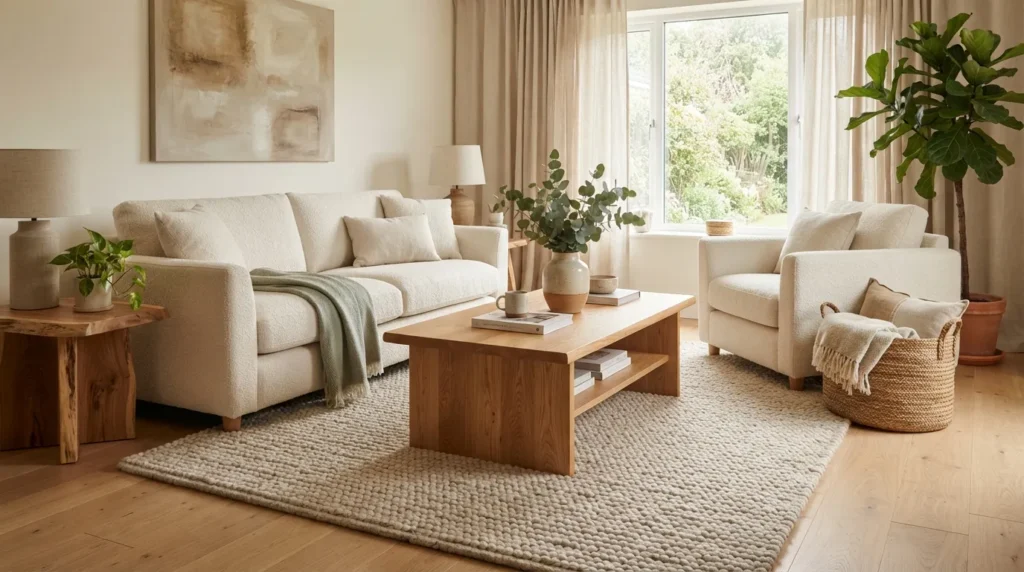
Wood grain is naturally textured.
Even a smooth wooden surface contains subtle lines, knots, tonal variation, and imperfections that add depth to a room.
Wood also prevents neutral interiors from feeling overly cold.
A room filled with white upholstery, cream walls, and soft fabrics can benefit enormously from a warm oak coffee table, walnut cabinet, or natural wood stool.
How To Style It
Choose one dominant wood tone and repeat it a few times throughout the room.
A coffee table, side table, picture frame, or console can provide enough wood to establish continuity.
Don’t worry about matching every wood piece perfectly.
A mix of related tones can look collected and natural.
Pair warm wood with linen, wool, ceramic, woven fibers, and greenery.
6. Textured Throw Pillows
Quick Benefits
- Easy to change seasonally
- Adds comfort
- Introduces multiple fabrics
- Creates sofa depth
- Budget-friendly update
Why It Works
Throw pillows are one of the simplest ways to experiment with texture.
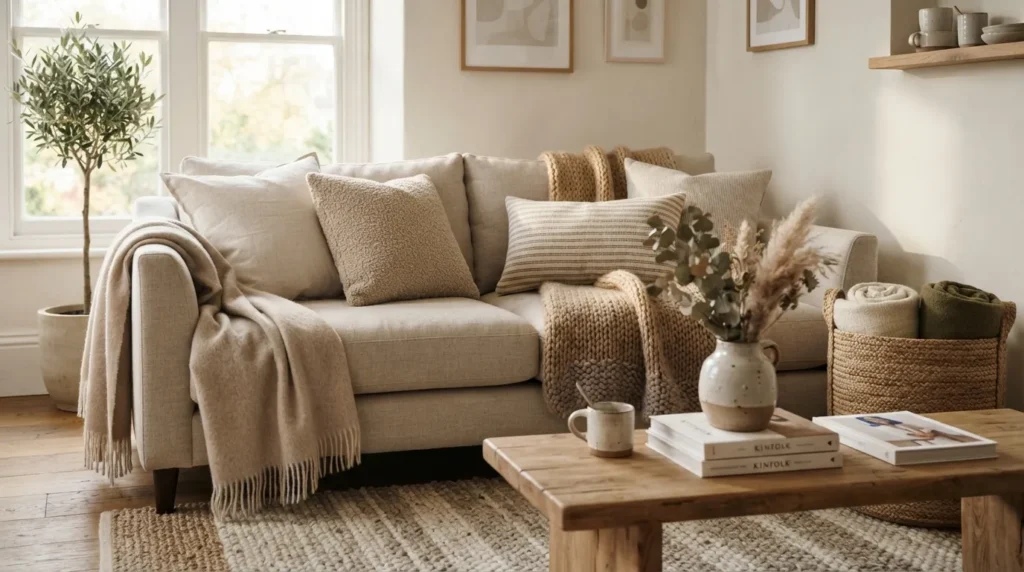
Instead of buying several pillows that all have the same smooth surface, combine different fabrics.
Think linen beside boucle, cotton beside velvet, or woven fabric beside a chunky knit.
The contrast is subtle but noticeable.
Pillows can also help repeat colors already present in the room.
How To Style It
Start with two or three pillow materials.
For example, use a linen base, a woven accent, and one plush boucle pillow.
Vary the sizes.
A larger square pillow can sit behind smaller lumbar cushions.
Choose colors from the existing palette rather than introducing unrelated shades.
For a neutral sofa, cream, camel, taupe, warm gray, muted olive, and soft brown can create a sophisticated layered arrangement.
7. Ceramic Decorative Pieces
Quick Benefits
- Adds subtle surface variation
- Creates handcrafted character
- Works with neutral decor
- Easy to rearrange
- Adds sculptural interest
Why It Works
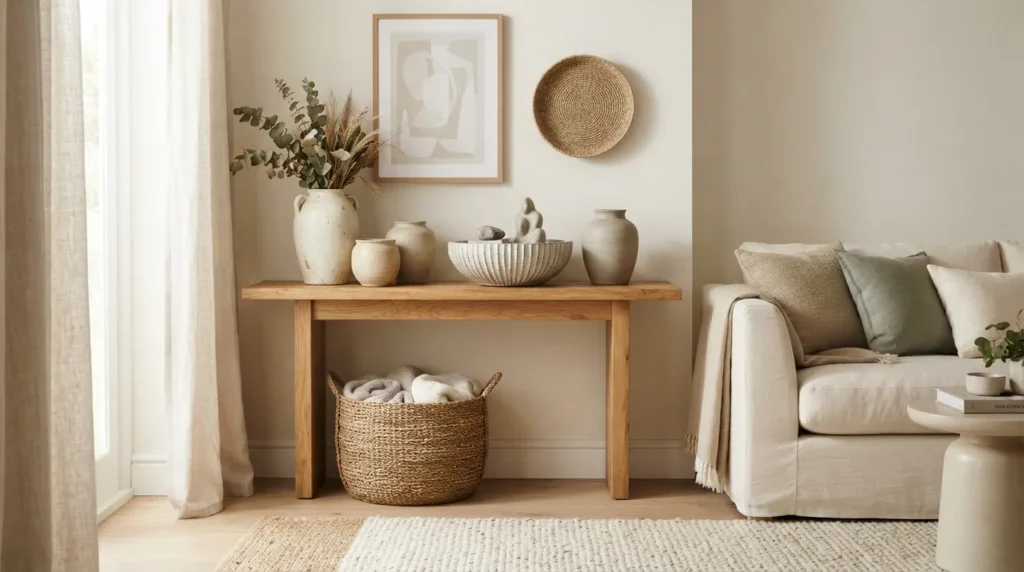
Ceramics provide a different kind of texture.
Their surfaces can be matte, glossy, speckled, ridged, rough, or slightly irregular.
This makes them excellent for styling shelves, coffee tables, consoles, and sideboards.
Handcrafted-looking ceramics also add personality to rooms that otherwise rely heavily on manufactured furniture.
How To Style It
Mix two or three ceramic finishes rather than using only one.
A matte vase can sit beside a slightly glossy bowl.
A ridged planter can add another layer.
Choose pieces with related neutral colors.
Cream, sand, stone, terracotta, and warm gray are especially versatile.
Place ceramic objects beside wood or woven materials so the differences are obvious without feeling forced.
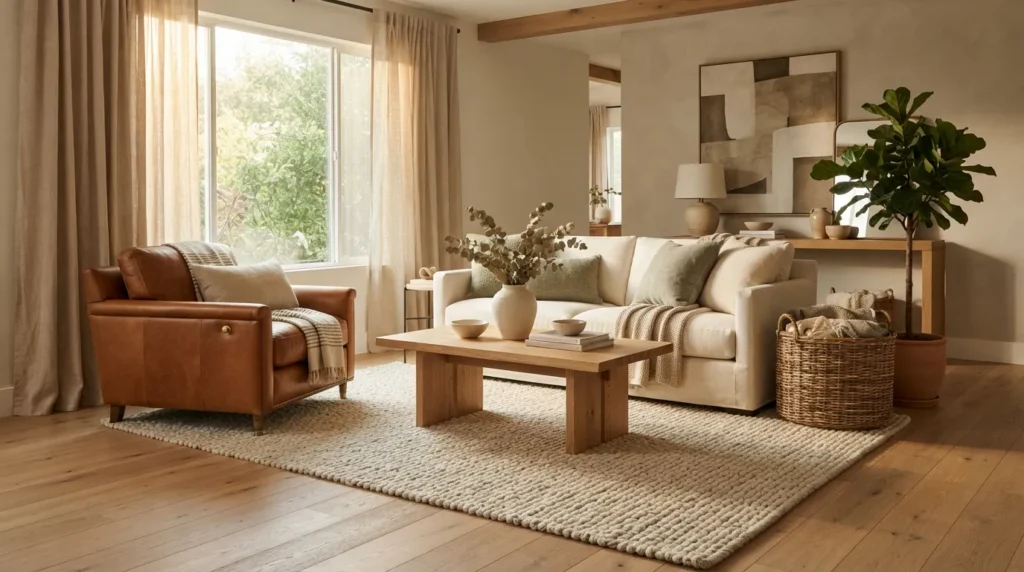
8. Leather Contrast
Quick Benefits
- Adds sophistication
- Balances soft materials
- Creates material contrast
- Ages beautifully
- Works with modern and traditional rooms
Why It Works
Leather introduces a smooth, structured surface that contrasts beautifully with soft textiles.
A leather accent chair beside a linen sofa creates immediate material variation.
A leather ottoman can also balance boucle, wool, or woven textures.
This is especially useful in cozy rooms because too many soft materials can sometimes make the space feel visually indistinct.
Leather gives the eye something more structured to land on.
How To Style It
Choose cognac, camel, tan, dark brown, or black depending on your palette.
A single leather chair is often enough.
If you prefer a smaller commitment, use a leather ottoman or small accent pillow.
Pair leather with warm wood and woven materials for an inviting organic look.
Avoid making every major furniture piece leather, as this can reduce the layered softness you’re trying to create.
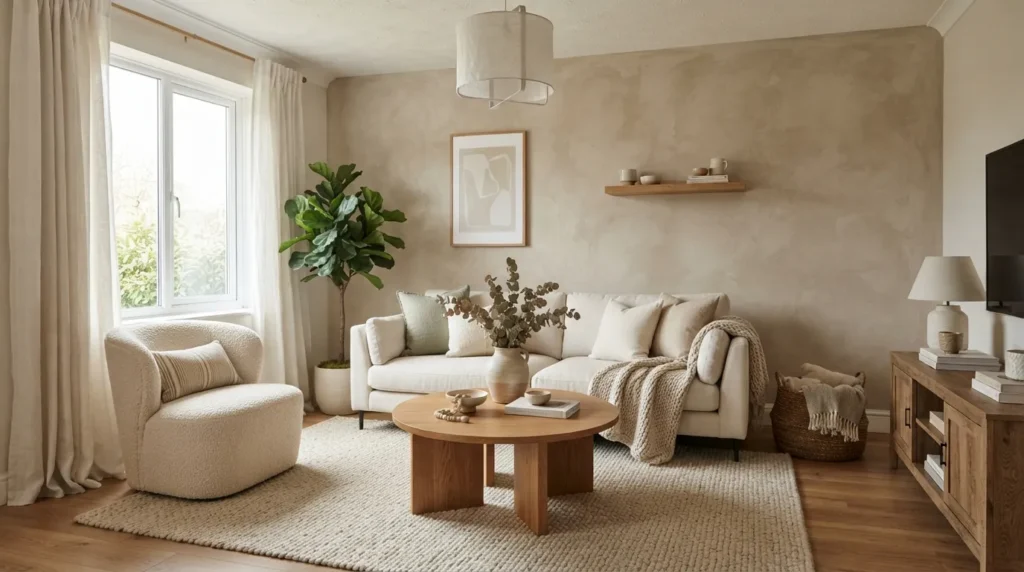
9. Textured Wall Details
Quick Benefits
- Adds architectural character
- Gives plain walls depth
- Creates a strong focal point
- Works without bright colors
- Makes the room feel customized
Why It Works
Texture doesn’t have to stay at furniture level.
Walls offer a major opportunity to introduce dimension.
Wood slats, limewash-style finishes, subtle paneling, grasscloth-inspired wallpaper, plaster effects, or textured artwork can make a plain wall much more interesting.
This approach works particularly well when you prefer neutral decor but still want a visually memorable room.
How To Style It
Choose one wall as the primary textured surface.
A fireplace wall, TV wall, sofa wall, or architectural focal point can work well.
For renters, removable textured wallpaper or large-scale textile art can provide a less permanent option.
Keep the surrounding decor relatively restrained.
If the wall already has strong texture, avoid covering it with too many small decorative objects.
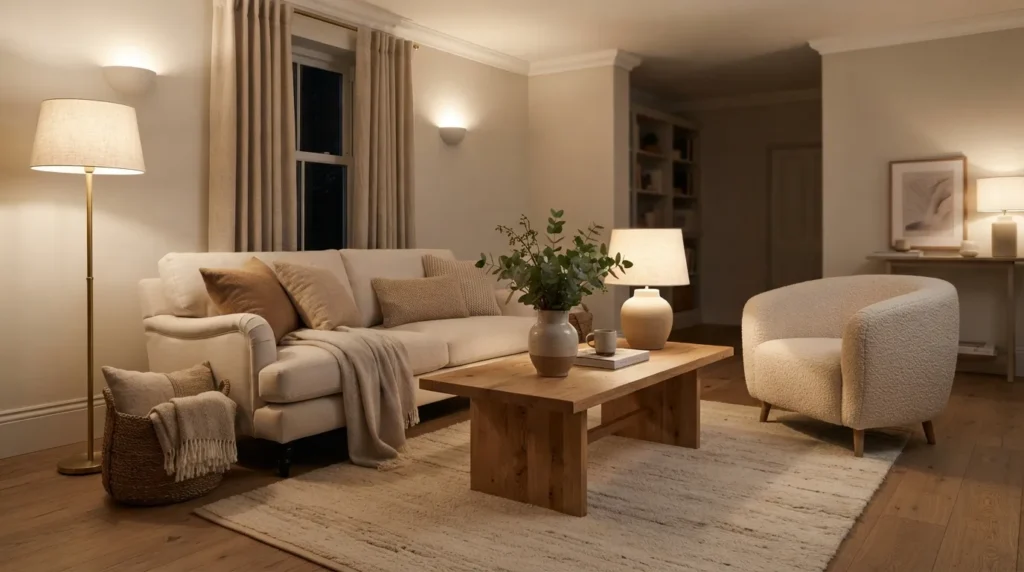
10. Layered Cozy Lighting
Quick Benefits
- Highlights materials
- Creates a warm atmosphere
- Adds visual depth
- Makes evenings more comfortable
- Enhances decorative details
Why It Works
Lighting doesn’t just illuminate texture.
It reveals it.
A woven lamp shade creates shadows.
A linen curtain becomes translucent in daylight.
Wood grain becomes more noticeable under warm directional lighting.
Ceramic surfaces change depending on where light falls.
That’s why layered lighting is such an important finishing step.
How To Style It
Use several light sources at different heights.
A floor lamp can illuminate one side of the sofa.
A table lamp can create a smaller pool of light.
Wall sconces can add architectural interest.
A ceiling fixture provides general illumination.
Choose warm, comfortable light for living areas and use dimmers where practical.
Avoid relying on one bright overhead fixture.
How To Combine Textures Without Overdoing It
Layering textures doesn’t mean every item needs to feel different.
The goal is balance.
A useful approach is to choose one texture for each major category:
Soft: linen, wool, boucle, cotton
Natural: wood, rattan, jute, stone
Smooth: leather, glass, polished ceramic
Structured: metal, architectural details, woven patterns
You don’t need all four categories in equal amounts.
Start with two or three.
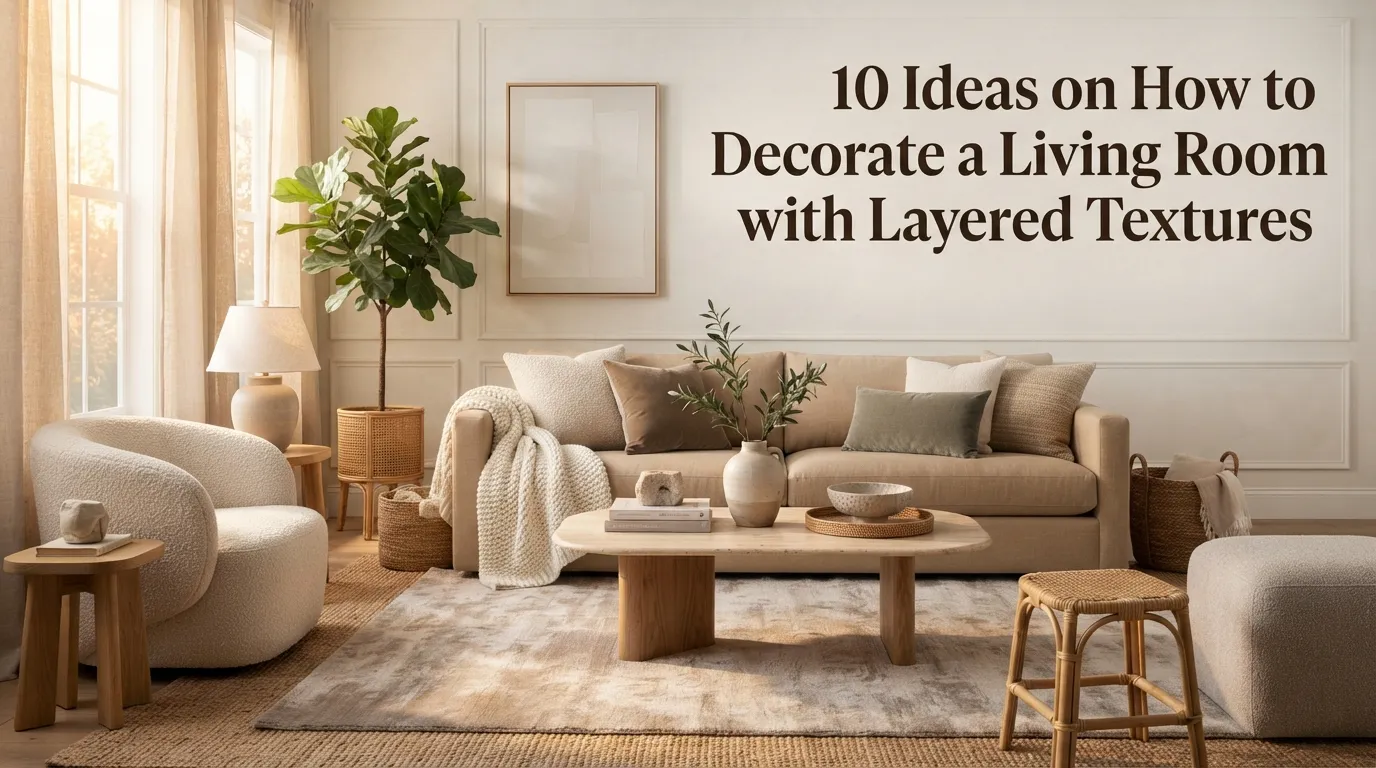
For example, a neutral sofa can be paired with a wool rug, wooden coffee table, linen curtains, and one woven basket.
That’s already a layered room.
Adding ten more textures could actually make the space feel less intentional.
How To Layer Textures In A Neutral Living Room
Neutral rooms are ideal for texture because the lack of strong color allows material differences to become more noticeable.
Start with your largest surfaces.
A cream sofa and beige rug create the foundation.
Then introduce warm wood through a coffee table.
Add linen curtains.
Place a woven basket near the sofa.
Finish with textured pillows and a ceramic vase.
The colors remain close, but the surfaces feel completely different.
This creates depth without relying on bold patterns.
If the room begins to feel too beige, introduce a small amount of muted green, charcoal, terracotta, or natural black.
How Many Textures Should A Living Room Have?
There isn’t a strict number, but most rooms benefit from a mix of several materials rather than one repeated surface.
A good starting point is around five to seven distinct textures across the entire room.
For example:
- Linen
- Wool
- Natural wood
- Woven fiber
- Ceramic
- Leather
- Metal
These can be distributed naturally instead of appearing as seven separate statement pieces.
The important thing is repetition.
If you use rattan in one location, a smaller woven detail elsewhere can help connect the room.
If you introduce warm oak furniture, another small wood accent can repeat the material.
That repetition creates cohesion.
FAQ
What textures make a living room feel cozy?
Soft textiles such as wool, boucle, linen, cotton, velvet, and chunky knits can make a living room feel warmer. Natural materials such as wood, rattan, jute, and stone add additional depth. Combining soft and structured materials generally creates a more balanced appearance than using only plush fabrics.
How do you layer textures in a neutral living room?
Begin with neutral upholstery and a textured rug, then add natural wood, linen curtains, woven accessories, ceramic pieces, and several different pillow fabrics. Keep the colors within a related palette so the materials provide most of the visual interest.
Can you mix too many textures?
Yes. Too many unrelated materials can make a room feel visually busy. Choose a few major textures and repeat them throughout the space. A combination of soft textiles, natural materials, and one or two smoother surfaces usually creates enough variation.
What is the easiest way to add texture to a living room?
Start with inexpensive accessories. Swap plain pillows for linen or woven versions, add a textured throw, introduce a basket, or place a ceramic vase on the coffee table. These small changes can create noticeable depth without replacing furniture.
Do neutral colors need texture?
Not necessarily, but texture is especially helpful in neutral rooms. When colors are similar, differences in material, weave, grain, and finish become more important. Layering these surfaces can prevent an all-neutral space from looking flat.
How do you make a modern living room feel warmer?
Combine clean-lined furniture with organic materials such as warm wood, linen, wool, woven fibers, and ceramics. Add soft lighting and a few tactile textiles. The contrast between modern shapes and natural textures creates a comfortable but polished atmosphere.
What textures work well with wood furniture?
Linen, wool, boucle, leather, rattan, ceramic, and woven fabrics all work well with wood. Choose materials that contrast slightly with the wood’s surface. For example, a smooth wooden table can look especially appealing with a chunky wool rug and soft linen upholstery.
Conclusion
Texture is one of the most effective ways to make a living room feel finished without relying on excessive decoration.
You don’t need to completely redesign the room.
Start by looking at what you already have.
If your sofa is smooth, introduce a textured throw or woven pillow.
If the room feels cold, bring in natural wood.
If the walls feel flat, consider textured artwork or a subtle architectural treatment.
If your neutral palette feels one-dimensional, focus on linen, wool, ceramics, rattan, leather, and other tactile materials rather than immediately adding more color.
The most beautiful layered rooms usually feel collected rather than overly coordinated.
They combine materials naturally.
A soft rug sits beneath a wooden table. A linen curtain filters the daylight. A woven basket rests beside the sofa. A ceramic vase adds a slightly imperfect surface. A leather chair provides contrast.
Each piece contributes something different.
At the same time, repeated colors and materials keep everything connected.
Start small and build gradually.
One new texture can change the way the entire room feels, and you may discover that your existing furniture looks completely different once you give the space more depth.
The goal isn’t perfection.
It’s creating a living room that feels comfortable, interesting, and inviting every time you walk into it.
Related Articles
- 10 Modern Living Room Ideas with Designer Finishes
- 10 Small Living Room Ideas That Feel Warm All Year
- 10 DIY Coffee Tables That Upgrade Your Living Room
- 10 Ideas for Decorating a Living Room Like a Professional Stylist
- 10 Bedroom Wall Decor Ideas That Add Luxury on a Budget