
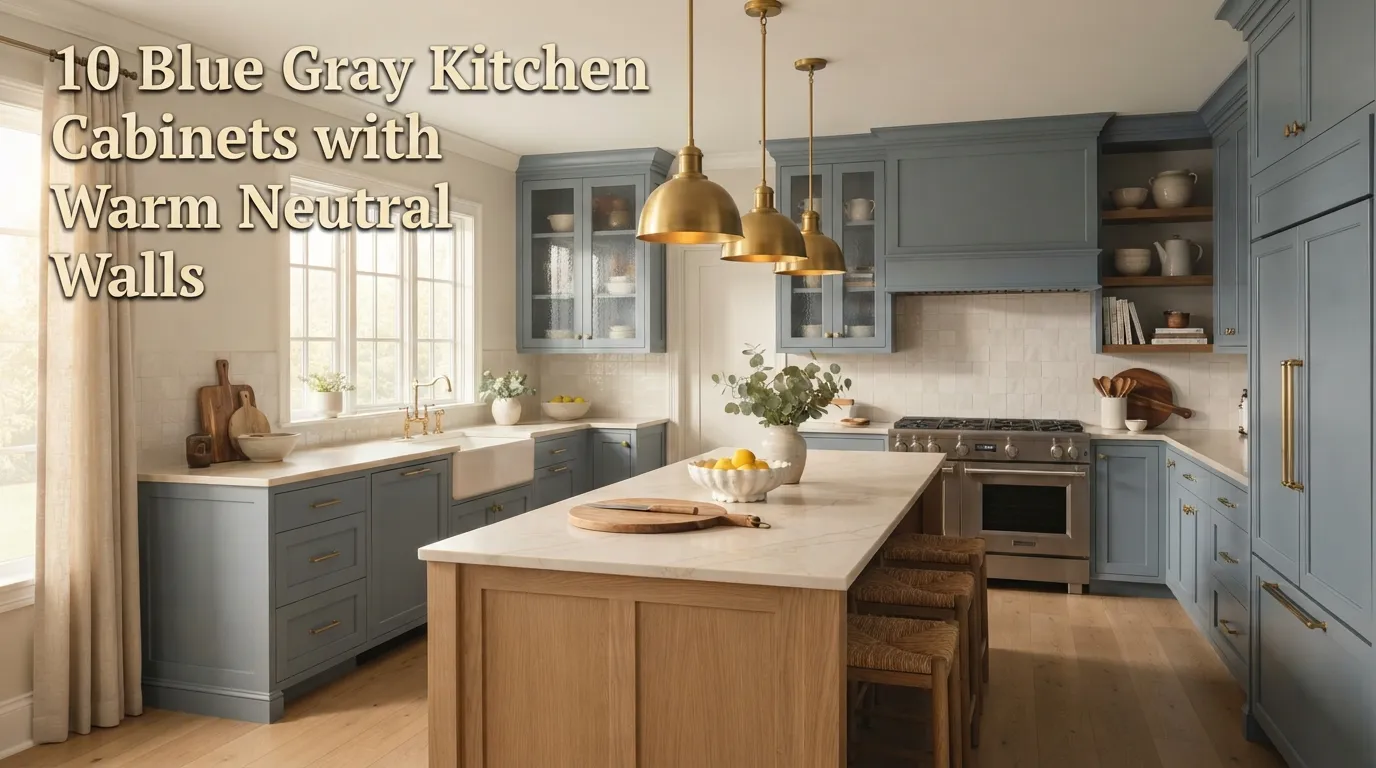
10 Blue Gray Kitchen Cabinets with Warm Neutral Walls
Blue gray kitchen cabinets have a special way of making a kitchen feel both sophisticated and comfortable.
The color sits somewhere between a classic blue and a soft neutral, which makes it surprisingly versatile. When paired with warm neutral walls, it becomes even more inviting. Cream, beige, taupe, warm white, greige, and soft sand tones can balance the cooler undertones of blue gray without making the kitchen feel overly coordinated.
This combination works particularly well for homeowners who want something more distinctive than an all-white kitchen but still want a palette that feels timeless.
The key is understanding the relationship between cool and warm tones.
Blue gray naturally brings a quieter, cooler quality to cabinetry. Warm neutral walls introduce softness and visual warmth. Together, they create contrast without the harshness that can sometimes happen when cool gray is paired with bright white.
I’ve noticed that the most successful kitchens using this palette don’t stop at cabinets and paint. They layer in natural wood, warm metals, stone, woven textures, and soft lighting to make the color combination feel intentional.
You can take the look in several directions.
Natural oak can make blue gray cabinets feel casual and organic. Brass hardware can make them feel more elegant. Marble or quartz countertops can create a classic appearance, while darker accents can give the kitchen a more modern edge.
Whether you’re updating an existing kitchen or planning a full renovation, these ideas can help you create a balanced space that feels welcoming during the day and cozy in the evening.
The goal isn’t simply to choose a beautiful cabinet color.
It’s to build a complete palette where every material works together.
Table of Contents
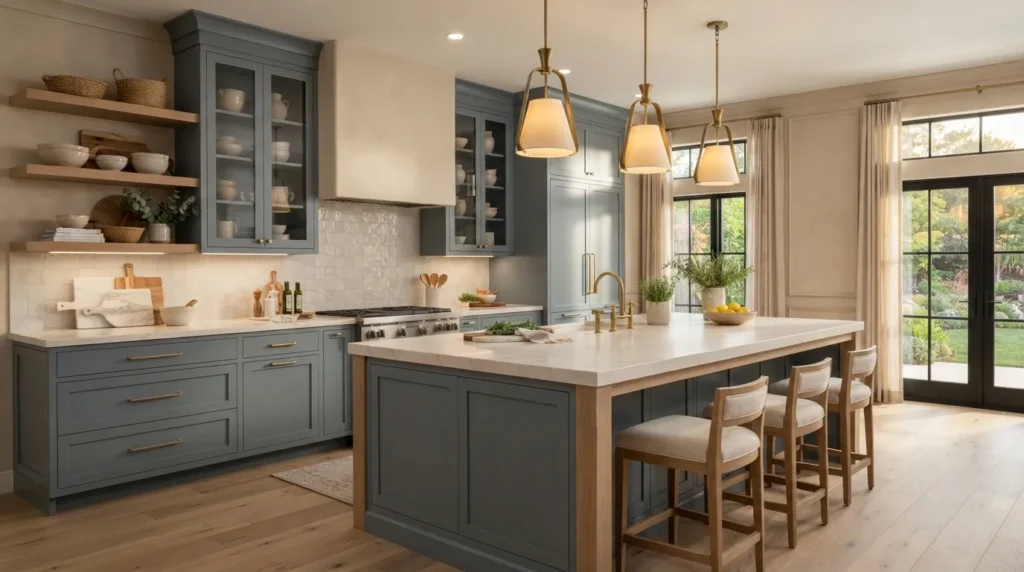
1. Creamy White Walls
Use warm white paint to soften blue gray cabinetry.
2. Beige Wall Balance
Create a welcoming contrast with classic beige tones.
3. Warm Greige Palette
Blend gray and beige for a sophisticated backdrop.
4. Taupe Contrast
Add depth with a richer neutral wall color.
5. Natural Oak Accents
Bring warmth through wood and organic textures.
6. Brass Hardware
Use warm metal to enhance the cabinet color.
7. Marble Countertops
Add elegant movement with softly veined surfaces.
8. Warm Lighting
Use layered illumination to make the palette inviting.
9. Neutral Backsplash
Create continuity with understated tile.
10. Layered Neutral Decor
Complete the kitchen with carefully chosen accessories.
1. Creamy White Walls
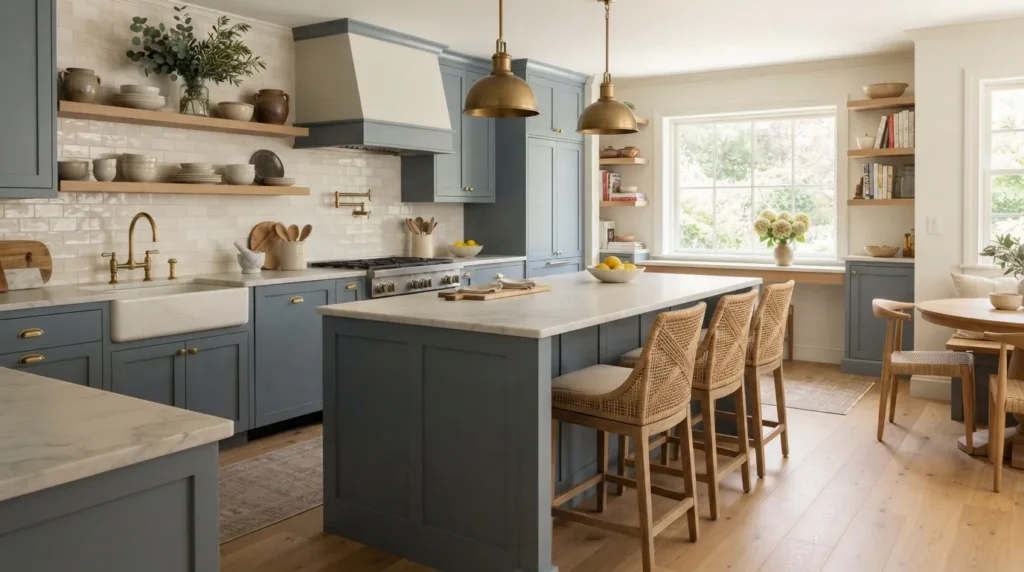
Quick Benefits
- Brightens the kitchen
- Softens blue gray cabinetry
- Creates a timeless appearance
- Works with many countertop colors
- Makes small kitchens feel more open
Why It Works
Warm white is one of the easiest wall colors to pair with blue gray cabinets.
The important distinction is choosing a white with a warm or balanced undertone rather than an icy white. A creamy white can visually bridge the cool cabinet color and warmer materials such as oak flooring or brass hardware.
This creates a softer transition between surfaces.
It also allows the cabinetry to remain the primary color statement without making the kitchen feel heavy.
For kitchens with limited natural light, warm white walls can be especially helpful because they reflect available light while maintaining a cozy appearance.
How To Style It
Choose a warm white for the walls and coordinate it with the undertones of the countertops.
Pair the cabinets with natural oak flooring or wood accents.
Aged brass hardware can introduce another layer of warmth.
For countertops, consider white quartz with subtle beige or gray veining.
Keep decorative accessories relatively neutral.
Cream ceramics, wooden cutting boards, woven baskets, and fresh greenery can create an easy transition between the blue gray cabinetry and warm walls.
2. Beige Wall Balance
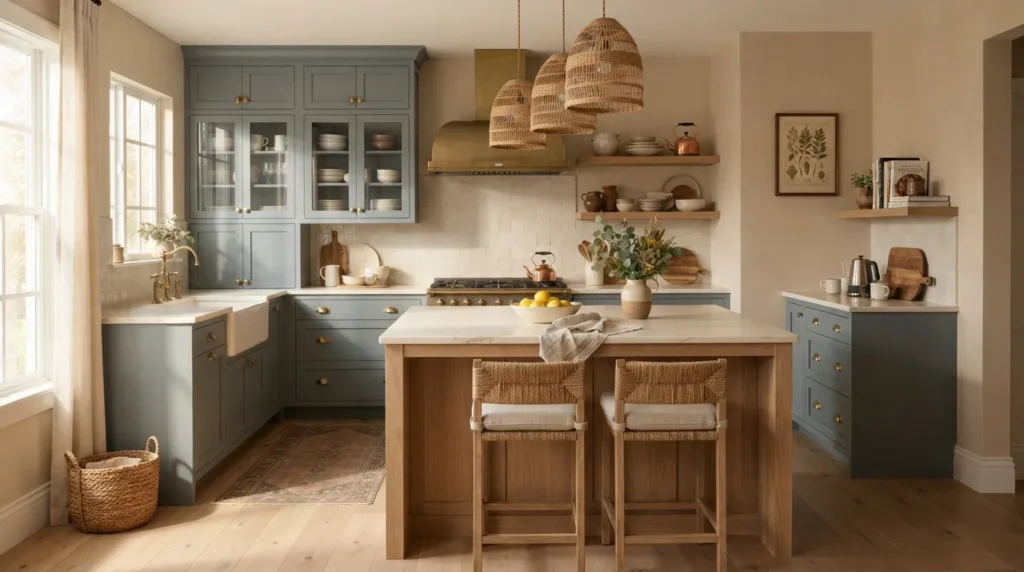
Quick Benefits
- Adds warmth
- Creates a cozy atmosphere
- Softens cool cabinet tones
- Works beautifully with wood
- Fits traditional and transitional kitchens
Why It Works
Beige can make blue gray cabinetry feel significantly warmer.
Instead of fighting the coolness of the cabinets, the wall color creates a visual counterbalance.
A soft beige is particularly attractive in kitchens with natural wood floors or traditional architecture because it reinforces the earthy qualities already present in the room.
The trick is avoiding beige with an overly yellow undertone if your blue gray cabinets have a muted, sophisticated finish.
A balanced beige usually creates a more timeless result.
How To Style It
Use soft beige on the main walls while keeping trim slightly lighter.
Add natural wood through stools, shelving, or cutting boards.
Choose countertops with cream, beige, or soft gray movement.
Woven pendant shades can reinforce the warmth.
For a traditional kitchen, use brushed brass or antique brass hardware.
For a modern look, combine beige walls with streamlined black accents and simple cabinet profiles.
3. Warm Greige Palette
Quick Benefits
- Feels sophisticated
- Bridges blue and beige
- Creates subtle contrast
- Works in modern kitchens
- Provides a flexible decorating backdrop
Why It Works
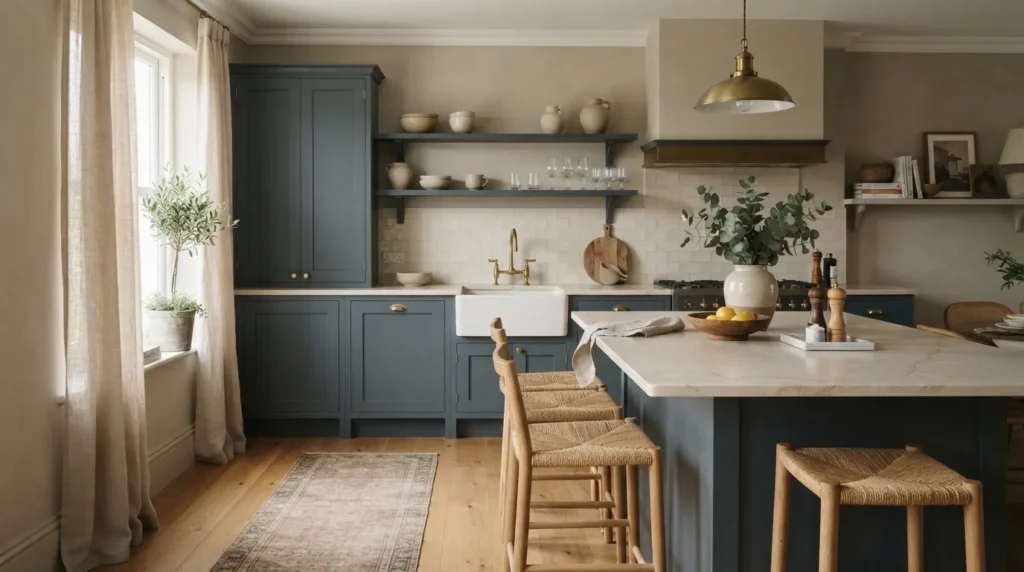
Greige is particularly useful when you want the walls to relate directly to both the gray and blue undertones of the cabinetry.
A warm greige contains enough beige to prevent the room from feeling cold while maintaining the understated quality of gray.
This creates a sophisticated tonal palette rather than a high-contrast kitchen.
It’s especially effective in transitional homes where modern cabinetry needs to coexist with traditional architectural details.
How To Style It
Choose a greige with a warm undertone.
Test paint samples beside the cabinets at different times of day because natural light can dramatically change how the color appears.
Pair the walls with white or cream countertops.
Introduce oak or walnut through furniture and accessories.
Use brushed brass or bronze hardware for warmth.
Keep the backsplash relatively quiet so the wall and cabinet colors remain the focus.
4. Taupe Contrast
Quick Benefits
- Adds visual depth
- Creates a sophisticated atmosphere
- Works beautifully with warm wood
- Makes cabinets feel richer
- Suitable for larger kitchens
Why It Works
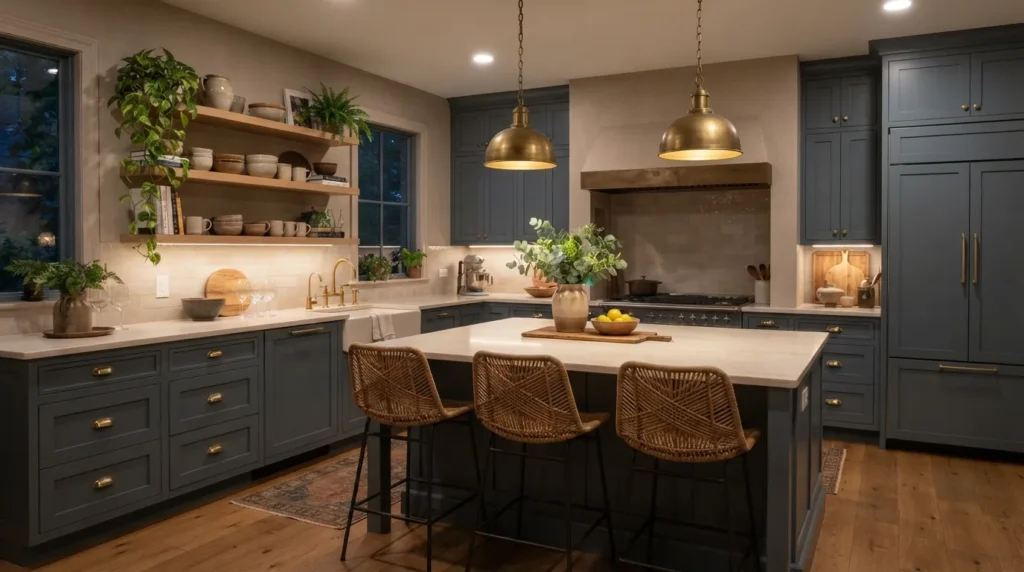
Taupe can create a slightly moodier version of the blue gray and warm-neutral combination.
Because taupe contains both gray and brown influences, it can connect the cabinet color with natural materials throughout the kitchen.
This works especially well when you want a kitchen that feels cozy rather than extremely bright.
The deeper wall tone can also make lighter countertops and cabinetry stand out beautifully.
How To Style It
Use taupe on walls where you have enough natural or layered artificial light.
Keep countertops lighter to maintain contrast.
Choose cream-colored backsplash tile.
Add warm oak shelves or a wood island.
Aged brass lighting can prevent the palette from feeling too muted.
Use cream textiles and natural woven accessories to soften the darker backdrop.
5. Natural Oak Accents
Quick Benefits
- Adds warmth
- Balances cool cabinetry
- Introduces natural texture
- Creates a relaxed atmosphere
- Works with many decorating styles
Why It Works
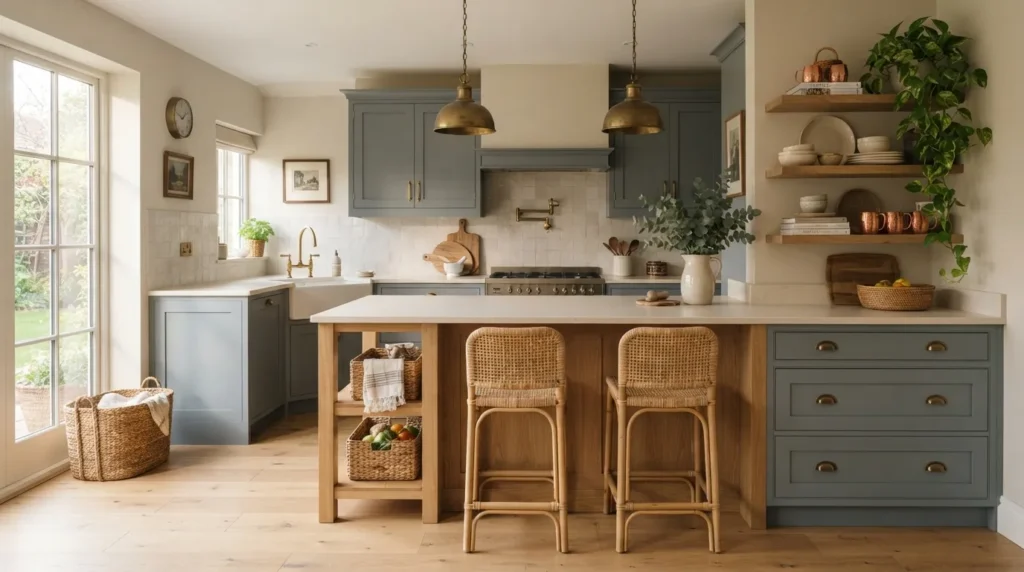
Wood is one of the most effective materials for balancing blue gray cabinets.
The warmth of natural oak creates immediate contrast without requiring another paint color.
It also adds texture.
Painted cabinetry is visually smooth and consistent, while wood grain introduces variation.
This is especially useful when the walls are already neutral.
Instead of adding another decorative color, you can create interest through material.
How To Style It
Use oak flooring, island stools, open shelving, cutting boards, or a freestanding furniture piece.
Choose a natural or lightly finished wood that allows the grain to remain visible.
Warm oak looks especially beautiful with cream walls and blue gray cabinetry.
Avoid introducing too many unrelated wood tones.
One primary wood finish plus smaller coordinated accents will usually look more intentional.
Add woven baskets or rattan accessories for another layer of natural texture.
6. Brass Hardware
Quick Benefits
- Adds warmth
- Creates elegant contrast
- Highlights cabinet color
- Works with traditional kitchens
- Easy to update
Why It Works
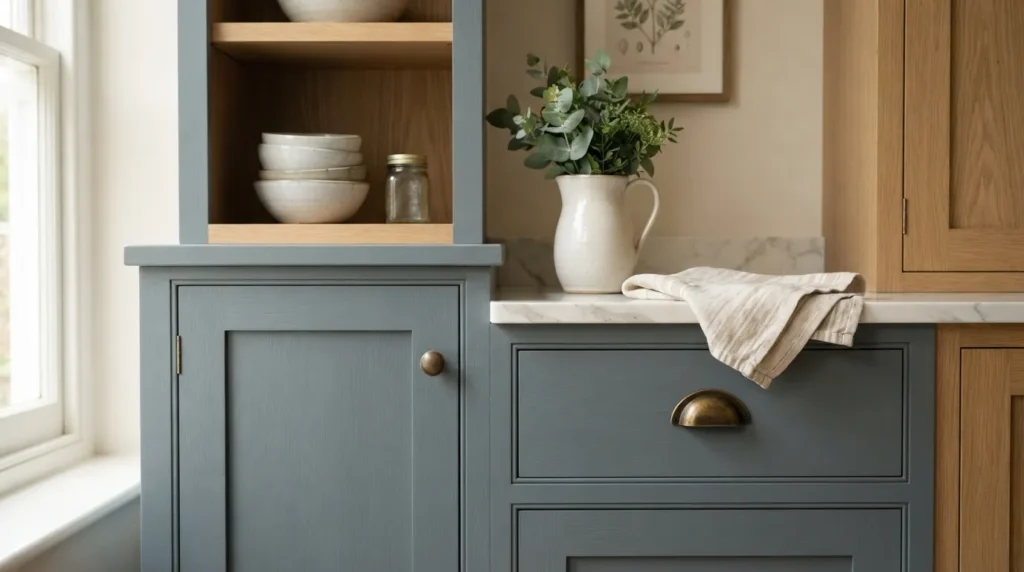
Blue gray and brass are a naturally attractive pairing.
The cool cabinet color gives the warm metal room to stand out.
At the same time, the brass visually connects with warm neutral walls, wood floors, and other earthy materials.
Aged brass is especially effective because it doesn’t look overly shiny.
It feels established and timeless.
Hardware can also be one of the easiest ways to update an existing kitchen without replacing the cabinets.
How To Style It
Choose knobs, pulls, or handles in aged brass, antique brass, or a warm brushed finish.
Repeat the metal in the faucet or pendant lighting.
Keep the hardware profile simple.
Cup pulls can reinforce a farmhouse or traditional aesthetic.
Long bar pulls can create a more contemporary appearance.
Avoid adding several unrelated metallic finishes unless the overall design has enough structure to support them.
7. Marble Countertops
Quick Benefits
- Adds elegance
- Creates visual movement
- Complements blue gray
- Works with warm neutrals
- Creates a classic finish
Why It Works
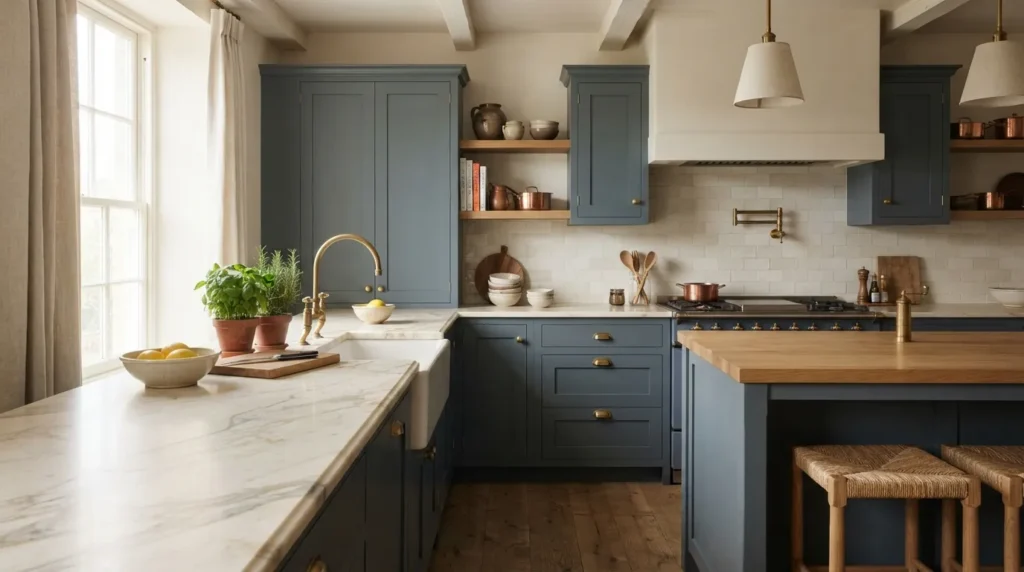
A softly veined countertop can connect all the colors in the kitchen.
Gray veining can echo the cabinet color, while warmer veins or a creamy background can relate to the walls.
This creates a visual bridge between the cool and warm elements.
You don’t necessarily need natural marble to achieve this look.
Quartz and porcelain surfaces can provide similar visual characteristics with different maintenance requirements.
How To Style It
Choose a countertop with subtle rather than extremely dramatic veining if you want a timeless appearance.
Pair it with warm neutral walls and simple backsplash tile.
Use wooden cutting boards and cream ceramics to reinforce the warmer tones.
Keep counters relatively open.
A single ceramic vase or bowl of fruit can provide enough decoration without competing with the stone.
8. Warm Lighting
Quick Benefits
- Enhances neutral colors
- Makes blue gray feel softer
- Improves evening atmosphere
- Highlights cabinet details
- Adds practical illumination
Why It Works
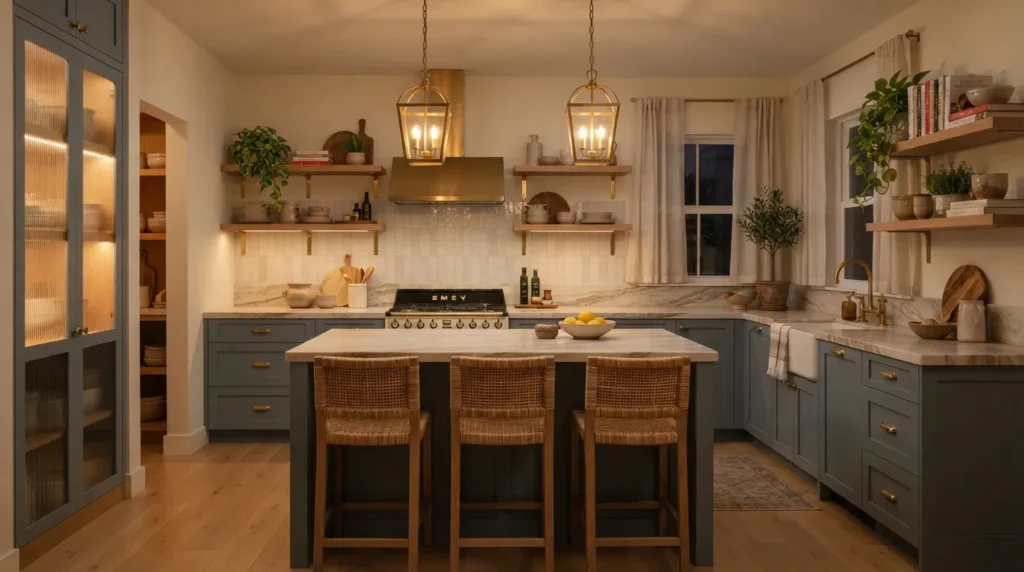
Lighting can completely change how blue gray cabinetry looks.
Cool lighting can emphasize blue undertones and make the kitchen feel sharper.
Warm lighting tends to soften the color and make the surrounding neutrals feel more inviting.
This is why lighting should be considered alongside paint and cabinet choices rather than as an afterthought.
Layered lighting also helps create a kitchen that works throughout the day.
How To Style It
Use warm-toned bulbs where appropriate.
Combine ceiling fixtures with under-cabinet lighting and decorative pendants.
Aged brass pendants can reinforce the warm palette.
For a modern kitchen, choose simple glass or metal fixtures.
For a traditional kitchen, lantern-style or vintage-inspired lighting can add character.
Make sure task areas receive sufficient illumination for food preparation.
9. Neutral Backsplash
Quick Benefits
- Creates visual continuity
- Prevents color overload
- Highlights blue gray cabinets
- Works with multiple wall colors
- Provides a timeless finish
Why It Works
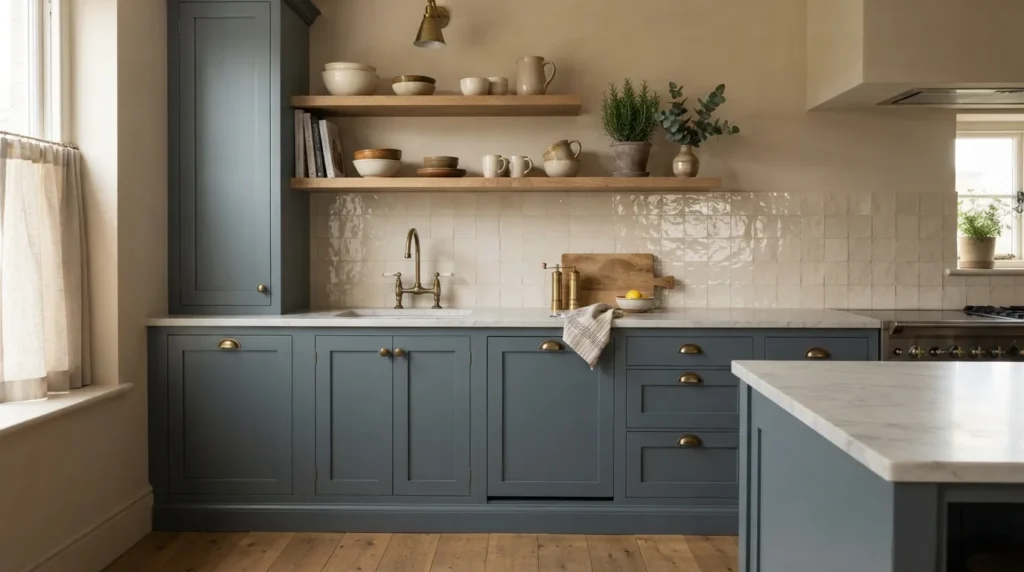
When both the cabinets and walls already contribute color, the backsplash doesn’t need to compete.
A neutral backsplash provides visual breathing room.
Cream subway tile, handmade-look ceramic, warm white zellige-inspired tile, or softly textured stone can all work beautifully.
The best option depends on the cabinet undertone and countertop.
How To Style It
Choose a backsplash that connects at least two existing colors.
For example, creamy tile can relate to warm walls and countertops.
Soft gray tile can connect with the cabinetry.
A subtle beige pattern can bridge the entire palette.
Keep grout color relatively close to the tile for a quieter appearance.
If you want stronger definition, use a contrasting grout carefully.
10. Layered Neutral Decor
Quick Benefits
- Completes the palette
- Adds personality
- Creates visual texture
- Makes the room feel lived-in
- Allows seasonal updates
Why It Works
The final layer of a successful kitchen isn’t another color.
It’s texture.
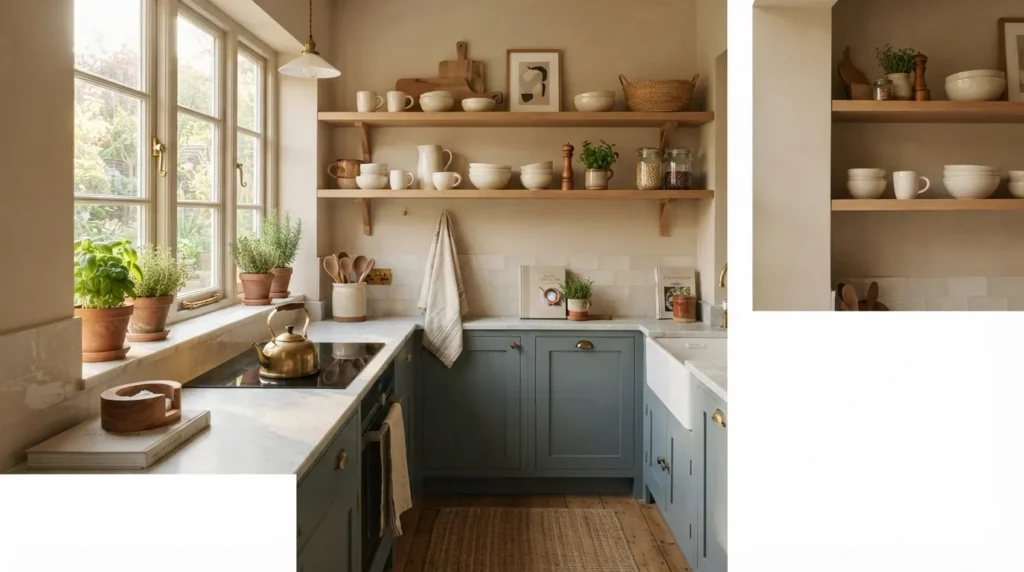
Natural wood, woven baskets, ceramic pottery, linen textiles, greenery, and neutral artwork can make the entire room feel more cohesive.
These materials help bridge the blue gray cabinetry and warm neutral walls.
They also prevent the kitchen from looking overly staged.
The goal is to create a room that feels beautiful while still looking like it is used every day.
How To Style It
Use cream ceramics on open shelving.
Display wooden cutting boards near the backsplash.
Add a woven basket to an island or pantry area.
Place fresh herbs near a sunny window.
Use neutral linen towels and a subtle runner.
Introduce a few black accents if the kitchen needs stronger definition.
Keep countertops functional by limiting decorative objects to a handful of intentional pieces.
Choosing The Right Warm Neutral Wall Color
The phrase “warm neutral” includes a surprisingly wide range of colors.
Warm whites create the brightest result.
Beige creates a traditional and cozy atmosphere.
Greige feels sophisticated and transitional.
Taupe creates a richer, slightly moodier appearance.
Cream works beautifully with traditional cabinetry and natural wood.
The right choice depends on your kitchen’s lighting.
A color that looks creamy in a north-facing room can appear significantly warmer in strong afternoon sunlight.
Always test paint samples on the actual walls.
Look at them in the morning, afternoon, and evening.
Also place the sample beside the blue gray cabinetry.
The cabinet undertone matters just as much as the paint color.
How To Keep Blue Gray Cabinets From Looking Cold
The easiest approach is to add warm materials.
Natural wood is particularly effective.
So are brass, bronze, cream textiles, warm stone, woven accessories, and warm lighting.
Avoid filling the entire kitchen with cool gray.
If your cabinets are blue gray, adding cool gray flooring, cool white walls, stainless steel everywhere, and blue-gray accessories can make the room feel overly cold.
Instead, create contrast.
Use warm walls.
Add wood.
Choose warmer lighting.
Introduce natural textures.
The result will feel more balanced and welcoming.
Blue Gray Kitchen Ideas For Small Spaces
Blue gray cabinets can work beautifully in smaller kitchens when the rest of the palette remains relatively light.
Choose a medium or soft blue gray rather than an extremely dark shade.
Use warm white or light greige walls.
Consider reflective surfaces such as glass pendants or polished hardware to bounce light around the room.
Keep countertops visually quiet.
Open shelving can also help break up a wall of cabinetry when appropriate.
Use wood sparingly but intentionally.
A natural oak shelf or small wooden breakfast counter can provide enough warmth without visually crowding the space.
FAQ
What wall color goes best with blue gray kitchen cabinets?
Warm white, cream, beige, greige, and soft taupe can all work beautifully with blue gray cabinets. The best choice depends on the cabinet’s undertone and the amount of natural light. Warm neutrals generally help soften the cooler qualities of blue gray.
Are blue gray kitchen cabinets still stylish?
Blue gray is a versatile cabinet color because it combines the familiarity of gray with the character of blue. It can work in traditional, farmhouse, coastal, transitional, and contemporary kitchens when paired with appropriate materials and finishes.
What color countertops work with blue gray cabinets?
White, cream, marble-look, soft gray, and warm quartz countertops can all complement blue gray cabinetry. Countertops with subtle veining are particularly useful because they can visually connect the cabinet color with warm neutral walls.
What hardware looks best with blue gray cabinets?
Aged brass, brushed brass, bronze, and certain black finishes can all work. Brass is especially effective when the walls, flooring, or other materials have warm undertones because it reinforces the overall balance of the room.
Can blue gray cabinets work with beige walls?
Yes. Beige walls can provide warmth that balances the cooler qualities of blue gray cabinetry. Choose a balanced beige rather than an extremely yellow shade, especially if the cabinets have a muted or sophisticated blue gray undertone.
What flooring looks good with blue gray cabinets?
Natural oak, warm wood, light stone, beige tile, and neutral luxury vinyl or porcelain flooring can all work. Warm wood is particularly effective because it introduces natural texture and counterbalances the cool cabinet color.
How do I make a blue gray kitchen feel warmer?
Add natural wood, warm neutral walls, aged brass, woven textures, cream textiles, warm countertop tones, and appropriately warm lighting. These elements can make blue gray cabinetry feel softer and more welcoming.
Conclusion
Blue gray cabinets offer a beautiful middle ground between classic neutrals and more expressive kitchen colors.
They can feel elegant, relaxed, modern, traditional, or farmhouse-inspired depending on what surrounds them.
Warm neutral walls are one of the best ways to make the color feel balanced.
From creamy white and beige to greige and taupe, the right wall color can soften the cabinetry while creating a cohesive foundation for the rest of the kitchen.
Then build from there.
Natural oak adds warmth.
Brass adds subtle elegance.
Marble or marble-look countertops provide movement.
Neutral backsplash tile keeps the room from feeling visually busy.
Warm lighting changes the atmosphere after sunset.
And carefully chosen decor gives the space personality.
If you’re updating an existing kitchen, you don’t necessarily need to change everything at once.
Start with the most visible elements.
A fresh wall color, new hardware, natural wood accessories, or improved lighting can completely change how blue gray cabinets feel.
For a full renovation, use the cabinet color as the starting point and build a restrained material palette around it.
The most successful result will be a kitchen that feels intentional but not overly matched.
Choose warmth, texture, and timeless materials, and your blue gray cabinetry can remain beautiful for years.
Related Articles
- 10 Blue Gray Kitchen Cabinets That Look Custom
- 10 Blue Gray Kitchen Cabinets with White Oak Floors
- 10 French Style Kitchen Ideas with Timeless White Decor
- 10 Modern Kitchen Ideas with Warm Natural Wood
- 10 Kitchen Decor Ideas for a Warm and Welcoming Home