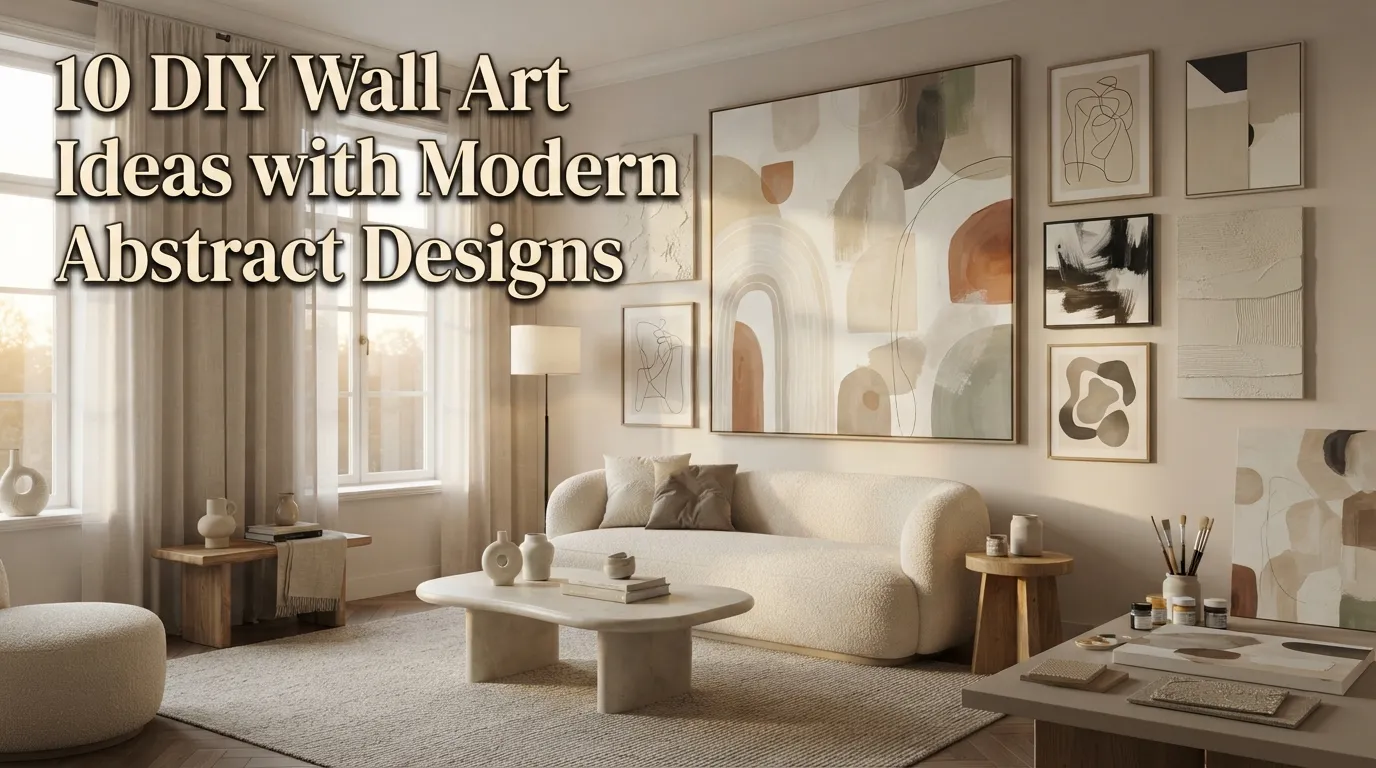
10 DIY Wall Art Ideas with Modern Abstract Designs
Modern abstract wall art can completely change the personality of a room without requiring an expensive designer piece.
One of the best things about abstract art is that it doesn’t need to represent a specific object. Instead, it can bring color, movement, texture, and visual balance to an otherwise plain wall. That makes it especially useful for homeowners who want their rooms to feel personal without committing to a highly specific decorating theme.
DIY projects also give you more freedom.
You can choose colors that already exist in your room, adjust the artwork to fit an unusually large wall, or create several coordinated pieces instead of purchasing one expensive statement print.
I’ve noticed that the most successful DIY abstract artwork usually looks intentional rather than overly complicated. A limited color palette, generous negative space, varied texture, and an oversized composition can make a relatively simple project feel surprisingly sophisticated.
You also don’t need advanced painting skills.
Some of the best designs rely on broad brushstrokes, geometric shapes, layered paper, plaster-like texture, fabric, or simple lines. The goal isn’t perfect technique. It’s creating an artwork that works with the architecture and furniture around it.
Before starting, look around your room and identify three or four colors already present. These might come from a rug, sofa, bedding, curtains, wood flooring, or decorative accessories. Repeating those colors in your artwork is one of the easiest ways to make a DIY piece look professionally coordinated.
From soft neutral compositions to bold geometric statements, these modern abstract wall art ideas offer plenty of inspiration for creating something beautiful, affordable, and completely your own.
Table of Contents
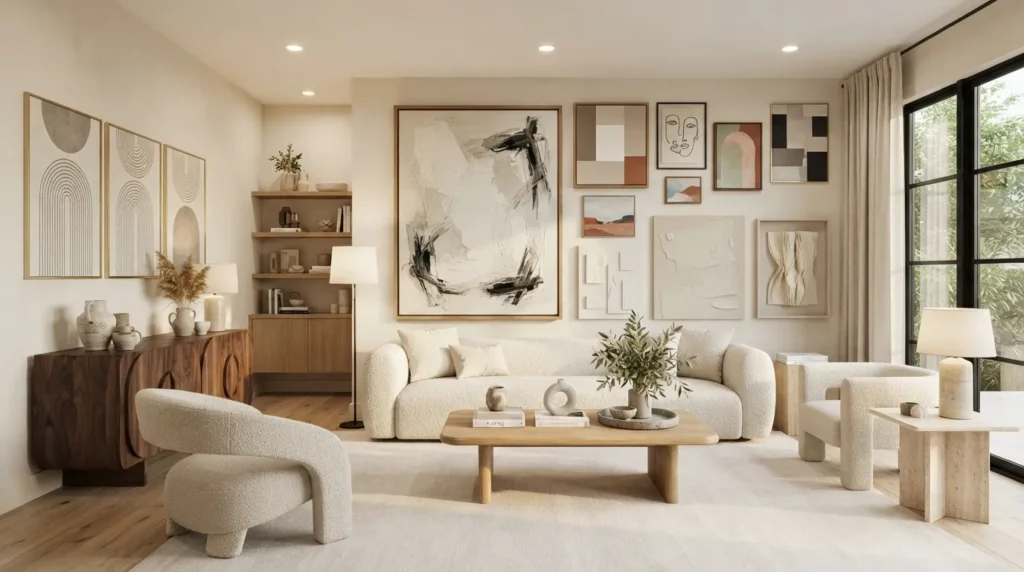
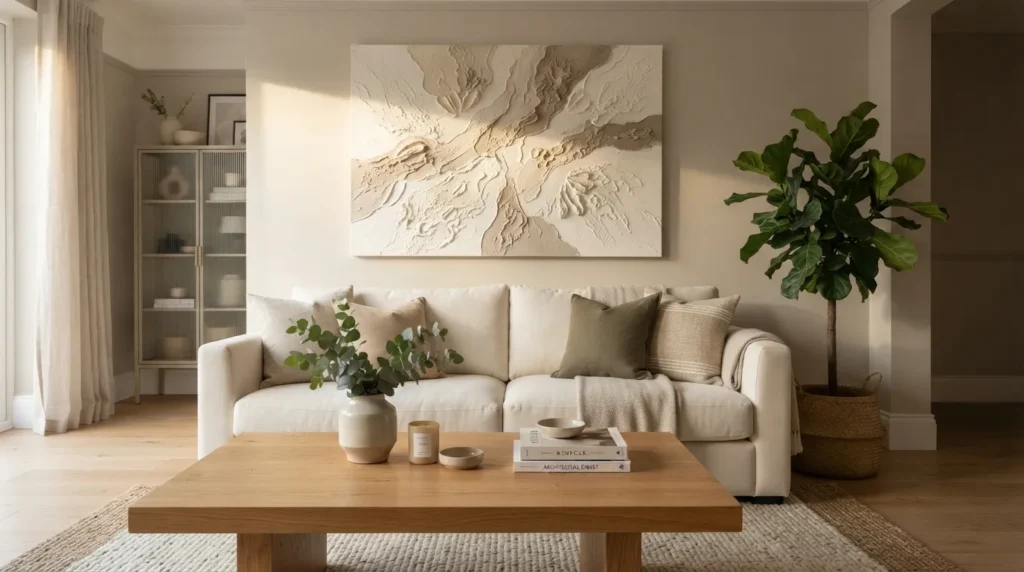
1. Neutral Texture Canvas
Create a sophisticated artwork using layered neutral textures.
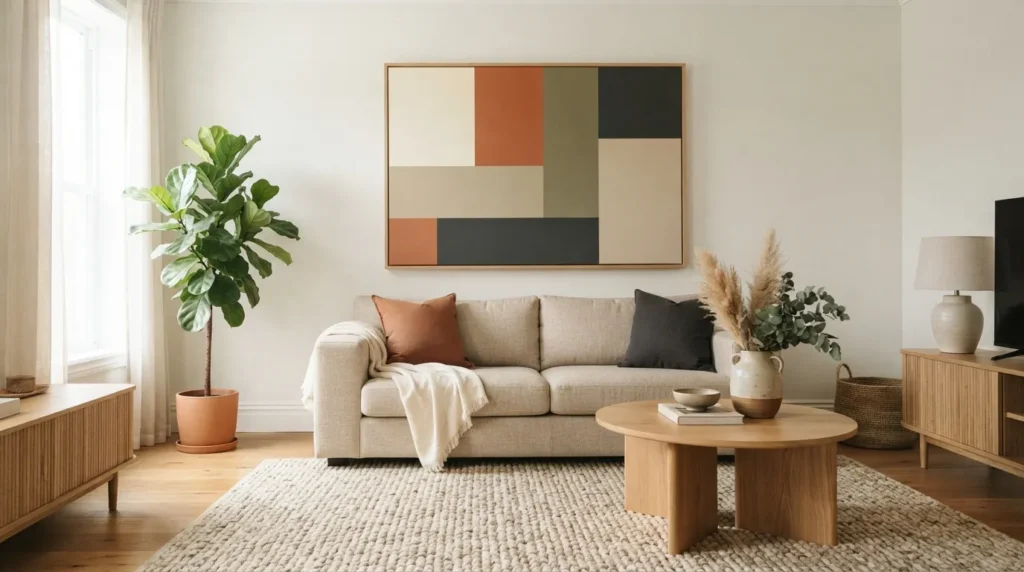
2. Geometric Color Blocks
Combine simple shapes for a contemporary statement.
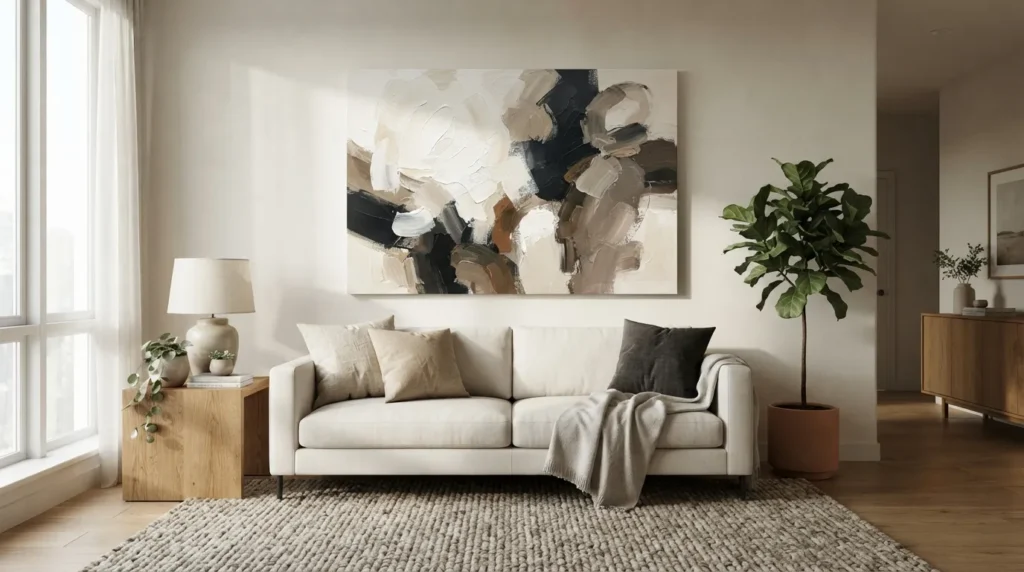
3. Oversized Brushstrokes
Use expressive strokes to create movement and depth.
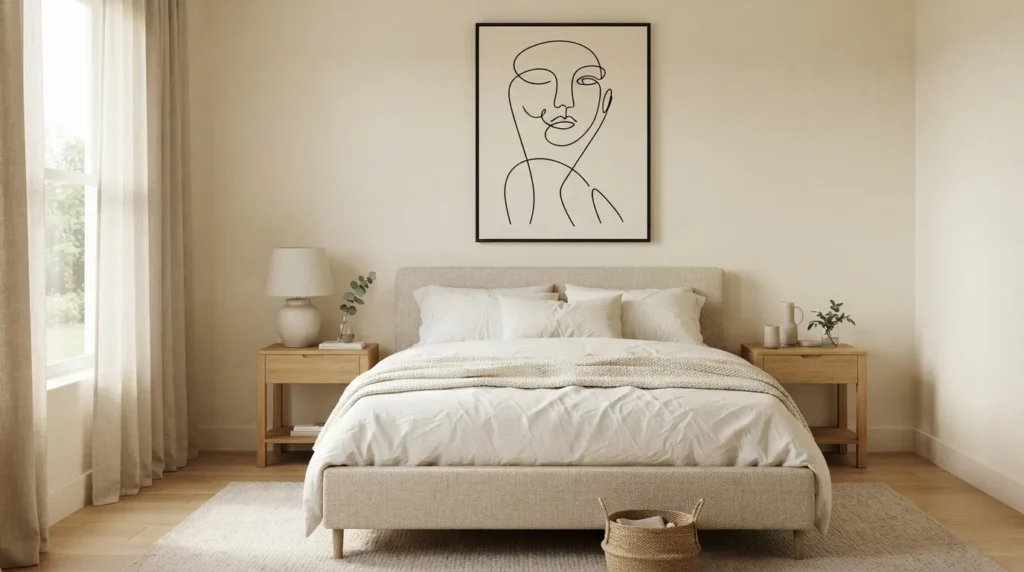
4. Minimal Line Art
Create elegant artwork with simple continuous lines.
5. Layered Paper Shapes
Build dimensional abstract art with cut paper.
6. Plaster Texture Art
Add architectural texture with a sculptural surface.
7. Soft Arch Composition
Use curved shapes for a calm modern aesthetic.
8. Metallic Accent Art
Introduce subtle shimmer with restrained metallic details.
9. Diptych Abstract Panels
Create two coordinated pieces for a larger wall.
10. Organic Abstract Forms
Combine flowing shapes with earthy modern colors.
1. Neutral Texture Canvas
Quick Benefits
- Easy to coordinate
- Works with many interiors
- Creates subtle dimension
- Looks sophisticated
- Ideal for bedrooms and living rooms
Why It Works
Neutral abstract artwork is one of the safest choices when you want a modern look without introducing a strong new color.
Instead of relying on bright pigments, the visual interest comes from texture and subtle tonal differences.
Cream, ivory, beige, taupe, warm gray, and soft brown can create a layered composition that feels calm while still giving a blank wall personality.
The texture is what keeps the artwork from looking like a plain painted canvas.
Different application techniques can create raised areas, soft ridges, or imperfect brush patterns that catch natural light throughout the day.
How To Style It
Start with a large stretched canvas and a neutral acrylic base.
Create texture with a suitable modeling paste or textured medium, following the product instructions.
Use a palette knife to create broad organic ridges.
Once dry, apply a second neutral shade selectively across the raised areas.
Keep the composition intentionally imperfect.
Hang the finished canvas above a sofa, console table, bed, or dining area.
Natural wood furniture and linen textiles can reinforce the warm modern aesthetic.
2. Geometric Color Blocks
Quick Benefits
- Creates a contemporary focal point
- Easy to customize
- Works with bold or muted colors
- Requires basic painting skills
- Looks excellent in pairs
Why It Works
Geometric abstract art works because it gives the eye clear visual structure.
Squares, rectangles, circles, arches, and angled shapes can be arranged into a composition that feels modern without needing complicated painting techniques.
The secret is controlling the palette.
Instead of using many unrelated colors, choose three to five shades that already appear in your room.
This allows the artwork to feel connected to the surrounding furniture instead of looking like a random decorative object.
How To Style It
Choose a canvas with a simple rectangular or square shape.
Sketch large geometric sections lightly with a pencil.
Use painter’s tape to create crisp boundaries where needed.
Try combinations such as warm white, terracotta, muted olive, charcoal, and beige.
For a softer room, use cream, taupe, dusty blue, and warm gray.
Leave some sections of the canvas exposed if you want a more minimalist result.
Frame the finished piece in natural oak or a slim black frame.
3. Oversized Brushstrokes
Quick Benefits
- Creates movement
- Looks expressive
- Easy to personalize
- Works well at large scale
- Can transform a blank wall quickly
Why It Works
You don’t need to create a recognizable image for artwork to feel impactful.
Large brushstrokes can create movement and visual rhythm without requiring precise painting skills.
The important part is scale.
Tiny brushstrokes on a large wall can disappear, while several broad strokes can create a strong focal point.
This style works particularly well in modern living rooms and open-plan spaces where artwork needs enough visual weight to hold its own against larger furniture.
How To Style It
Choose an oversized canvas.
Start with a soft neutral background.
Use a wide brush to create several broad strokes in complementary colors.
Try warm beige, muted black, cream, and earthy brown for an organic modern look.
Avoid filling every section.
Negative space can make the composition feel more sophisticated.
Hang the artwork where the large forms can be appreciated from across the room.
Pair it with simple furniture so the artwork remains the focal point.
4. Minimal Line Art
Quick Benefits
- Extremely simple
- Looks elegant
- Works in small spaces
- Easy to customize
- Complements minimalist decor
Why It Works
Minimal line art proves that abstract artwork doesn’t need to be complicated.
A few confident lines can create a sophisticated composition.
Continuous faces, abstract figures, botanical forms, or purely geometric lines can all work.
Black lines on warm white are particularly timeless.
You can also use dark brown, charcoal, or muted terracotta for a softer interpretation.
The key is allowing plenty of empty space.
How To Style It
Begin with a warm white or cream canvas.
Use a fine or medium artist brush with acrylic paint.
Sketch your composition lightly before painting if you want more control.
Keep the lines varied but intentional.
You can create one large piece or a set of three smaller canvases.
Natural wood frames work beautifully with this style.
Place the artwork above a nightstand, entryway console, reading chair, or minimalist sofa.
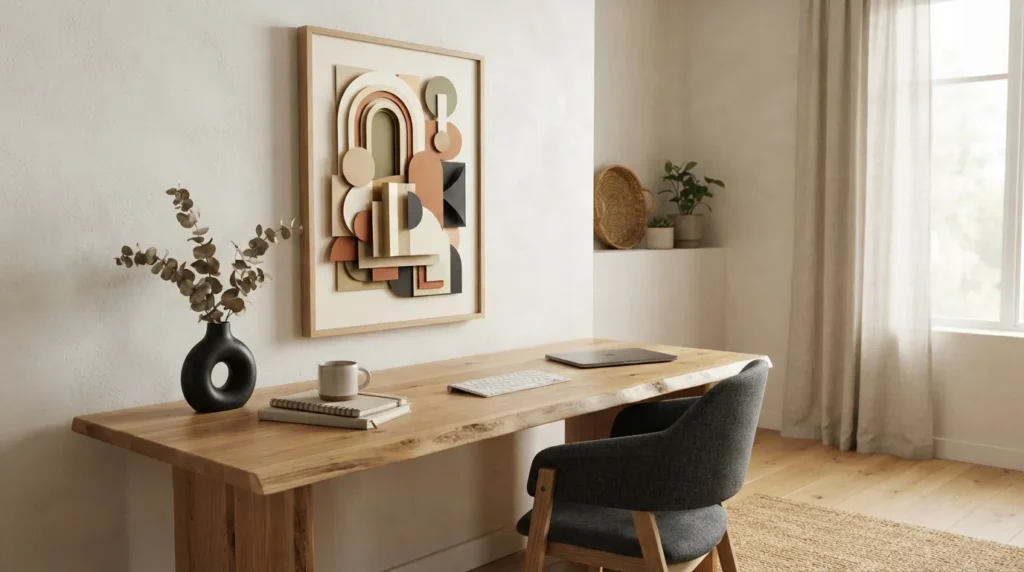
5. Layered Paper Shapes
Quick Benefits
- Affordable
- No advanced painting skills required
- Adds dimension
- Easy to customize
- Great for modern interiors
Why It Works
Paper can create surprisingly sophisticated abstract artwork when several shapes are layered.
Instead of painting everything onto one flat surface, you create subtle shadows between the layers.
This gives the piece dimension.
It also allows you to experiment with the composition before permanently attaching anything.
This method is particularly useful for renters or anyone who wants an inexpensive artwork project.
How To Style It
Choose heavyweight art paper in several coordinated colors.
Try cream, beige, muted olive, terracotta, and charcoal.
Cut circles, arches, rectangles, or irregular organic shapes.
Arrange them on a large background sheet until the composition feels balanced.
Layer selected pieces using dimensional adhesive or suitable mounting materials.
Frame the finished artwork behind glass or acrylic.
Use a wide mat if you want the piece to feel more gallery-inspired.
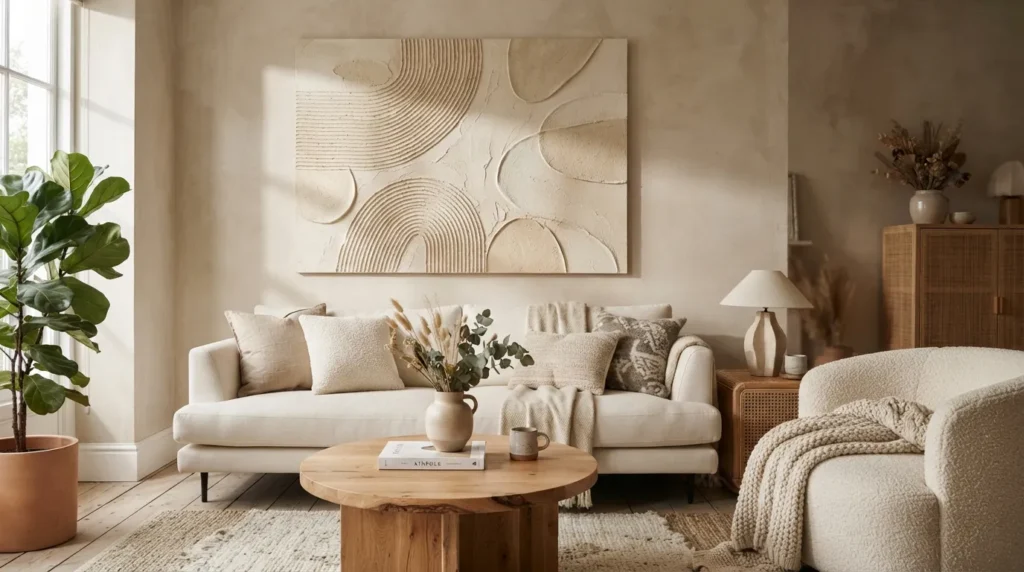
6. Plaster Texture Art
Quick Benefits
- Creates sculptural depth
- Looks architectural
- Works with neutral interiors
- Adds tactile interest
- Can become a statement piece
Why It Works
Textured wall art is particularly effective in neutral rooms because it creates interest without relying heavily on color.
A plaster-like finish gives the artwork a subtle sculptural quality.
Light changes throughout the day also create small shadows across the raised surface.
That means the artwork can look slightly different in morning sunlight, afternoon light, and evening illumination.
The result feels more like a handcrafted object than a conventional painting.
How To Style It
Use a sturdy canvas and an appropriate texture medium.
Create broad arcs, ridges, or abstract shapes with a palette knife.
Don’t aim for perfect symmetry.
Once the surface is completely dry, you can leave it natural or paint it in warm white, ivory, or beige.
A simple natural wood frame can emphasize the handcrafted appearance.
Hang it against a neutral wall where side lighting can reveal the texture.
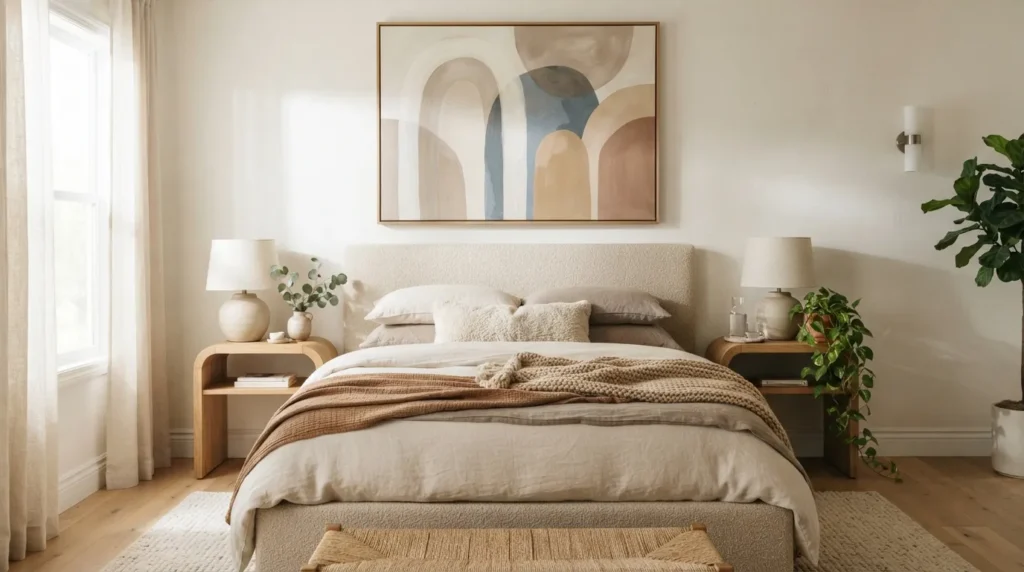
7. Soft Arch Composition
Quick Benefits
- Creates a calm appearance
- Adds curved visual movement
- Works with modern interiors
- Complements neutral palettes
- Easy to recreate
Why It Works
Arches and curved forms have become popular in contemporary interiors because they soften the straight lines commonly found in furniture and architecture.
An abstract artwork built around overlapping arches can introduce that same softness.
The composition can remain simple while still feeling visually interesting.
This is especially useful in bedrooms, living rooms, and entryways where you want artwork to contribute to a relaxed atmosphere.
How To Style It
Start with a warm cream canvas.
Paint overlapping arches in several tones such as beige, clay, muted olive, dusty blue, and warm gray.
Allow some shapes to overlap.
Keep the overall composition asymmetrical.
You can make the arches large and bold or small and repetitive.
Pair the artwork with curved furniture, rounded mirrors, boucle seating, or an arched floor lamp for visual repetition.
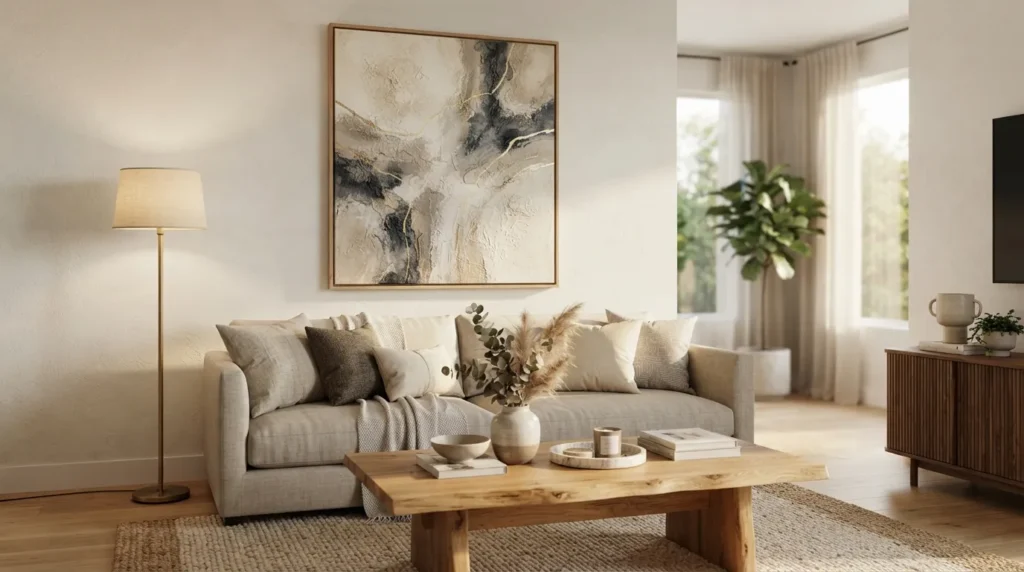
8. Metallic Accent Art
Quick Benefits
- Adds subtle luxury
- Works with neutral palettes
- Creates light reflection
- Easy to personalize
- Complements modern furniture
Why It Works
A small amount of metallic detail can make handmade artwork feel surprisingly elevated.
The trick is restraint.
Too much metallic paint can overwhelm an abstract composition.
A few thin lines, small geometric sections, or subtle brush marks can provide just enough reflection to catch the eye.
Warm metallic tones such as muted gold or bronze generally pair beautifully with neutral modern interiors.
How To Style It
Begin with a warm neutral background.
Create your main abstract composition using cream, taupe, beige, or charcoal.
Add metallic paint only after the base layers have dried.
Try thin geometric lines or small highlighted sections.
Pair the artwork with brass lighting, warm wood, and neutral textiles.
If your room already has several metallic elements, repeat the same general tone rather than introducing another competing finish.
9. Diptych Abstract Panels
Quick Benefits
- Works well over large furniture
- Creates visual balance
- Looks custom-made
- Allows simple compositions
- Easy to coordinate
Why It Works
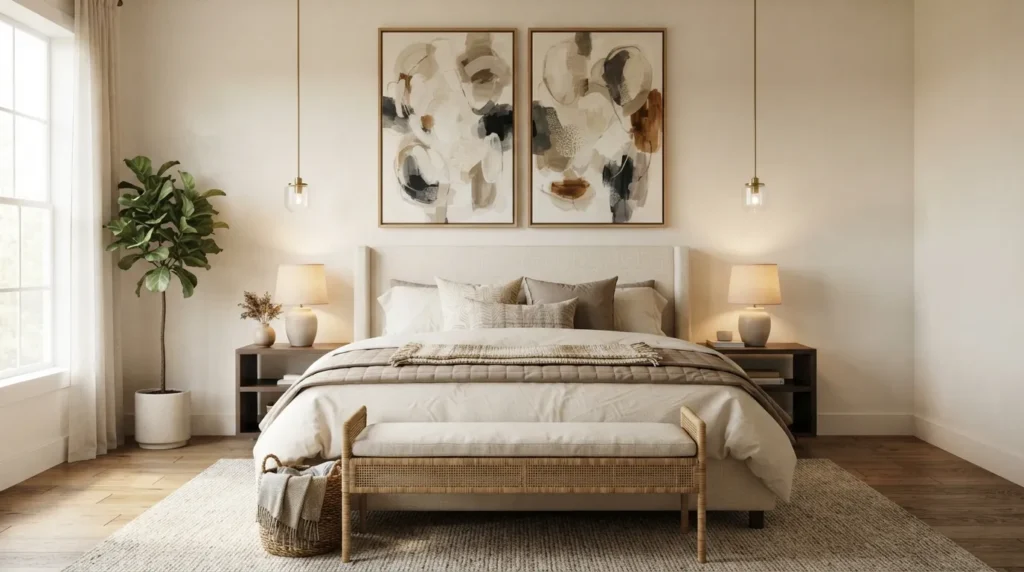
A diptych consists of two related artwork panels displayed together.
This format is particularly useful when one standard canvas feels too narrow for the wall.
Two pieces can visually span the width of a sofa, bed, sideboard, or dining console.
The artwork doesn’t need to be identical.
In fact, slight differences often make the arrangement feel more artistic.
How To Style It
Choose two canvases of the same size.
Use the same base color on both.
Create related abstract shapes, but allow each panel to have its own composition.
A neutral palette of ivory, beige, taupe, charcoal, and muted brown works beautifully.
Leave a small consistent gap between the canvases.
Hang the pair at a balanced height relative to the furniture below.
Natural oak frames can make the arrangement feel warm and contemporary.
10. Organic Abstract Forms
Quick Benefits
- Creates an earthy atmosphere
- Works with natural materials
- Adds visual softness
- Complements modern interiors
- Easy to personalize
Why It Works
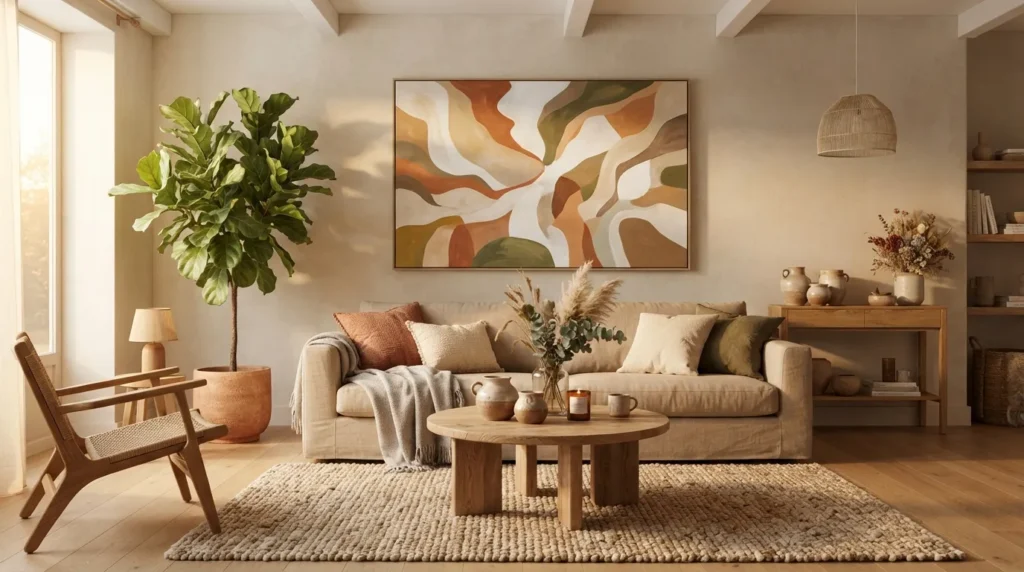
Organic abstract art uses flowing shapes rather than strict geometric patterns.
Think of soft curves, irregular circles, botanical-inspired forms, waves, and natural silhouettes.
This style is especially effective in homes filled with wood, stone, linen, woven textures, and greenery.
The artwork reinforces the organic feeling already present in the room.
It can also soften modern furniture that has strong straight lines.
How To Style It
Choose earthy shades such as sand, clay, olive, warm white, terracotta, and muted brown.
Create several overlapping irregular shapes.
Allow the edges to remain slightly imperfect.
Use a large canvas if the wall needs a substantial focal point.
Pair the artwork with natural wood furniture, woven baskets, linen curtains, and plants.
Keep surrounding accessories simple so the organic composition remains visually prominent.
How To Choose Colors For DIY Abstract Art
The easiest way to make handmade artwork look professionally coordinated is to borrow colors from the room.
Look at your sofa, rug, bedding, curtains, flooring, and decorative objects.
Choose one dominant neutral.
Add one or two secondary colors.
Then include a darker accent for contrast if needed.
For example:
Warm modern: cream + beige + walnut + charcoal.
Earthy: sand + terracotta + olive + brown.
Coastal: warm white + muted blue + sand + soft gray.
Minimalist: ivory + taupe + charcoal.
Soft feminine: cream + dusty rose + beige + muted brown.
Keeping the palette limited prevents the artwork from becoming visually chaotic.
Choosing The Right Canvas Size
Scale is just as important as color.
A small artwork can disappear above a large sofa.
For a wide piece of furniture, consider one oversized canvas or a horizontal arrangement of multiple pieces.
A diptych can work particularly well above a bed or sideboard.
Three smaller coordinated panels can fill a long hallway wall.
Before painting, use painter’s tape to outline the approximate artwork dimensions on the wall.
Stand back and look at it from different parts of the room.
This simple step can help you decide whether the finished piece needs to be larger or smaller.
How To Make DIY Art Look Expensive
Professional-looking artwork isn’t necessarily about expensive materials.
It’s about proportion, restraint, and presentation.
Use a limited color palette.
Create intentional negative space.
Choose a canvas large enough for the wall.
Avoid overcrowding the composition.
Use consistent framing when creating multiple pieces.
And pay attention to the hanging height.
A beautiful painting can still look awkward if it is too small or positioned too high.
For neutral artwork, texture is another powerful tool.
Raised surfaces, layered paper, subtle brush marks, and natural materials can give inexpensive projects a handcrafted quality.
FAQ
What is the easiest DIY abstract wall art?
Large brushstroke paintings and geometric color-block artwork are among the easiest approaches because they don’t require advanced painting skills. A limited palette and oversized canvas can make simple shapes feel intentional and contemporary.
How do I choose colors for abstract wall art?
Start with colors already present in your room. Pull shades from your rug, sofa, bedding, curtains, flooring, or accessories. Using existing colors helps the artwork feel connected to the overall interior rather than looking like a separate decorative object.
How can I make DIY wall art look expensive?
Use a restrained color palette, generous negative space, large-scale compositions, quality-looking frames, and carefully chosen textures. Proper scale and placement can make a simple DIY project appear much more sophisticated.
What type of canvas is best for abstract art?
A sturdy stretched canvas is a versatile option for acrylic paint and many texture techniques. Choose the canvas size based on the wall and surrounding furniture rather than choosing a size first and trying to find a place for it later.
Can beginners make modern abstract art?
Absolutely. Many modern abstract designs use simple shapes, broad brushstrokes, lines, or layered textures rather than realistic painting techniques. The focus is on composition, color, scale, and texture rather than creating a recognizable image.
What colors work best for modern abstract art?
There isn’t one correct palette. Neutral combinations such as cream, beige, taupe, charcoal, and brown are especially versatile. Earthy combinations with olive and terracotta work well in organic interiors, while muted blue can create a calmer contemporary look.
How large should DIY artwork be over a sofa?
The artwork or combined artwork arrangement should generally have enough visual width to relate to the furniture beneath it. Rather than relying on one exact measurement, use painter’s tape to test the approximate dimensions on the wall before creating the final piece.
Conclusion
DIY abstract wall art gives you an opportunity to decorate your home in a way that feels personal rather than mass-produced.
You don’t need to be a professional painter.
A few broad brushstrokes can become a dramatic focal point.
Simple geometric shapes can create a modern statement.
Textured canvas can bring architectural depth to a neutral room.
Layered paper can create dimension on a budget.
And organic forms can soften a contemporary space with natural movement.
The most important step is to consider the room before starting the artwork.
Look at the existing colors.
Notice the furniture scale.
Think about how much visual weight the wall needs.
Then choose a composition that supports those elements.
If you’re nervous about painting, start with a small canvas or paper composition. Once you find a color combination you love, scale it up.
And don’t be afraid of imperfection.
Modern abstract art often looks better when it feels handmade.
Start with one project, experiment with texture and shape, and allow the finished piece to reflect your personal style.
The result doesn’t have to look like something from a gallery.
It simply needs to make your room feel more complete.
Related Articles
- 10 DIY Wall Art Ideas Using Natural Textures
- 10 DIY Wall Art Ideas with Textured Canvas
- 10 Bedroom Wall Decor Ideas That Add Luxury on a Budget
- 10 Modern Living Room Ideas with Designer Finishes
- 10 DIY Home Decor Projects for a Stylish Space