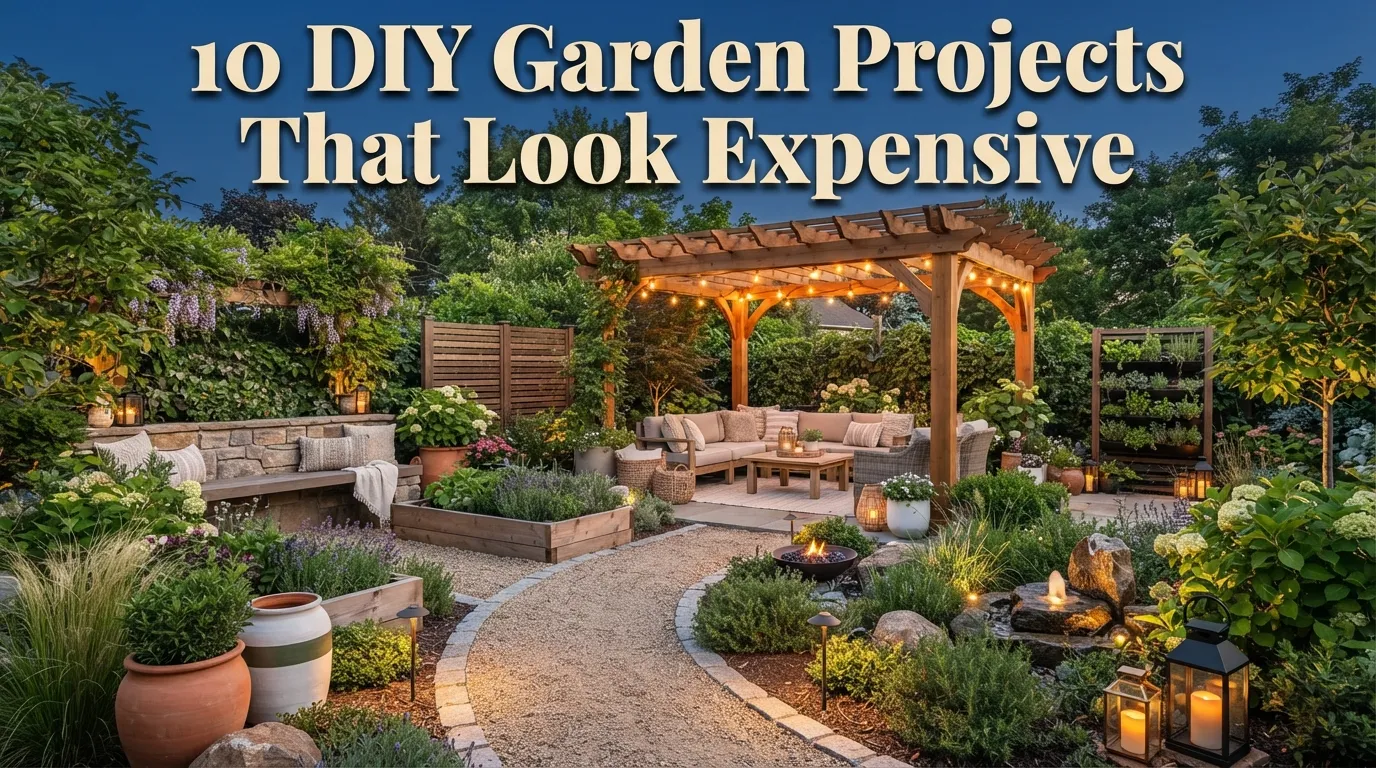
10 DIY Garden Projects That Look Expensive
A beautiful garden doesn’t have to come with a designer-sized budget.
Some of the most impressive outdoor spaces are built from surprisingly simple materials: leftover lumber, inexpensive pavers, thrifted containers, gravel, paint, concrete, and plants chosen for their shape and texture rather than their price tag.
The secret is in the presentation.
When a DIY garden project has clean lines, a limited color palette, thoughtful proportions, and a polished finish, it can look considerably more expensive than it actually was. That’s especially helpful if you’re trying to improve a backyard, patio, side yard, or small garden without committing to a major landscaping renovation.
I’ve noticed that the most successful budget-friendly garden projects usually have one thing in common: they solve a practical problem while also adding a strong visual feature. A simple raised planter can define a planting area. A gravel path can make an ordinary yard feel intentionally designed. A painted planter wall can turn an empty fence into a focal point.
You also don’t need to tackle all ten ideas.
Choose one project that addresses the biggest weakness in your outdoor space, then build around it. If the garden lacks structure, start with a path or raised beds. If it feels empty, create a vertical planting feature. If the patio looks unfinished, focus on a container grouping or outdoor lighting.
These ideas are designed for real homeowners and DIYers who want beautiful results without unnecessary complexity.
With careful measuring, durable materials, consistent finishes, and a little patience, you can create outdoor details that feel custom rather than homemade.
Table of Contents
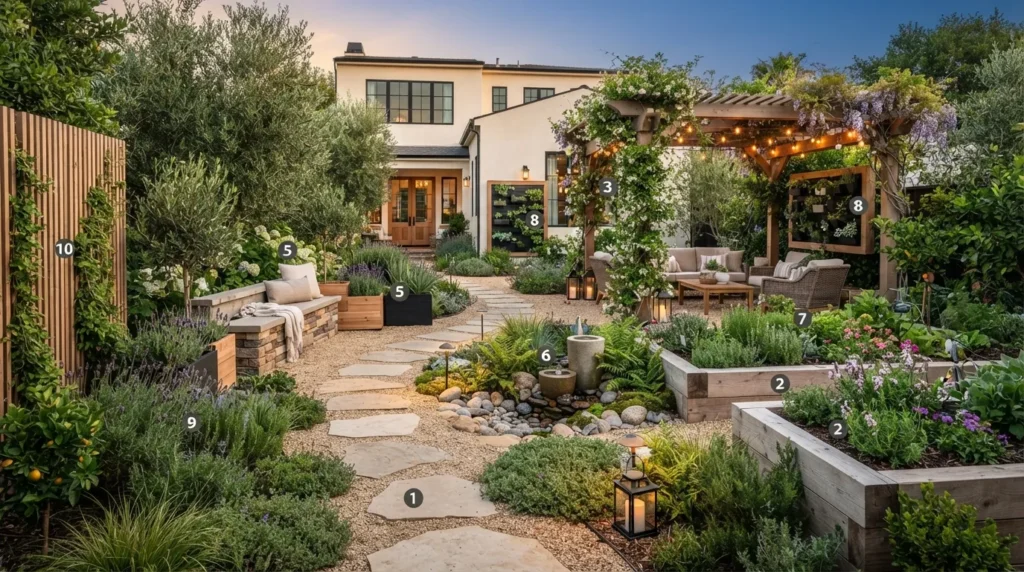
1. Raised Planter Beds
Create structured planting areas with a custom-built appearance.
2. Gravel Garden Paths
Give the yard a polished landscape-design feel.
3. Painted Planter Wall
Turn a blank fence into a decorative garden feature.
4. Modern Container Grouping
Create an upscale arrangement with inexpensive planters.
5. DIY Garden Bench
Add functional seating with simple construction.
6. Stepping Stone Path
Build an elegant walkway with affordable materials.
7. Vertical Herb Garden
Combine useful planting with attractive wall decor.
8. Outdoor Trellis Screen
Add height, privacy, and architectural interest.
9. Built-In Firewood Storage
Turn an ordinary storage need into a design feature.
10. Layered Garden Lighting
Use inexpensive lighting to create an evening atmosphere.
1. Raised Planter Beds
Quick Benefits
- Creates clear garden structure
- Improves planting organization
- Adds architectural detail
- Can be customized to your yard
- Makes inexpensive materials look intentional
Why It Works
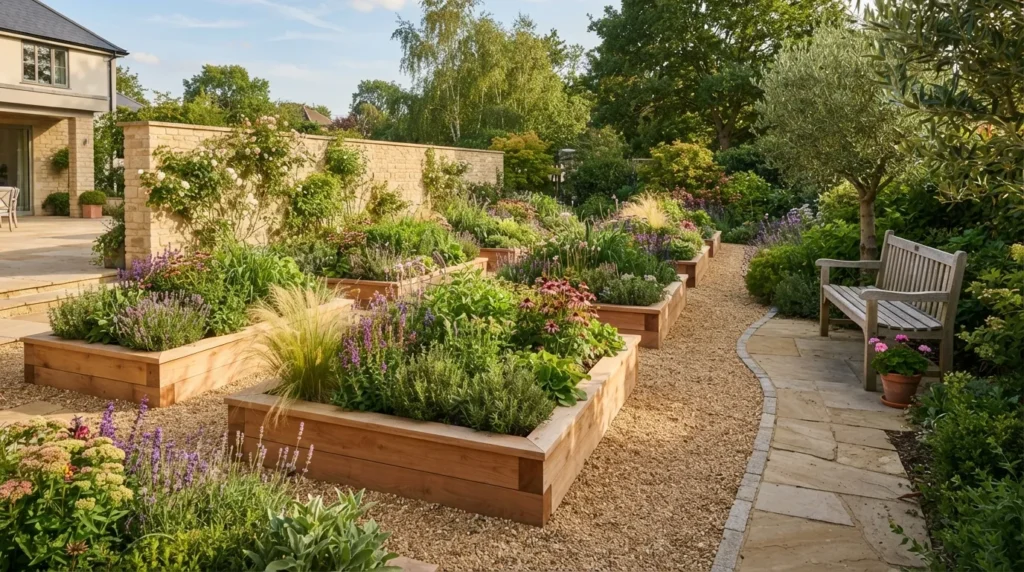
Raised beds are one of the easiest ways to give a backyard a professionally planned appearance.
Instead of having plants scattered throughout a large garden, raised beds create defined boundaries. Those clean lines make the landscape look organized and intentional.
The elevated structure also provides visual height, which is particularly useful when a yard feels flat.
You don’t need expensive materials to create the effect. Straight lumber, composite boards, brick, stone, or other suitable outdoor materials can produce a polished result when the construction is precise.
In my experience, the biggest difference between a basic raised bed and an expensive-looking one is attention to proportion and finishing details.
How To Style It
Keep the shape simple.
Rectangular beds are usually easier to construct and maintain than complicated curves.
Choose a material that coordinates with your home or existing hardscape.
For example, natural wood works beautifully with organic gardens, while painted or composite materials can suit modern yards.
Keep the edges straight and level.
Fill the beds with a deliberate combination of plants rather than randomly mixing everything together.
Repeating the same plant in groups can make even inexpensive landscaping look more sophisticated.
2. Gravel Garden Paths
Quick Benefits
- Creates strong landscape structure
- Costs less than many hardscape options
- Improves garden circulation
- Adds texture
- Can be installed in stages
Why It Works
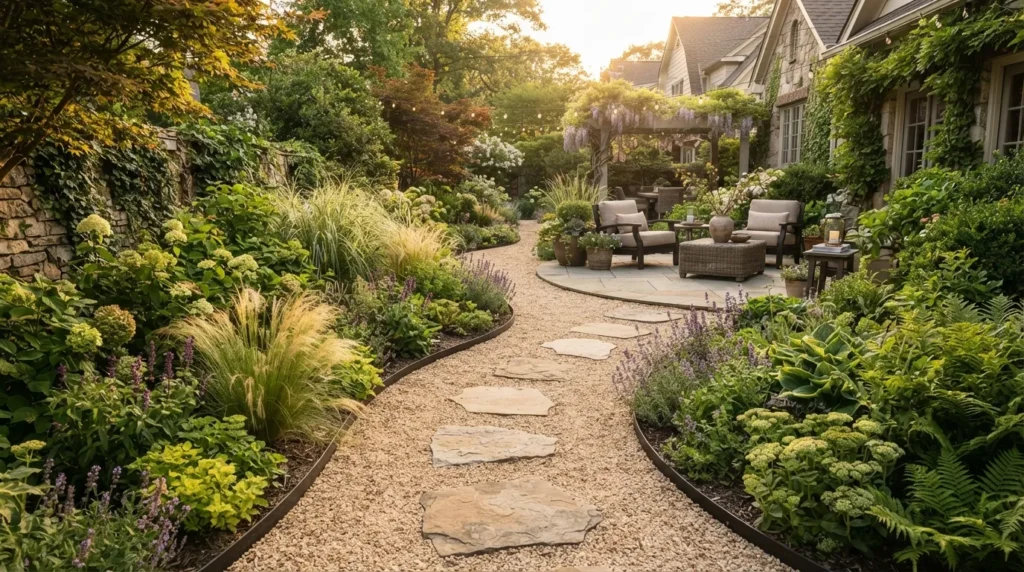
A garden path instantly makes an outdoor space feel more designed.
Without defined pathways, a backyard can look like a collection of plants. A simple gravel path gives the eye a route through the landscape and creates separate zones for planting, seating, and entertaining.
Gravel is especially useful for DIY projects because it doesn’t require the same level of construction as a poured walkway.
The finished appearance depends heavily on the edging and preparation.
How To Style It
Mark the path carefully before digging.
Remove vegetation and prepare a reasonably stable base according to the conditions of your site.
Use landscape edging to create crisp boundaries.
Choose one gravel color and keep it consistent.
Warm tan gravel can complement natural wood and cottage gardens, while gray gravel works well with modern landscaping.
Add larger stepping stones at intervals if you want a more structured appearance.
Plant low-growing greenery along the edges to soften the transition.
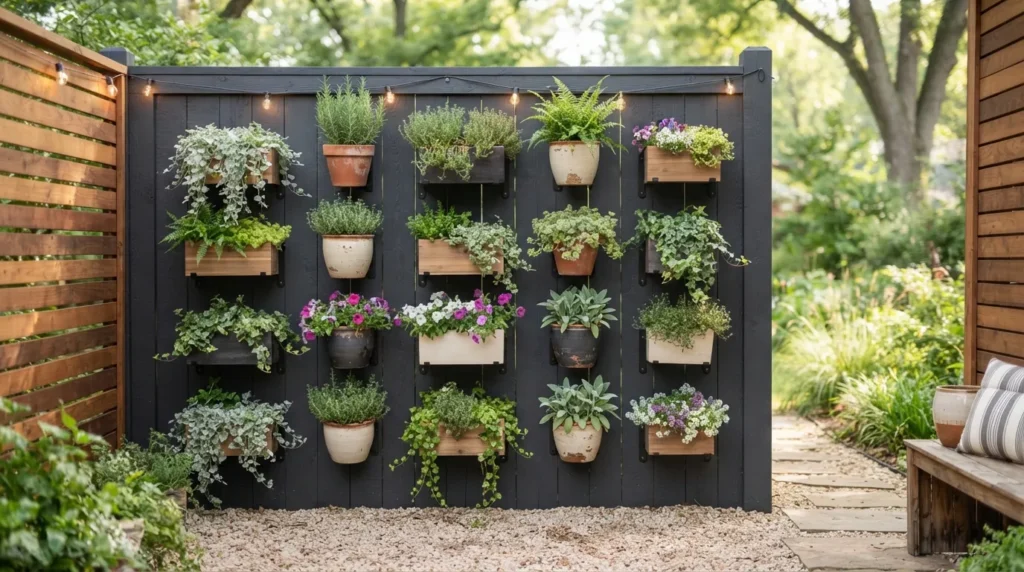
3. Painted Planter Wall
Quick Benefits
- Uses vertical space
- Refreshes an old fence
- Creates a focal point
- Works in small gardens
- Can be customized with paint
Why It Works
Fences are often overlooked when planning a garden.
A tired wooden fence can make an otherwise beautiful backyard feel unfinished.
Painting a section of the fence and adding coordinated planters can turn that blank surface into a feature wall.
This is particularly effective in small yards because it uses vertical space rather than consuming valuable floor area.
The finished effect can resemble a custom garden installation.
How To Style It
Start by choosing an exterior-rated paint or stain appropriate for your fence material and local conditions.
Deep charcoal, warm black, muted olive, and earthy brown can provide a sophisticated background for greenery.
Mount a series of simple planters in a clean arrangement.
Use matching containers for a more expensive-looking appearance.
Plant trailing greenery, herbs, ornamental grasses, or seasonal flowers depending on your climate.
Keep the layout symmetrical or intentionally geometric rather than randomly placing containers.
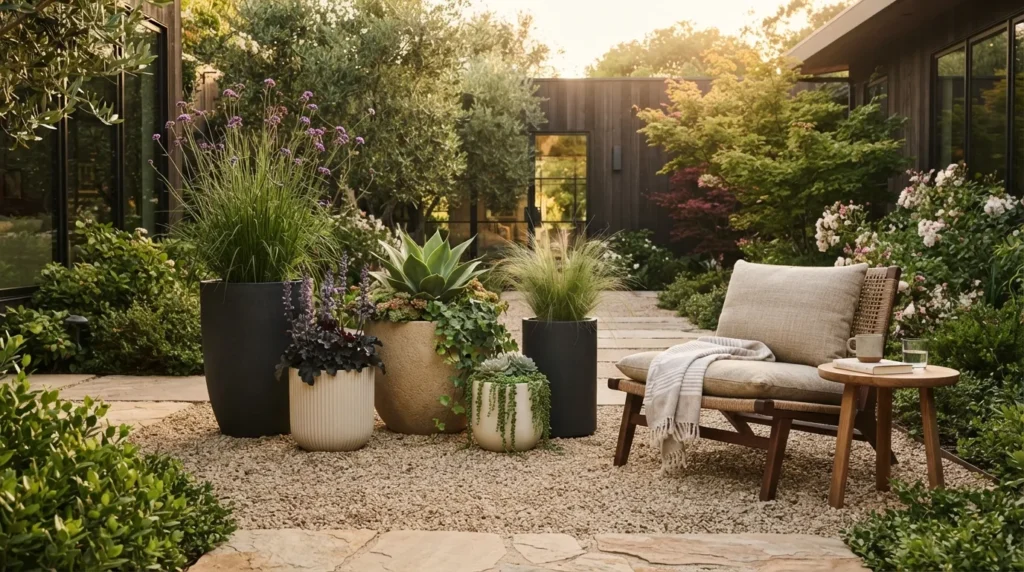
4. Modern Container Grouping
Quick Benefits
- Works on patios and balconies
- Easy to rearrange
- Creates instant visual impact
- Doesn’t require landscaping
- Can be changed seasonally
Why It Works
You don’t need a huge garden to create an expensive-looking outdoor display.
A carefully arranged group of containers can create the appearance of custom landscaping.
The secret is using different heights and consistent finishes.
Instead of placing ten unrelated pots around the patio, create one intentional composition.
This makes the area feel more like an outdoor room.
How To Style It
Choose three to five containers in complementary shapes.
Use different heights rather than making every pot the same size.
Stick with a limited color palette such as charcoal, cream, terracotta, or stone.
Then vary the plants.
Combine a taller architectural plant, a medium flowering plant, and a trailing variety.
Leave enough space between containers to keep the arrangement visually clean.
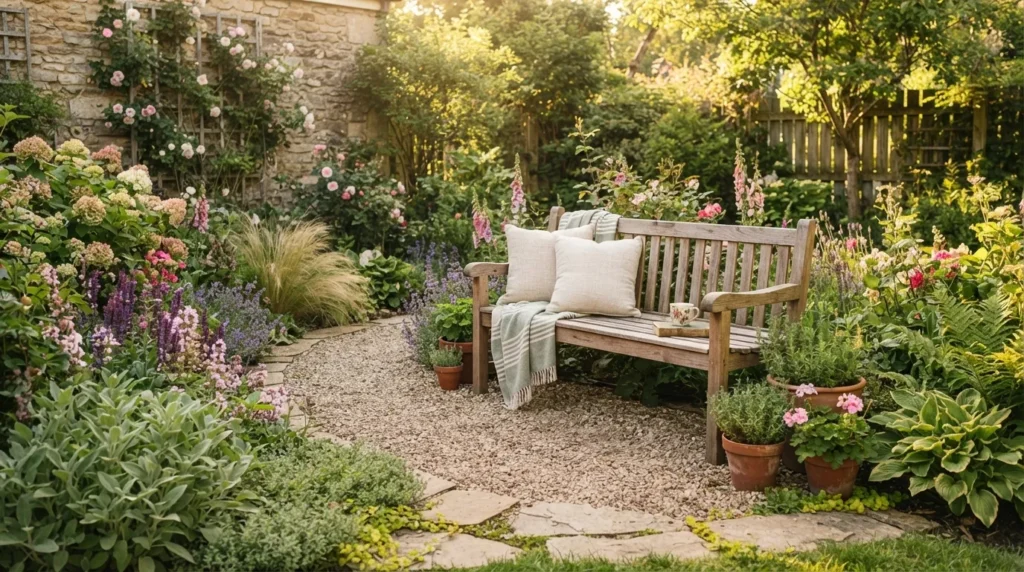
5. DIY Garden Bench
Quick Benefits
- Adds useful seating
- Creates a garden destination
- Can be customized
- Works with simple materials
- Makes the garden feel finished
Why It Works
A garden can look beautiful but still feel incomplete if there isn’t anywhere comfortable to sit.
A DIY bench creates a destination within the landscape.
It can also make a garden feel more expensive because it introduces a piece of outdoor furniture that visually defines the space.
You don’t need an elaborate design.
A simple bench with clean lines can look surprisingly sophisticated when it is well proportioned and properly finished.
How To Style It
Build or repurpose a sturdy outdoor bench using materials appropriate for outdoor conditions.
Paint it in charcoal, warm white, muted green, or another color that works with your home’s exterior.
Place it beneath a tree, along a garden path, or against a planting bed.
Add one or two outdoor-rated cushions for comfort.
Surround the bench with plants rather than placing it in the middle of an empty lawn.
That creates a cozy garden nook.
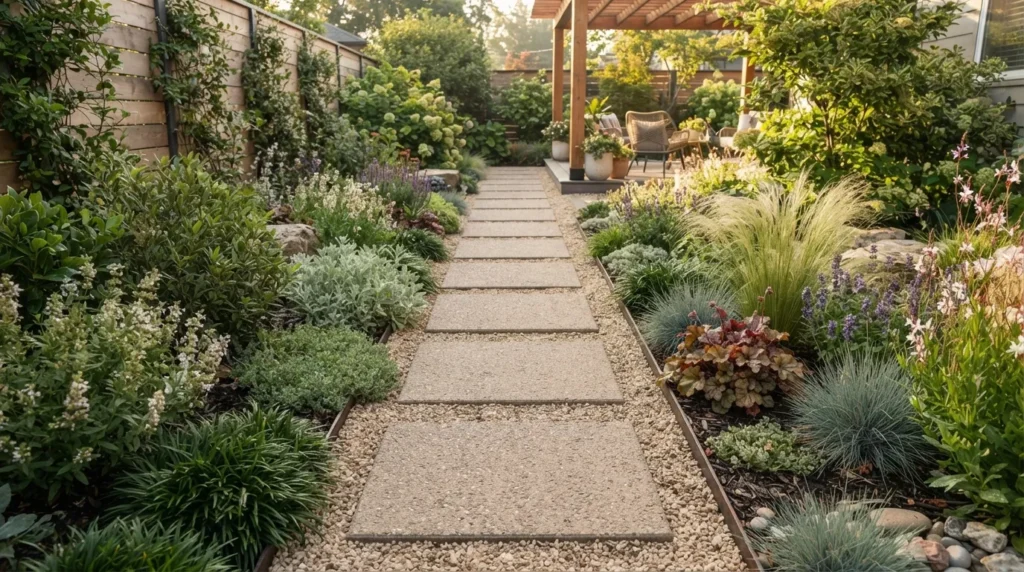
6. Stepping Stone Path
Quick Benefits
- Creates a custom walkway
- Requires fewer materials than a full path
- Adds garden structure
- Can be installed gradually
- Works in small spaces
Why It Works
Stepping stones create rhythm.
When repeated across grass, gravel, or groundcover, they naturally guide the eye through the garden.
Large-format stones often create a more sophisticated appearance than many small pieces.
The spacing also matters.
A comfortable walking path should have stones positioned according to the natural stride of the people who will use it.
How To Style It
Choose stones with similar colors and thicknesses.
Lay them out before permanently positioning them.
Use a consistent visual rhythm while allowing the path to follow the natural movement of the yard.
Surround the stones with gravel, lawn, or low-growing plants.
For a modern appearance, choose large rectangular concrete pavers.
For an organic garden, irregular natural stone can work beautifully.
7. Vertical Herb Garden
Quick Benefits
- Saves ground space
- Adds useful greenery
- Creates a decorative feature
- Works on patios
- Makes gardening accessible
Why It Works
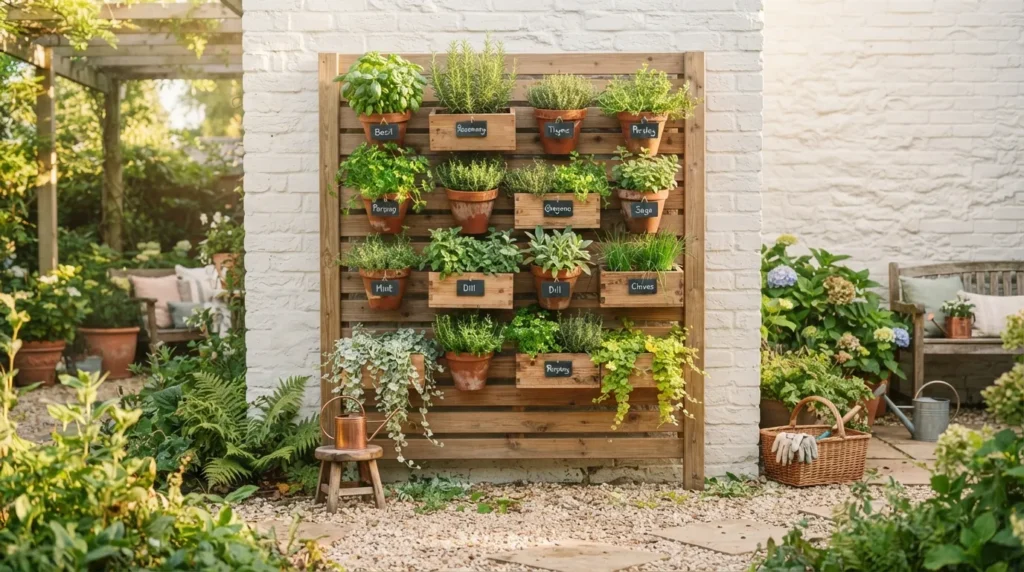
A vertical herb garden combines practicality with visual design.
Instead of hiding herbs in a corner, you can turn them into a decorative wall feature.
The repetition of containers creates a structured pattern, while the greenery softens the hard surface behind it.
This works particularly well in small yards, patios, and kitchens with outdoor access.
How To Style It
Use a wooden frame, wall-mounted planter system, or sturdy vertical structure appropriate for outdoor use.
Choose containers in a consistent finish.
Label herbs subtly if desired.
Basil, thyme, rosemary, mint, parsley, and chives can be attractive as well as useful, but choose plants suited to your climate and growing conditions.
Arrange taller herbs toward the upper or rear portion of the display and trailing varieties where they can naturally spill over.
8. Outdoor Trellis Screen
Quick Benefits
- Adds vertical height
- Creates privacy
- Supports climbing plants
- Defines outdoor rooms
- Adds architectural interest
Why It Works
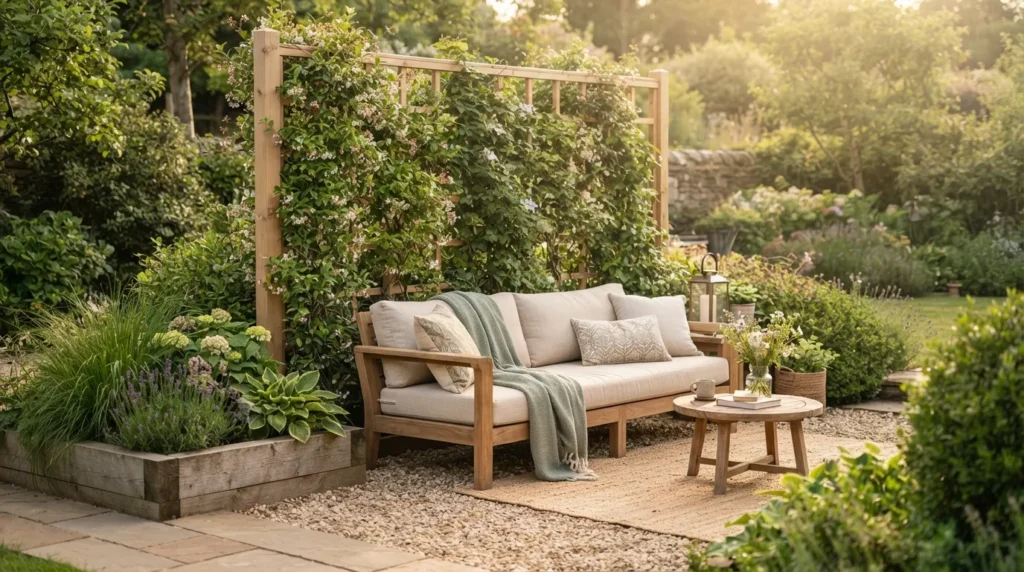
A trellis can make a simple backyard feel much more intentional.
It introduces vertical structure, which is often missing from flat landscapes.
A trellis can also divide an outdoor area into zones without constructing a permanent wall.
As climbing plants mature, the structure becomes even more integrated into the landscape.
How To Style It
Use cedar, treated outdoor lumber, metal, or another appropriate material depending on the design and local conditions.
Paint or stain the structure to coordinate with the house.
Place it behind a seating area or along a property edge where appropriate.
Add climbing plants suited to your climate.
Make sure the trellis is properly anchored and designed to support the mature plant weight.
A simple rectangular grid often looks more expensive than an overly decorative pattern.
9. Built-In Firewood Storage
Quick Benefits
- Adds practical storage
- Keeps firewood organized
- Creates architectural structure
- Works beside outdoor seating
- Can become a design feature
Why It Works
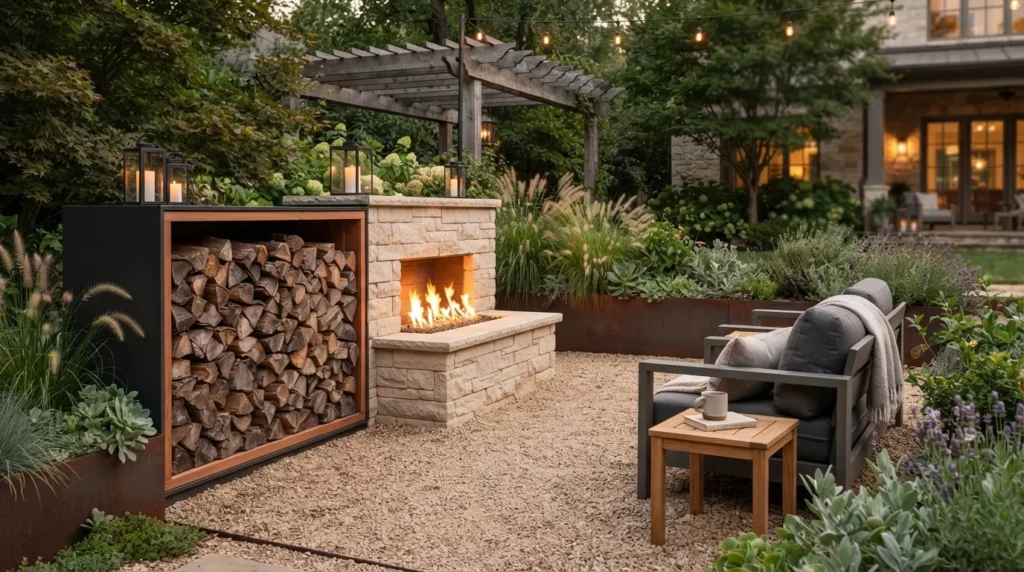
Storage can become part of the landscaping instead of something you try to hide.
A simple built-in-style firewood rack can frame an outdoor fireplace or fire pit while keeping logs neatly organized.
The key is repetition.
When the storage is aligned with nearby furniture or hardscape, it looks like an intentional part of the outdoor design.
How To Style It
Build a sturdy rack from appropriate outdoor materials and position it where ventilation and local safety requirements allow.
Use clean rectangular lines.
Keep the firewood stacked neatly.
Pair the rack with stone, concrete, brick, or wood elements already present in the garden.
If you’re building around a fire feature, maintain all required clearances and follow the manufacturer’s instructions and local fire regulations.
The finished result should prioritize safety first and aesthetics second.
10. Layered Garden Lighting
Quick Benefits
- Extends outdoor usability
- Highlights landscaping
- Creates evening atmosphere
- Adds visual depth
- Makes DIY projects stand out
Why It Works
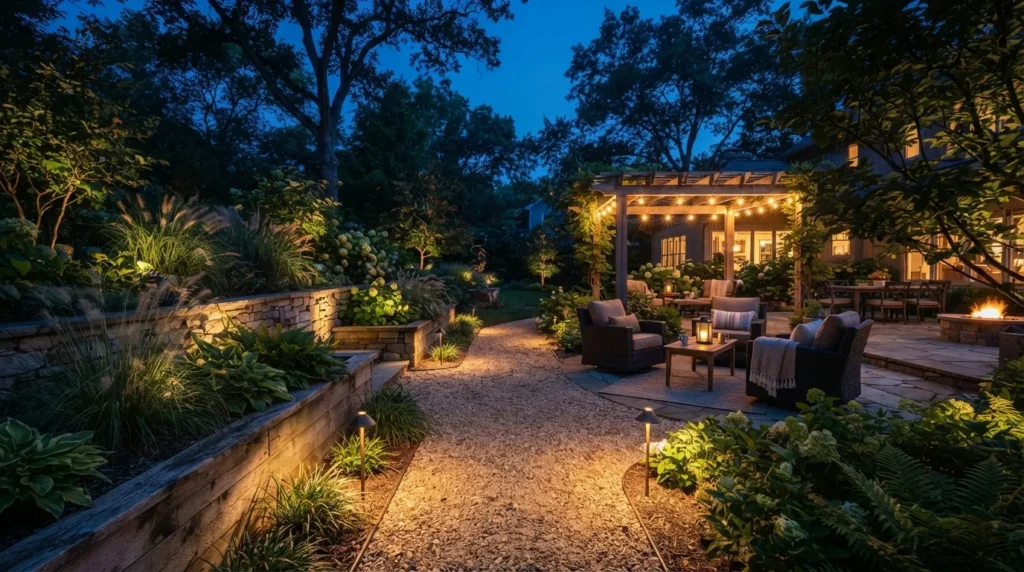
Lighting can make an ordinary backyard feel dramatically more polished after sunset.
Instead of using one bright floodlight, several smaller sources create layers.
Path lights define movement.
Accent lights highlight trees or architectural features.
Warm decorative lights can make a seating area feel inviting.
The result is similar to the layered lighting approach used indoors: different sources perform different jobs.
How To Style It
Start with practical lighting along pathways and steps.
Then add accent lighting to one or two focal points.
Solar path lights can be convenient for certain locations, while low-voltage landscape lighting can provide more consistent results where appropriate.
Avoid placing bright lights everywhere.
A few carefully positioned lights and areas of shadow generally create a more sophisticated atmosphere.
Always follow product instructions and applicable electrical safety requirements for outdoor installations.
How To Make DIY Garden Projects Look Expensive
The materials aren’t always what determine whether a project looks expensive.
Finishing details matter enormously.
Keep Lines Clean
Straight edges and consistent spacing make inexpensive materials appear intentional.
Limit Your Colors
Choose two or three main outdoor colors and repeat them.
Repeat Materials
If you use natural wood in one area, echo it somewhere else.
Think About Scale
Tiny planters scattered across a large patio can look disconnected. Larger, grouped elements often create stronger visual impact.
Hide The Mess
Conceal hoses, tools, empty pots, and miscellaneous supplies whenever possible.
Maintain Everything
Even the most beautiful DIY installation can look neglected if plants are overgrown, paint is peeling, or gravel has migrated.
Best Materials For Budget-Friendly Garden Projects
The right materials depend on the project and your local climate, but several options can provide an upscale appearance without requiring a luxury budget.
Natural wood works well for raised beds, benches, trellises, and garden structures.
Gravel can create attractive paths and seating areas with relatively simple installation.
Concrete pavers can provide a clean modern appearance.
Terracotta adds warmth and works beautifully with Mediterranean and cottage-inspired gardens.
Metal can introduce a modern architectural element.
Stone provides natural texture and can be used for paths, edging, seating, and decorative features.
Always choose materials rated for outdoor use and consider moisture, freezing temperatures, sunlight, soil contact, and maintenance requirements in your area.
How To Choose The Right DIY Project
Start by identifying what your garden actually needs.
If the yard feels flat, add raised beds, a trellis, or vertical planting.
If it feels unfinished, create a path or defined seating area.
If it lacks privacy, consider a trellis screen.
If it lacks color, use coordinated containers and seasonal plants.
If the patio feels empty, create a garden bench or container grouping.
If the garden looks good during the day but disappears at night, focus on layered lighting.
This approach prevents you from spending money on projects that don’t solve an actual problem.
FAQ
What DIY garden projects look the most expensive?
Projects with strong structure usually create the biggest visual impact. Raised beds, gravel paths, coordinated container groupings, trellis screens, and well-designed garden seating can all look sophisticated when their proportions, materials, and finishes are consistent.
How can I make my garden look expensive on a budget?
Focus on structure rather than buying lots of decorations. Define pathways, group plants, repeat materials, use a limited color palette, maintain clean edges, and add strategic lighting. A few large, intentional features often look more polished than many inexpensive decorations scattered throughout the yard.
What is the easiest DIY garden project for beginners?
A coordinated container garden is one of the simplest starting points. You can create visual height by combining containers of different sizes and planting complementary varieties. A gravel path or simple raised bed can also be approachable if you’re comfortable with basic measuring and preparation.
What materials make a garden look high-end?
Natural wood, stone, quality gravel, concrete pavers, metal, and coordinated ceramic or terracotta containers can all create a refined appearance. The finish and consistency of the installation are often just as important as the material itself.
How do I make a small backyard look more expensive?
Use vertical space, define zones, and avoid overcrowding. A simple trellis, compact seating area, raised planter, or coordinated container arrangement can create structure without consuming much ground space. Keep colors consistent and use lighting to add depth after sunset.
Are DIY raised beds worth making?
Raised beds can be worthwhile when you want defined planting areas, improved organization, or a more structured landscape. Before building, consider drainage, sunlight, soil requirements, material durability, and the appropriate height for your gardening needs.
How can I make my garden look good at night?
Use layered outdoor lighting instead of relying on one very bright fixture. Illuminate pathways for safety, highlight selected plants or structures, and add softer lighting around seating areas. Keep some areas darker so the illuminated features have more visual impact.
Conclusion
Creating an expensive-looking garden isn’t necessarily about spending more money.
It’s about making thoughtful decisions.
A simple raised bed can look custom when its edges are straight and its plants are intentionally grouped. A basic gravel path can become a major landscape feature when it has clean edging and a consistent material. A simple trellis can provide both privacy and architectural interest, while a few carefully positioned lights can transform the entire backyard after sunset.
The biggest lesson is to focus on structure, repetition, proportion, and maintenance.
Instead of filling the garden with lots of inexpensive decorations, choose one or two projects that solve a real problem and make them look intentional.
If you’re starting from scratch, consider beginning with a path or raised planter. If the landscape already has structure, add a seating area, vertical garden, or lighting.
And don’t feel pressured to complete everything at once.
The best DIY gardens evolve gradually.
Choose a project that fits your skill level, use outdoor-appropriate materials, measure carefully, and take time with the finishing details.
A beautiful backyard can be practical, personal, and budget-conscious at the same time.
Start with one project, make it feel intentional, and let the rest of your garden grow from there.
Related Articles
- 10 DIY Garden Projects with Raised Beds
- 10 Backyard Landscape Design Ideas with Beautiful Garden Paths
- 10 Garden Decor Ideas That Transform Any Backyard
- 10 DIY Fire Pit Ideas That Look Professionally Built
- 10 Small Balcony Ideas with Cozy Lounge Seating