

10 DIY Coffee Tables That Upgrade Your Living Room
A coffee table can be much more than a place to set down your morning coffee.
In a living room, it helps anchor the seating arrangement, fills the visual space between sofas and chairs, and gives the entire room a finished appearance. The right table can also introduce a material, shape, or color that makes the rest of your furniture feel more intentional.
That’s what makes a DIY coffee table such a rewarding project.
You can create something that fits your exact space instead of searching for a ready-made table with the right dimensions, style, and price. A simple wooden top can become a warm modern centerpiece. An old table can be transformed with paint and new legs. A pair of crates can become useful storage. Even a basic tabletop can look surprisingly high-end when the proportions and finish are right.
I’ve found that the best DIY furniture projects aren’t necessarily the most complicated ones. They’re the projects where the materials suit the room and the finished piece solves a practical problem.
Before building anything, think about how you actually use your living room.
Do you need hidden storage? Extra surface area? A kid-friendly design? A compact table for a small apartment? Or simply a statement piece that makes the sofa arrangement feel complete?
Once you know the answer, choosing the right DIY approach becomes much easier.
These coffee table ideas range from simple beginner-friendly projects to more substantial builds. Each one can be customized to suit a modern, farmhouse, rustic, minimalist, or cozy living room.
The goal isn’t just to build a table.
It’s to create a piece that makes your living room feel more functional, comfortable, and finished.
Table of Contents
1. Chunky Wood Table
Create a substantial centerpiece with a warm natural finish.
2. Hairpin Leg Table
Combine a simple tabletop with sleek metal legs.
3. Crate Storage Table
Turn wooden crates into useful built-in storage.
4. Round Pedestal Table
Create a softer silhouette for your seating area.
5. Reclaimed Wood Table
Add character with weathered and imperfect wood.
6. Lift Top Table
Combine a coffee table with a practical workspace.
7. Concrete Top Table
Create a modern industrial centerpiece with a durable surface.
8. Slatted Wood Table
Use repeating wood slats for a contemporary look.
9. Painted Accent Table
Refresh a basic table with color and updated details.
10. Oversized Tray Table
Create a versatile centerpiece with a removable serving top.
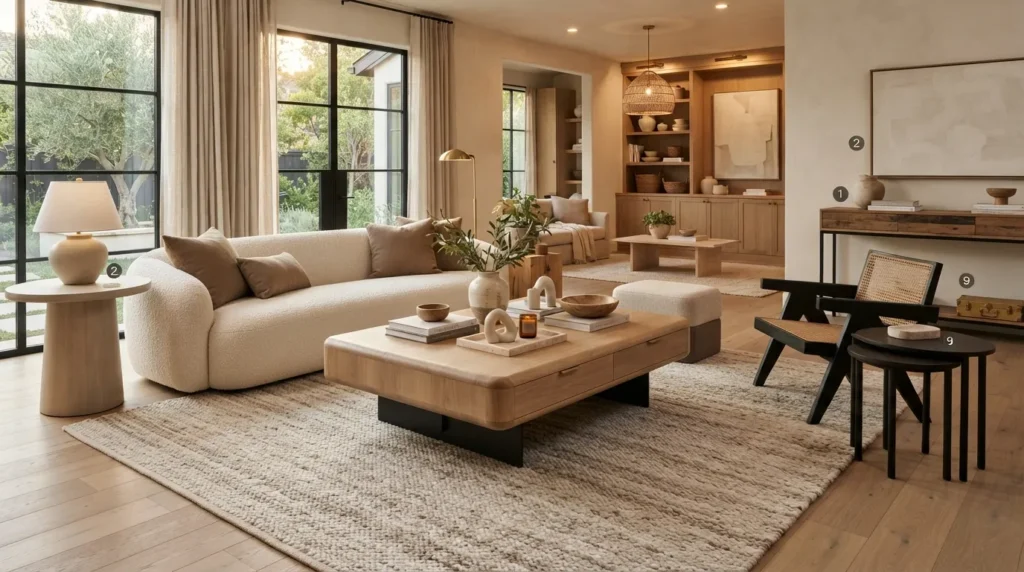
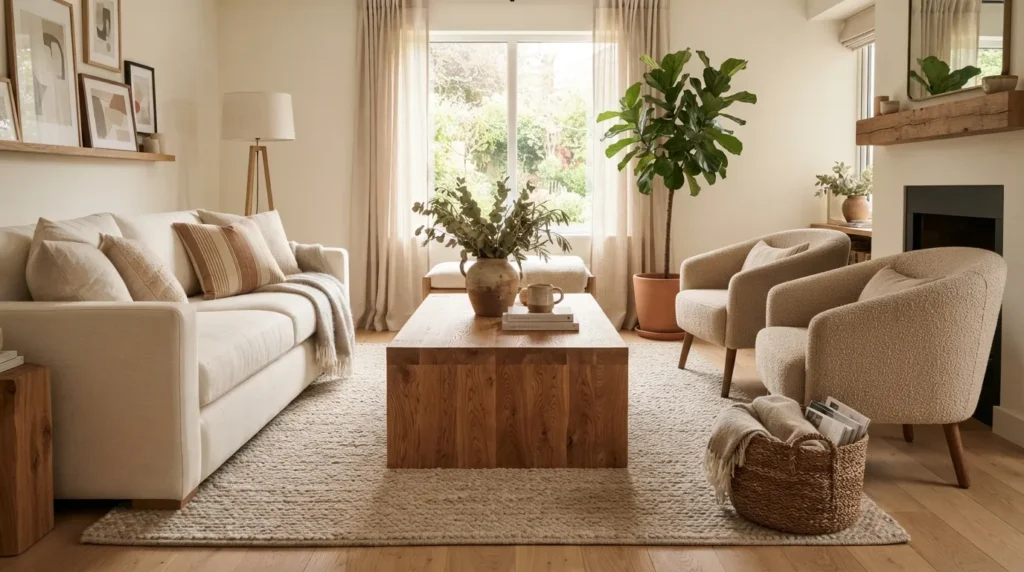
1. Chunky Wood Table
Quick Benefits
- Warm and substantial
- Works with many styles
- Easy to customize
- Durable for everyday use
- Creates a strong focal point
Why It Works
A chunky wood coffee table immediately gives a living room visual weight.
This is especially useful when a sofa and chairs feel disconnected or when the center of the room looks visually empty. Thick wood creates a substantial anchor between the seating pieces.
Natural wood also adds warmth to rooms filled with neutral upholstery, painted walls, or modern furniture.
The beauty of this design is that it doesn’t need elaborate details.
A simple rectangular top with sturdy legs can look intentionally high-end when the proportions are right and the finish is carefully applied.
How To Style It
Use furniture-grade lumber or a suitable solid wood panel for the top.
Sand the surface thoroughly before applying stain, oil, or a clear protective finish.
Choose a medium natural oak tone for a contemporary look or a deeper walnut-inspired finish for a more traditional room.
Pair the table with a large area rug so the furniture arrangement feels connected.
Keep the tabletop relatively simple with a ceramic bowl, coffee table books, and a small vase.
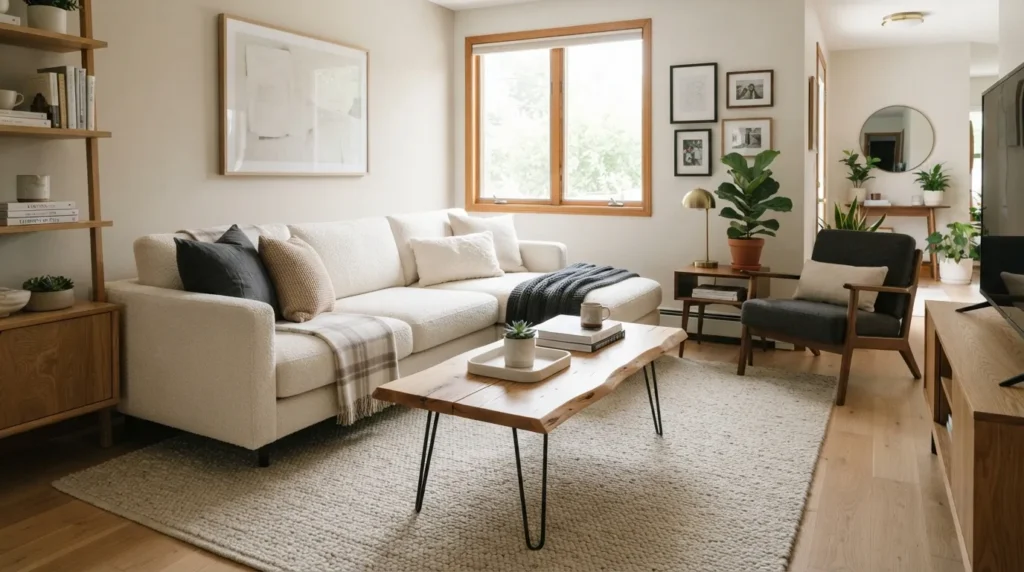
2. Hairpin Leg Table
Quick Benefits
- Modern appearance
- Relatively simple construction
- Visually lightweight
- Works in small rooms
- Easy to customize
Why It Works
Hairpin legs create an interesting contrast between a solid wood tabletop and a delicate metal base.
Because the legs are visually open, they allow more of the rug and flooring to remain visible.
That can make a small living room feel less crowded.
The design also works well with modern, industrial, Scandinavian, and eclectic interiors.
It’s one of those projects where changing the tabletop finish can completely alter the finished appearance.
How To Style It
Choose a rectangular, square, or slightly irregular wood top.
Attach appropriately rated hairpin legs according to the manufacturer’s instructions and the tabletop’s weight.
Use black metal for a stronger modern contrast or a softer metal finish if it coordinates with existing hardware.
A natural wood top looks especially attractive against neutral upholstery.
Add a low tray and one or two decorative objects without overcrowding the surface.
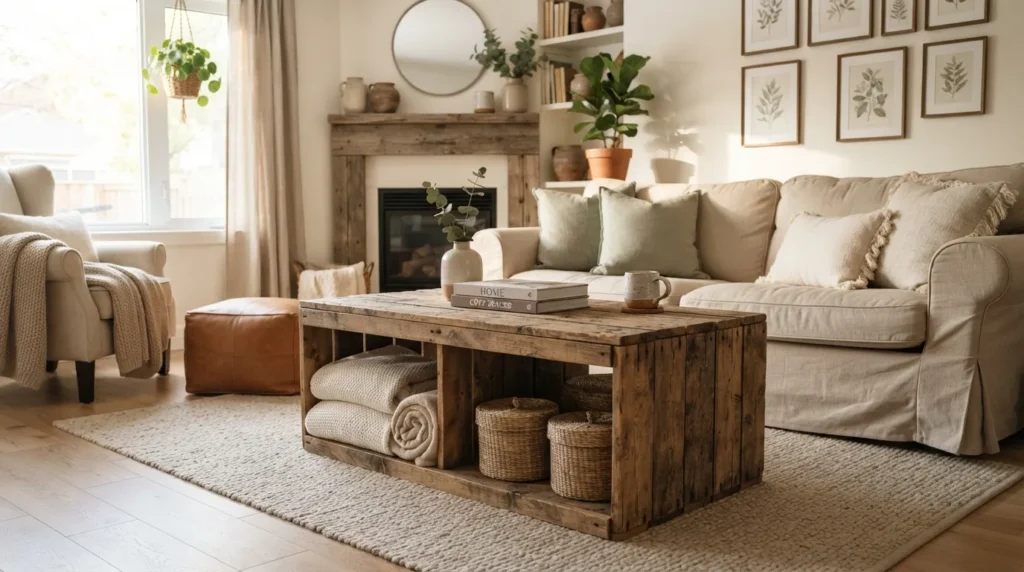
3. Crate Storage Table
Quick Benefits
- Adds hidden or open storage
- Budget-friendly
- Great for small spaces
- Easy to personalize
- Useful for family rooms
Why It Works
Storage becomes much more valuable when floor space is limited.
A crate-style coffee table can provide compartments for blankets, books, board games, remote controls, or baskets.
It also creates a casual handmade appearance that works beautifully in farmhouse, rustic, cottage, and relaxed modern interiors.
The design is particularly useful for households where the coffee table needs to do more than look decorative.
How To Style It
Use sturdy wooden crates and a solid tabletop.
Sand rough edges carefully.
Arrange the crates so their openings provide accessible storage while maintaining a stable structure.
Add baskets inside the openings if you prefer a cleaner appearance.
A natural wood finish keeps the project rustic.
Painted crates can create a more contemporary look.
Use a thick tabletop for visual balance.
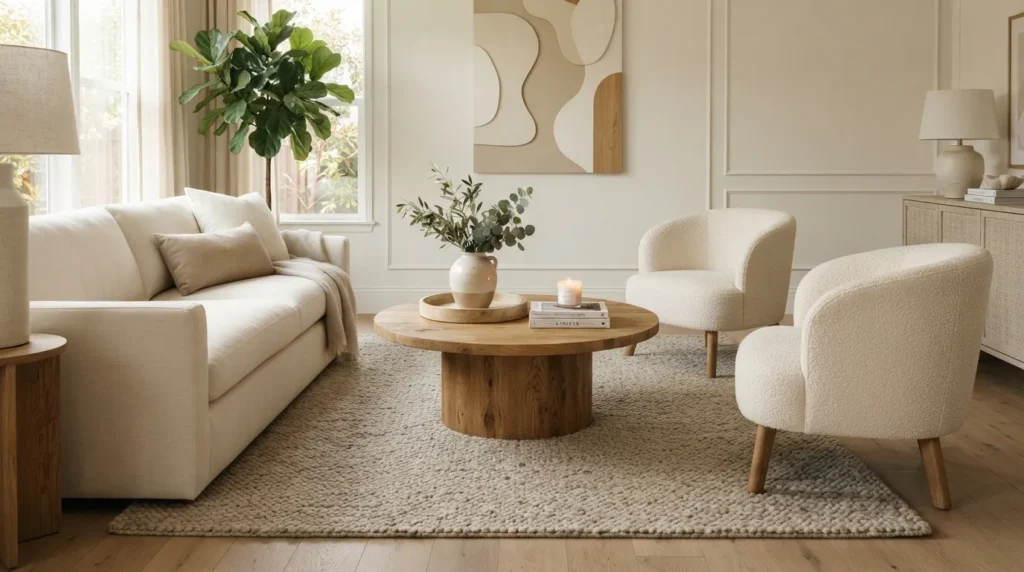
4. Round Pedestal Table
Quick Benefits
- Softens angular furniture
- Improves traffic flow
- Works in compact rooms
- Looks sophisticated
- Creates a sculptural focal point
Why It Works
Round coffee tables can make a seating arrangement feel more relaxed.
Without sharp corners, they can also be easier to navigate around, especially in smaller living rooms.
A pedestal base creates another advantage: the center support keeps the design visually clean.
This style works particularly well when the surrounding furniture contains straight lines.
A rounded table can soften a boxy sofa, rectangular rug, and angular accent chairs.
How To Style It
Use a round tabletop with a sturdy central pedestal base.
Wood creates a warm appearance, while a painted finish can make the piece feel more contemporary.
Choose a diameter that allows enough walking space around the table.
Place a round tray on top to echo the shape.
Add a small vase, candleholder, or stack of books inside the tray.
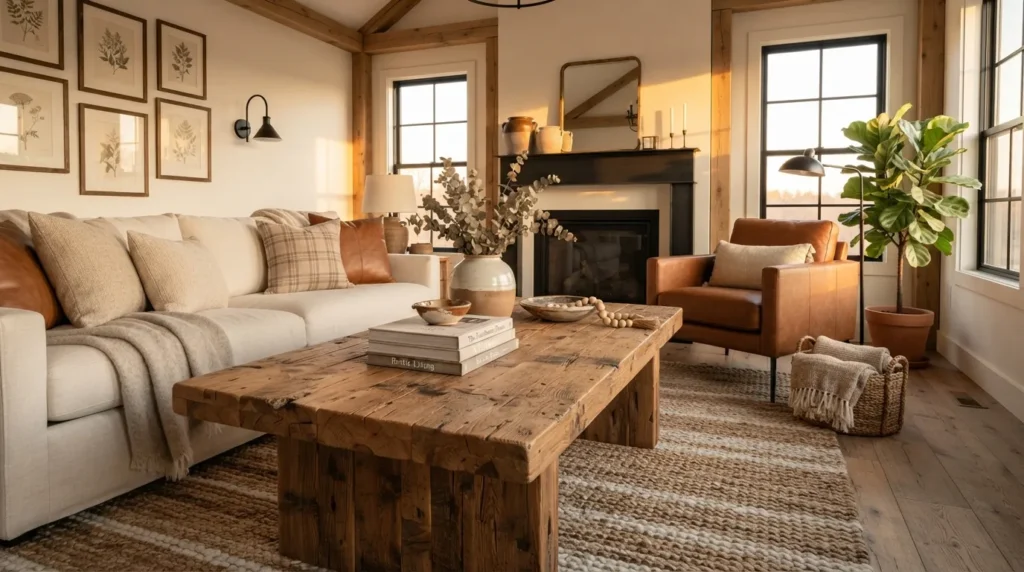
5. Reclaimed Wood Table
Quick Benefits
- Adds character
- Creates a rustic focal point
- Reuses existing materials
- Each piece feels unique
- Works beautifully with neutral rooms
Why It Works
Reclaimed wood brings visual history into a living room.
Knots, grain variations, weathered marks, and subtle imperfections give the table personality that manufactured furniture often lacks.
It works especially well in rooms that already use natural materials.
Pairing aged wood with linen upholstery, woven baskets, leather, or stone creates a layered and relaxed aesthetic.
The imperfections are part of the appeal.
How To Style It
Use properly prepared reclaimed wood from a reliable source.
Remove loose debris, check for damaged sections, and sand areas that could snag clothing or skin.
Seal the surface with a suitable finish.
Use simple metal or wooden legs to keep attention on the wood grain.
Style the table with neutral ceramics, woven accessories, and a low stack of books.
6. Lift Top Table

Quick Benefits
- Creates a temporary workspace
- Adds practical storage
- Useful for apartments
- Supports flexible living
- Combines several functions
Why It Works
A lift-top coffee table is ideal when the living room needs to serve multiple purposes.
The top can provide a more comfortable surface for working, eating, writing, or using a laptop.
The closed table still functions like a conventional coffee table.
This makes the design particularly practical for apartments, smaller homes, and multifunctional family spaces.
How To Style It
Start with a sturdy coffee table structure and use a purpose-built lift-top mechanism rated for the tabletop weight.
Keep the mechanism concealed when possible.
Add an interior compartment for blankets, electronics, notebooks, or other small items.
Choose a simple finish that coordinates with the existing furniture.
Keep decorative pieces lightweight and easy to move so the table can transition quickly from decorative surface to functional workspace.
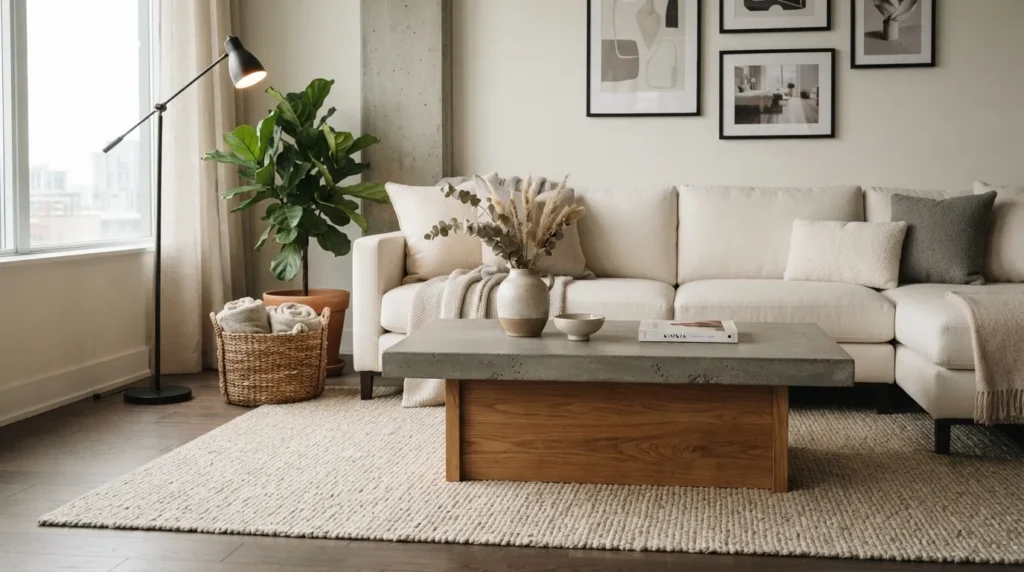
7. Concrete Top Table
Quick Benefits
- Modern appearance
- Strong visual presence
- Durable surface
- Works with minimalist rooms
- Creates industrial character
Why It Works
Concrete introduces a cool, architectural material to the living room.
It can be particularly effective when paired with warm wood, soft textiles, and neutral upholstery.
The contrast prevents the room from feeling too industrial.
A concrete-look surface doesn’t have to dominate the room.
A relatively simple slab combined with a wooden or metal base can create a sophisticated modern centerpiece.
How To Style It
Use a suitable concrete tabletop method or a professionally manufactured concrete-look surface.
Pay close attention to weight and ensure the base is appropriately designed to support it.
Pair the top with warm wood legs to soften the appearance.
Use a large rug beneath the seating arrangement.
Add natural textiles, woven baskets, and greenery around the room.
Keep the tabletop decor simple.
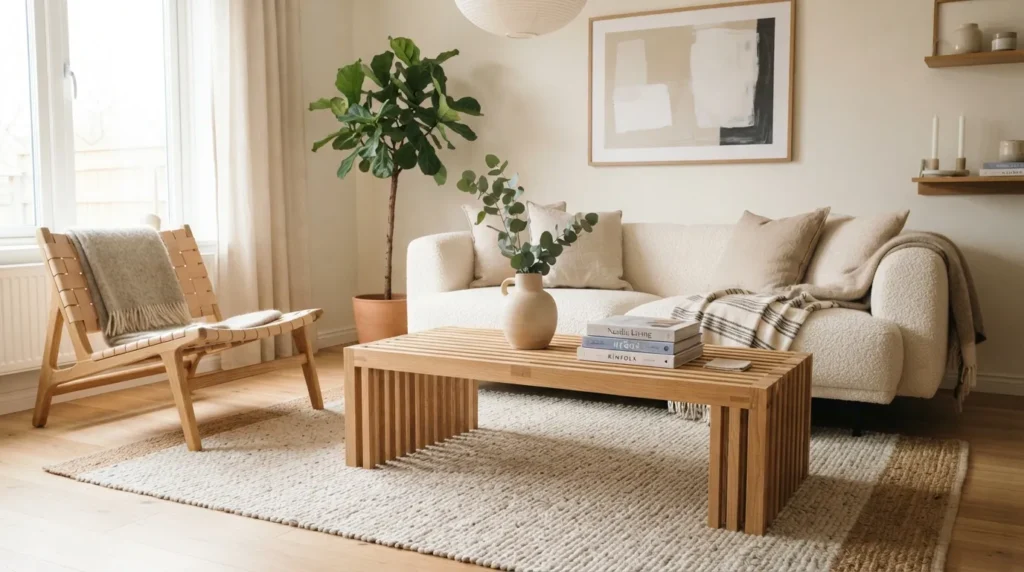
8. Slatted Wood Table
Quick Benefits
- Adds architectural detail
- Creates visual texture
- Looks custom-made
- Works with modern interiors
- Offers flexible sizing
Why It Works
Slatted wood creates repeated lines that add texture without requiring complicated decorative elements.
This makes the table feel more visually interesting than a completely flat surface.
The repeated wood pattern can also connect with architectural details elsewhere in the room, such as wall paneling, ceiling beams, or wooden shelving.
How To Style It
Build the tabletop using evenly spaced wood slats secured to a stable frame.
Measure carefully to keep spacing consistent.
Sand all edges thoroughly.
Choose a natural wood finish for a warm Scandinavian-inspired look.
For a more contemporary design, combine the wood top with a dark metal base.
Keep the rest of the decor restrained so the slatted detail remains visible.
9. Painted Accent Table
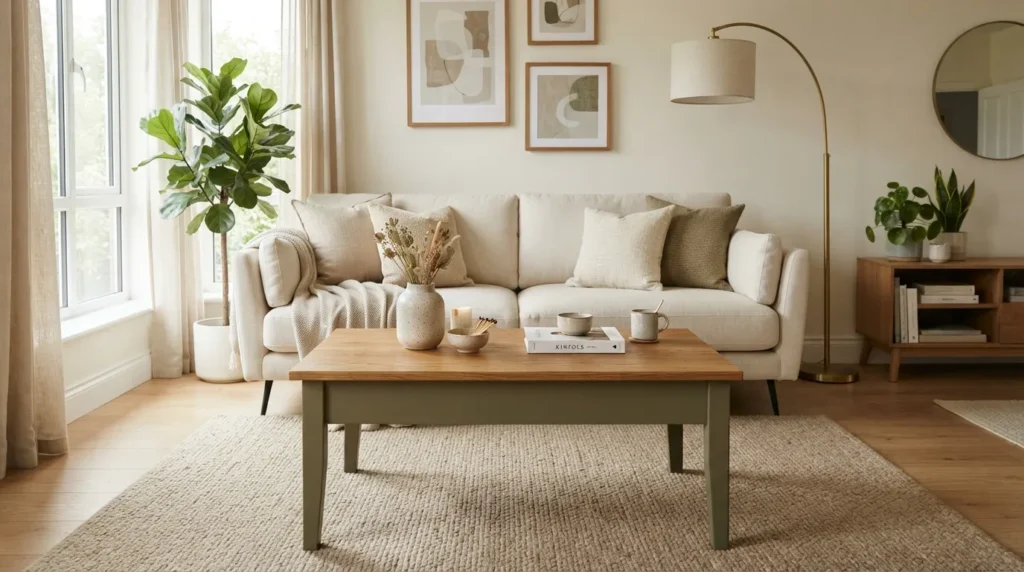
Quick Benefits
- Inexpensive update
- Great for beginners
- Easy to customize
- Adds personality
- Repurposes existing furniture
Why It Works
You don’t always need to build a coffee table from scratch.
Sometimes the smartest DIY project is transforming a table you already own.
Paint can completely change its appearance.
A muted olive, deep navy, warm beige, charcoal, or creamy white can make an outdated piece feel intentional again.
This approach is especially useful when the table’s shape and size already work well but the finish feels dated.
How To Style It
Clean and lightly sand the existing table before painting.
Use an appropriate primer and paint for the material and intended use.
Consider painting the base while leaving a natural wood top exposed.
For a modern appearance, use one solid color and simple hardware.
Add a large tray to protect and organize the surface.
Finish the room with accessories that repeat the table color subtly.
10. Oversized Tray Table
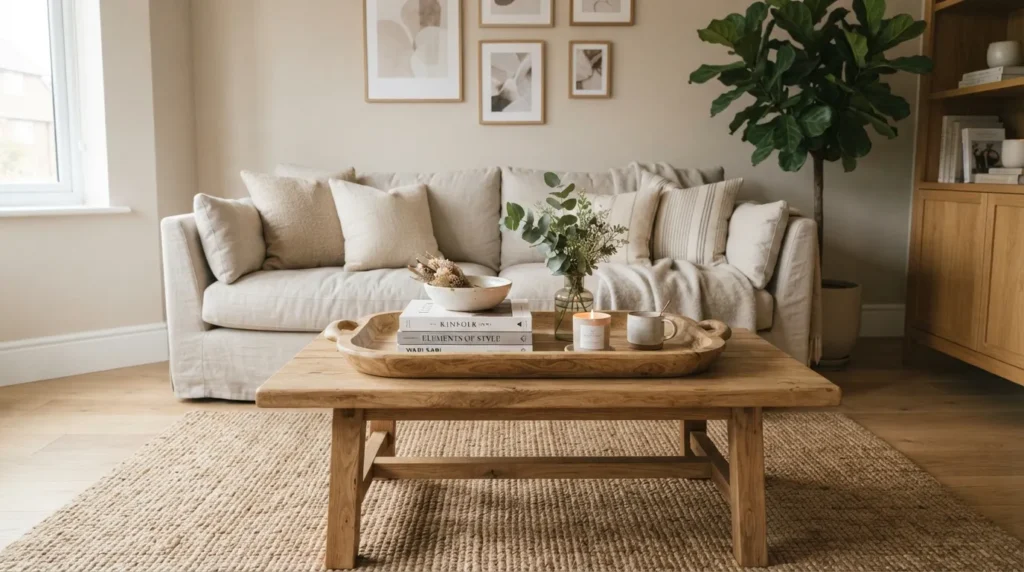
Quick Benefits
- Creates flexible styling
- Keeps small objects organized
- Works in many rooms
- Easy to customize
- Makes serving easier
Why It Works
An oversized tray can turn a simple tabletop into a much more functional surface.
It creates boundaries for decorative objects while also making it easier to clear the table when you need additional space.
This is especially helpful for family rooms and homes where the coffee table regularly changes from decorative centerpiece to snack station.
The tray also creates a visual layer that makes a basic table look more finished.
How To Style It
Build or purchase a large wooden tray that fits comfortably on your tabletop.
Add sturdy handles if you plan to move it frequently.
Finish it in a color that coordinates with the table.
Inside the tray, use a simple combination of books, a ceramic bowl, a small plant, and a candle.
Leave enough empty space for the arrangement to breathe.
When the table is needed for entertaining, simply remove the tray.
How To Choose The Right Coffee Table Size
A beautiful DIY coffee table can still feel awkward if it is the wrong size.
Start by measuring your sofa and the open area between the seating pieces.
The table should feel proportional to the room rather than dominating the entire seating arrangement.
You also need enough clearance to comfortably walk around it.
A useful approach is to mark the proposed table footprint on the floor with painter’s tape.
Live with the outline for a day.
Walk around it.
Sit on the sofa.
Reach toward the center.
Check whether drawers, doors, or recliners can still operate comfortably.
This simple test can save you from building a table that looks great on paper but doesn’t work in everyday life.
Choosing The Best Material
Wood is one of the easiest materials for DIY furniture because it can be cut, sanded, stained, painted, and customized.
Metal creates a more industrial appearance.
Concrete introduces a substantial modern feel.
Plywood can be useful for budget-friendly projects when the edges are intentionally incorporated into the design.
Reclaimed wood adds character but requires additional preparation.
The best material depends on both your style and how much wear the table will receive.
If you have children or pets, prioritize rounded edges, stable construction, durable finishes, and easy-to-clean surfaces.
How To Make A DIY Coffee Table Look Expensive
The difference between an ordinary DIY project and a polished furniture piece often comes down to details.
Sand every visible surface carefully.
Keep the legs straight.
Make sure the tabletop is level.
Use consistent spacing.
Choose hardware that suits the scale.
Don’t apply too many decorative details.
And spend time on the finish.
A smooth, even stain or paint application can make inexpensive materials look considerably more refined.
Proportion matters just as much.
A simple table with excellent proportions can look more expensive than an elaborate table that is too tall, too narrow, or visually heavy.
Styling Your Finished Coffee Table
Once your table is built, resist the temptation to cover the entire surface.
A coffee table usually looks best when there is a mixture of decorated and open space.
Try a simple formula:
Tray + books + natural element + small decorative object
For example, place a wooden tray in the center.
Add two coffee table books.
Place a ceramic vase with greenery beside them.
Finish with one small sculptural object.
For larger tables, create two or three visual groupings.
Vary the height of the objects.
This creates dimension without making the tabletop feel cluttered.
FAQ
What is the easiest DIY coffee table to make?
A simple wood tabletop with pre-made legs is one of the easiest options. Hairpin legs, basic wooden legs, or sturdy metal brackets can eliminate much of the complicated construction while still allowing you to customize the tabletop size and finish.
What wood is best for a DIY coffee table?
The best wood depends on your budget and desired appearance. Pine can be economical and easy to work with, while oak and maple offer greater durability and a more refined appearance. Proper sanding and finishing are just as important as the type of wood.
How high should a coffee table be?
A coffee table generally works best when its height is close to the seat height of the surrounding sofa or slightly lower. The exact height depends on the furniture and how you use the table, so measure your seating before building.
Can I turn an old table into a coffee table?
Yes. Repurposing an existing table is often one of the simplest DIY approaches. You can shorten the legs, replace the top, repaint the base, add new hardware, or combine the existing structure with another tabletop.
How do I make a small living room coffee table work better?
Choose a visually lightweight design, consider a round shape, and prioritize useful features such as storage or a lift-top surface. Avoid a table that is oversized for the seating arrangement because it can make the room feel cramped.
How do I protect a DIY wooden coffee table?
Use a finish appropriate for the type of wood and the level of everyday use. Depending on the project, options can include polyurethane, hardwax oil, or another suitable protective finish. Follow the manufacturer’s application and curing instructions.
Should a coffee table have storage?
Storage is useful when you need a place for blankets, books, remotes, games, or other living-room essentials. However, open space can be preferable if your room already has plenty of storage and you want a lighter visual appearance.
Conclusion
A DIY coffee table can completely change the way a living room looks and functions.
The best part is that you’re not limited to whatever dimensions or finishes happen to be available in a furniture store.
You can build a chunky wood table for warmth, a hairpin-leg design for a modern apartment, a crate table for extra storage, or a round pedestal table to soften a room filled with straight lines.
If your household needs more flexibility, a lift-top design can provide a temporary workspace.
If you want character, reclaimed wood can become the star.
And if you already have a table you like, a fresh coat of paint may be all it needs.
Before starting your project, measure the room carefully and think about how the table will actually be used.
Consider walking space, sofa height, storage needs, material durability, and the visual weight of the finished piece.
Then choose a design that complements those requirements.
A beautiful coffee table doesn’t have to be complicated.
With thoughtful proportions, a quality finish, and a few carefully chosen styling details, even a relatively simple DIY build can become the centerpiece that makes your living room feel complete.
Related Articles
- 10 DIY Coffee Tables for Modern Homes
- 10 DIY Wall Art Ideas with Modern Abstract Designs
- 10 Modern Living Room Ideas with Designer Finishes
- 10 Small Living Room Ideas That Feel Warm All Year
- 10 DIY Home Decor Projects for a Stylish Living Room