Best Primer to Prepare Raw Drywall for Removable Peel-and-Stick Paper
Selecting the best Primer to Prepare Raw Drywall for Removable Peel-and-Stick Paper involves more than just picking a standard wall coating off the shelf. Raw drywall, especially the porous paper facing, acts like a sponge that can soak up adhesive unevenly, leading to premature peeling or difficult removal later.
By choosing the right product to seal the surface, you create a stable foundation that protects your investment and ensures your decor stays put until you decide it is time for a change. Understanding how to properly treat these surfaces will save you significant time and frustration during your next home improvement project.
The most effective solution for priming raw drywall before applying removable peel-and-stick wallpaper is a high-quality, water-based acrylic wallcovering primer. Specifically, products like Zinsser Shieldz Universal Wallcovering Primer are widely regarded as the industry standard for this application. These primers are designed to seal the porous gypsum surface without creating an overly aggressive bond that would make removal impossible.
By using a dedicated wallcovering primer rather than a standard latex wall paint, you ensure that the adhesive on your wallpaper interacts with a consistent, non-porous layer. This prevents the drywall paper from tearing if you ever need to reposition or remove the panels.
Why Raw Drywall Requires Specialized Priming
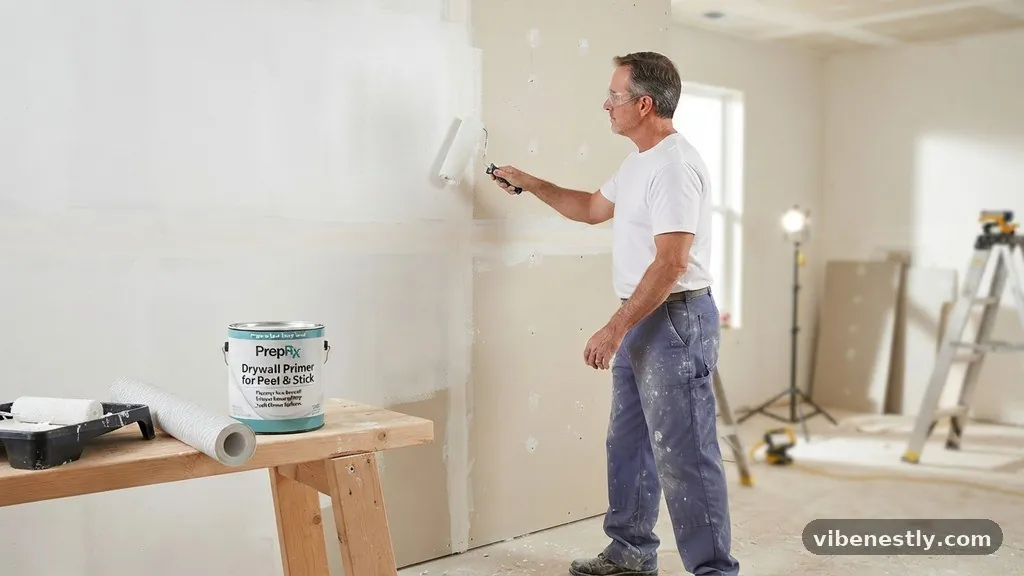
Raw drywall is essentially a layer of gypsum sandwiched between heavy paper sheets. This paper is highly absorbent, meaning any adhesive applied directly to it will be sucked into the fibers almost immediately. When the adhesive is absorbed too deeply, the wallpaper loses its ability to hold onto the wall, causing edges to curl or the entire sheet to fall.
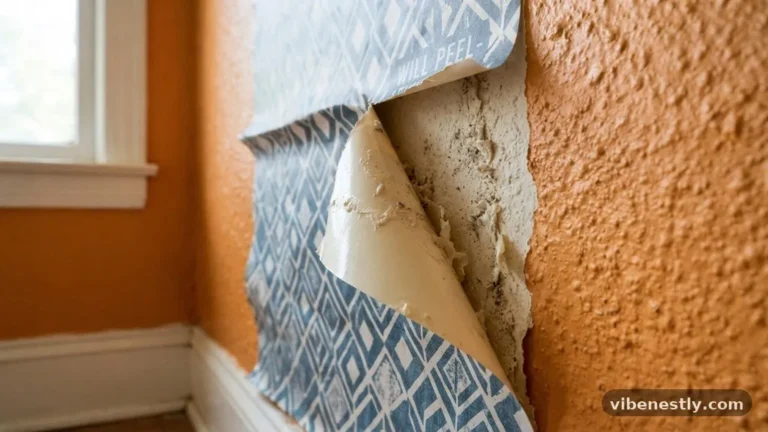
Furthermore, applying peel-and-stick products directly to raw paper often results in a permanent bond. If the adhesive bonds with the paper fibers, removing the wallpaper later will almost certainly rip the top layer of the drywall off.
This leaves you with a damaged, fuzzy surface that requires extensive sanding and repair before you can paint or re-wallpaper. Priming creates a thin, protective barrier that keeps the adhesive on the surface where it belongs.
Evaluating Water-Based Versus Oil-Based Primers
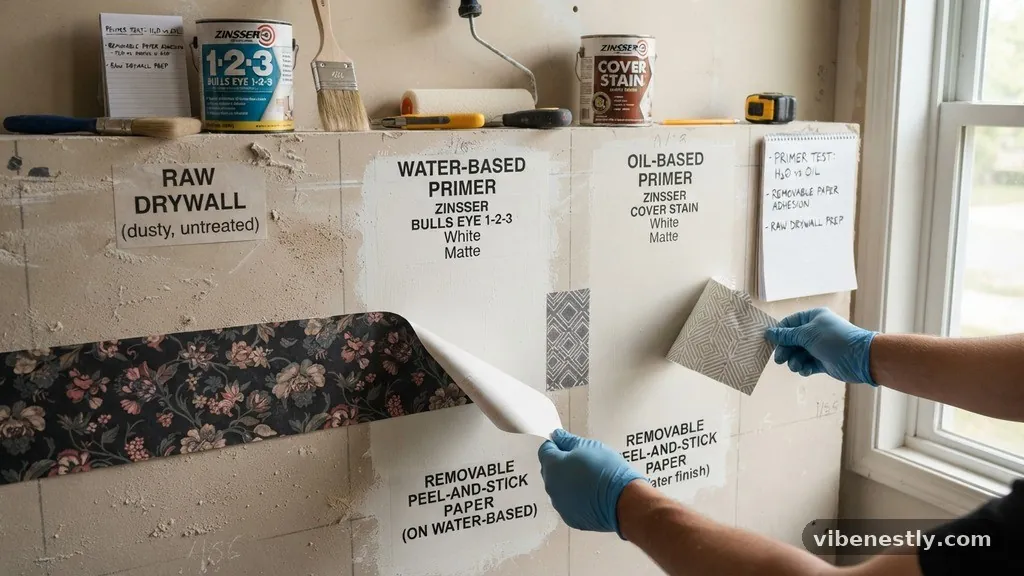
When searching for the best Primer to Prepare Raw Drywall for Removable Peel-and-Stick Paper, you will encounter both water-based and oil-based options. For most residential applications, water-based acrylic primers are the superior choice. They offer a fast drying time, low odor, and easy cleanup with soap and water.
Oil-based primers, while excellent for sealing stains or blocking moisture, are often overkill for new drywall. They can create a surface that is too hard or chemically incompatible with certain peel-and-stick adhesives.
Additionally, the strong fumes associated with oil-based products can make interior installation uncomfortable. Stick to high-quality water-based primers to maintain a balance between adhesion and ease of removal.
Surface Preparation Before Priming
Even the best primer will fail if the wall surface is not prepared correctly. Before you open a can of primer, you must ensure the drywall is clean, dry, and dust-free. Use a vacuum with a brush attachment or a slightly damp cloth to remove all drywall dust from the sanding process.
If you skip the cleaning step, the primer will simply bond to the dust rather than the wall. This creates a weak layer that can flake off once you apply the wallpaper. Take your time to wipe down every inch of the wall to ensure a smooth, clean starting point.
The Role of Sanding and Smoothing
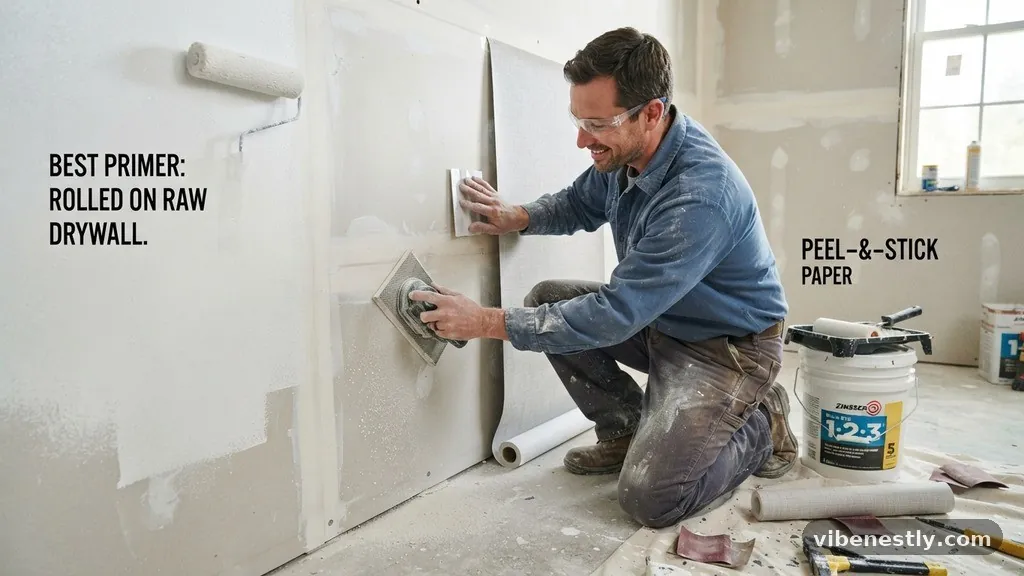
Raw drywall joints and screw heads usually have joint compound that needs to be leveled. Even if the wall looks flat, minor imperfections can show through thin peel-and-stick material. Use a fine-grit sanding sponge to gently smooth out any ridges in the mudded areas.
After sanding, you must clean the wall again to remove the fine particulate matter. A smooth, even surface is essential for the wallpaper to stick correctly without air pockets. If the surface is rough, the adhesive will not make full contact, leading to bubbling and peeling over time.
Comparing Common Priming Products
Choosing the right product is essential for a professional finish. The following table provides a comparison of common types of primers used in home improvement projects.
| Primer Type | Best For | Ease of Removal | Drying Time |
|---|---|---|---|
| Water-Based Acrylic | Raw Drywall | Excellent | 1-2 Hours |
| Oil-Based | Stain Blocking | Difficult | 8-24 Hours |
| PVA Drywall Sealer | New Construction | Moderate | 30-60 Minutes |
Applying the Primer Evenly
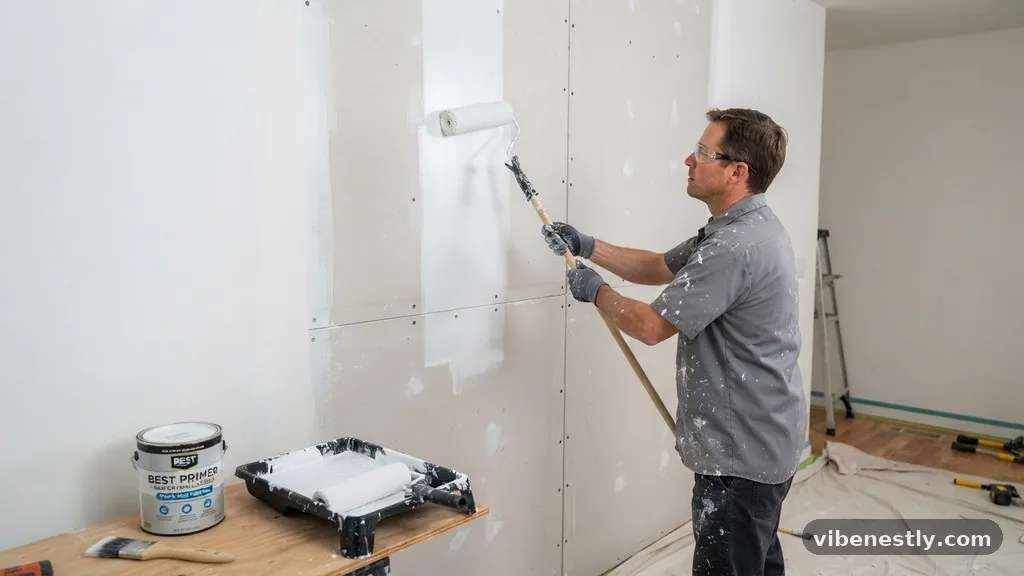
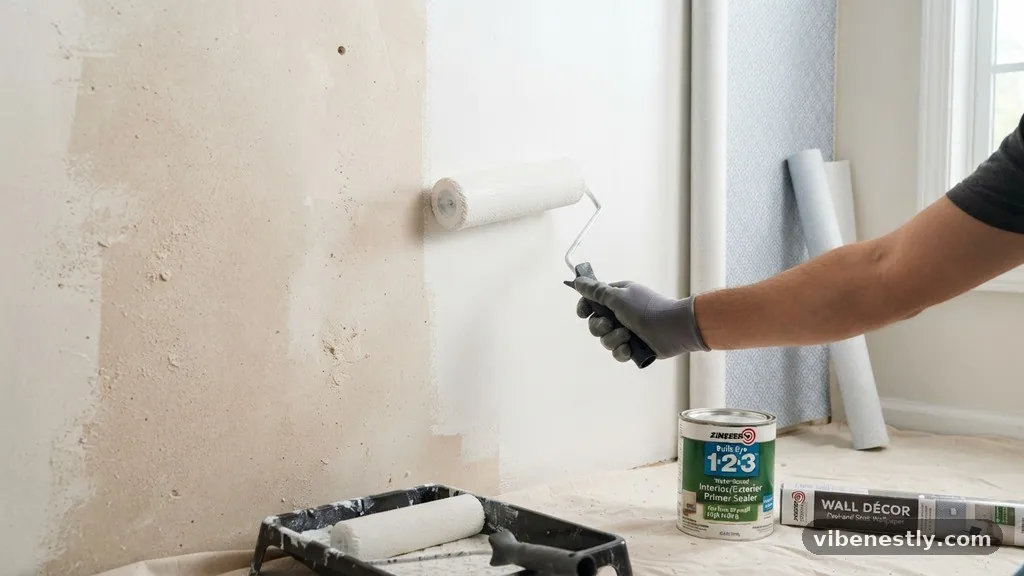
When you are ready to apply the primer, use a high-quality roller with a short nap cover. A 3/8-inch nap is usually sufficient for smooth drywall surfaces. You want to apply a thin, consistent coat that covers the entire area without pooling or dripping.
Avoid the temptation to apply a thick, heavy coat, as this can create texture that will telegraph through your wallpaper. One uniform layer is generally enough to seal the paper face of the drywall. Allow the primer to dry completely according to the manufacturer’s instructions before you attempt to stick any wallpaper.
The Importance of Dry Time
Patience is a critical component of the installation process. Even if the primer feels dry to the touch within 30 minutes, it may not be fully cured. If you apply the sticky wallpaper too soon, the moisture trapped in the primer can interfere with the adhesive.
Always check the product label for the recommended recoat or topcoat time. Most manufacturers suggest waiting at least 2 to 4 hours, or even overnight, for the best results. Rushing this step is a common mistake that leads to failed adhesion and wasted materials.
Ensuring Proper Adhesion
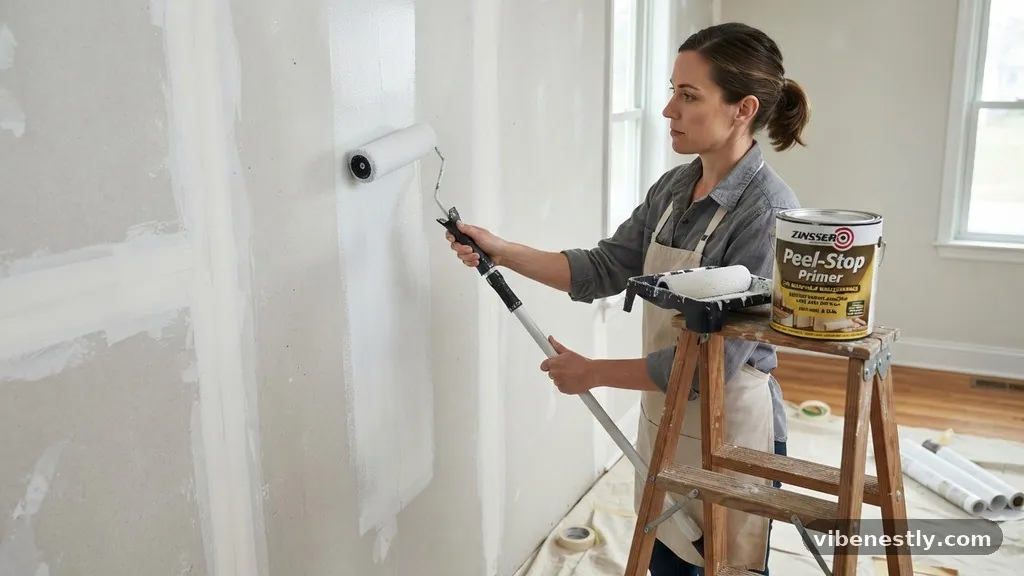
The goal of using the best Primer to Prepare Raw Drywall for Removable Peel-and-Stick Paper is to create a surface that is “tack-friendly.” You want the wall to be sealed so the adhesive doesn’t soak in, but not so slick that the wallpaper slides off. A good wallcovering primer provides a slight “tooth” or texture that helps the adhesive grip firmly.
You can verify the surface readiness by touching it once it is fully cured. It should feel smooth and uniform, not powdery or chalky. If you see white dust on your hand after touching the wall, it needs more primer or better cleaning.
Common Mistakes to Avoid
Many DIYers make the mistake of using a “paint and primer in one” product. While these are fine for painting walls, they are rarely the right choice for peel-and-stick wallpaper. These products are formulated to be thick and durable, which is the opposite of what you want for a removable application.
Another common error is failing to prime the edges and corners. Adhesive often fails first at the seams, so ensure you get good coverage in the corners and along the baseboards. Use a small brush to cut in the corners before rolling the main sections of the wall.
Frequently Asked Questions
Can I apply peel-and-stick wallpaper directly to raw drywall?
You should never apply peel-and-stick wallpaper directly to raw drywall. The paper face is too porous and will absorb the adhesive, leading to poor sticking and potential damage to the wall when you eventually try to remove the paper.
What happens if I don’t use a primer?
Without a primer, the adhesive will bond too strongly to the paper fibers of the drywall. When you decide to remove the wallpaper, it will likely tear the drywall paper, leaving you with a costly repair project involving skim coating and sanding.
How long should I wait after priming before applying wallpaper?
You should wait at least 24 hours to ensure the primer is fully cured. While many primers are dry to the touch in an hour, full curing is necessary to prevent moisture from affecting the wallpaper adhesive.
Is there a difference between wallcovering primer and regular paint primer?
Yes, wallcovering primers are specifically formulated to create a surface that holds wallpaper adhesive but allows for easy removal. Regular paint primers are designed to be a permanent base for paint, which can make them too aggressive for temporary wallpaper.
Can I use a PVA sealer instead of a wallpaper primer?
While PVA sealers are common for new drywall, they are designed to seal the surface for paint. They do not provide the same balance of adhesion and “removability” that a dedicated wallpaper primer offers.
Conclusion
Preparing your walls correctly is the most important step in any wallpapering project. By choosing the best Primer to Prepare Raw Drywall for Removable Peel-and-Stick Paper, you ensure that your walls remain protected and your decor looks professional. Taking the time to clean, sand, and properly seal the surface creates a reliable bond that holds up to daily life while remaining easy to remove when your style changes.
For additional information on wall preparation standards, you can review the technical guidelines provided by the Wallcovering Installers Association. Start your project by gathering the right tools, following a strict cleaning routine, and allowing your primer to cure completely.
Once your foundation is solid, the actual application of your wallpaper will be a straightforward and satisfying process. Happy decorating!