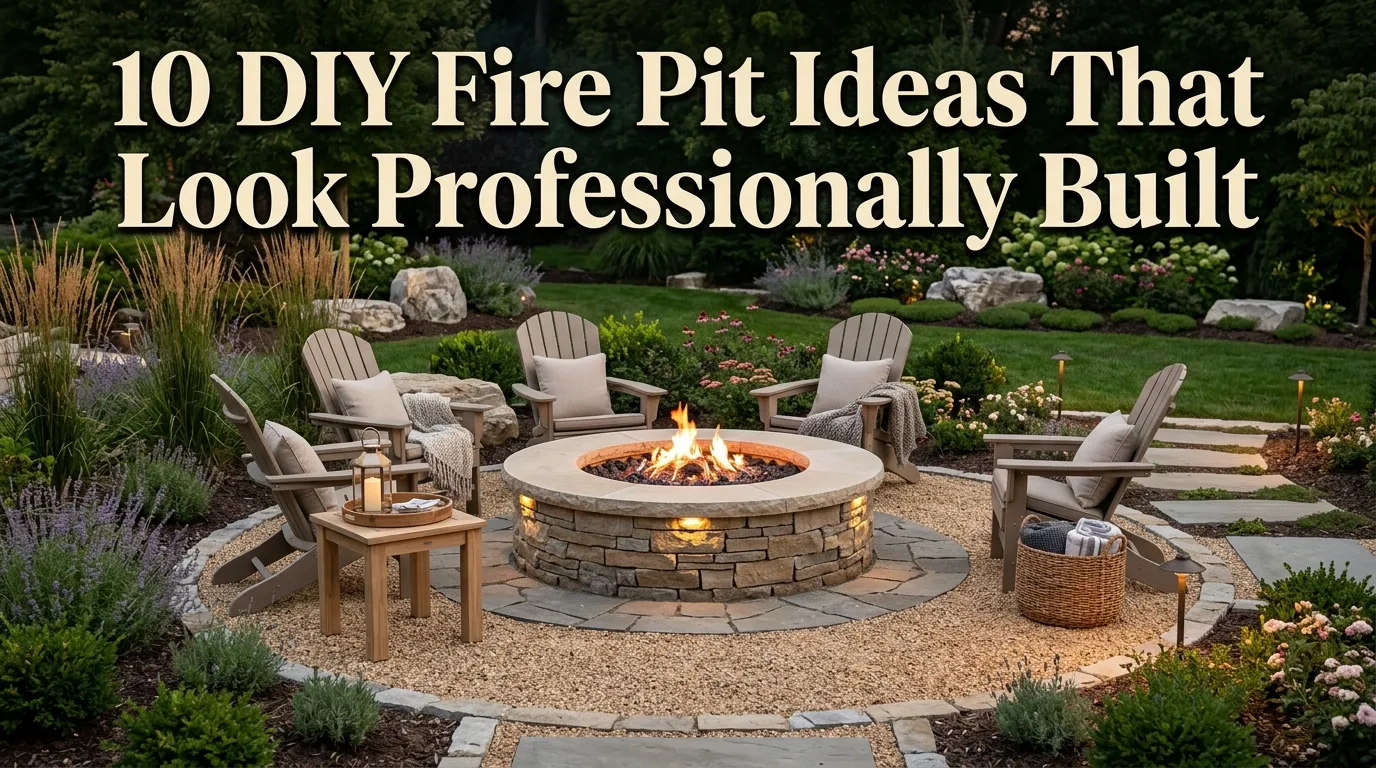
10 DIY Fire Pit Ideas That Look Professionally Built
A fire pit can completely change the way a backyard feels.
Even a simple outdoor area can become a natural gathering place once there is a dedicated spot for sitting, talking, roasting marshmallows, or enjoying a quiet evening outside. But the difference between a fire pit that looks thoughtfully designed and one that looks improvised often comes down to the details surrounding it.
The good news is that you don’t necessarily need a large landscaping budget to create a polished appearance.
A well-planned circular stone fire pit can look substantial and timeless. A square paver design can complement a modern patio. A gravel seating area can make an inexpensive project feel intentional. Even a simple steel fire bowl can look elevated when it is surrounded by the right furniture, plants, lighting, and hardscape.
I’ve noticed that the best-looking backyard fire pit areas usually have one thing in common: the fire feature feels connected to the landscape.
Instead of placing a fire pit randomly in an empty section of lawn, think about the entire zone as an outdoor room. Consider the seating arrangement, walking paths, ground material, lighting, nearby planting, and view from the house.
Safety should also come before appearance. Fire pits need appropriate clearance from structures and combustible materials, and local rules can vary significantly. Always check your local regulations, HOA requirements, and the manufacturer’s instructions before building or using one.
With that foundation in place, you can focus on creating a backyard fire area that feels comfortable, cohesive, and professionally designed.
These ideas range from rustic stone circles to modern built-in styles, giving you plenty of inspiration for creating a beautiful outdoor gathering space.
Table of Contents
1. Stone Circle Pit
Create a timeless fire pit using layered masonry.
2. Gravel Fire Lounge
Build an affordable outdoor gathering area around the fire.
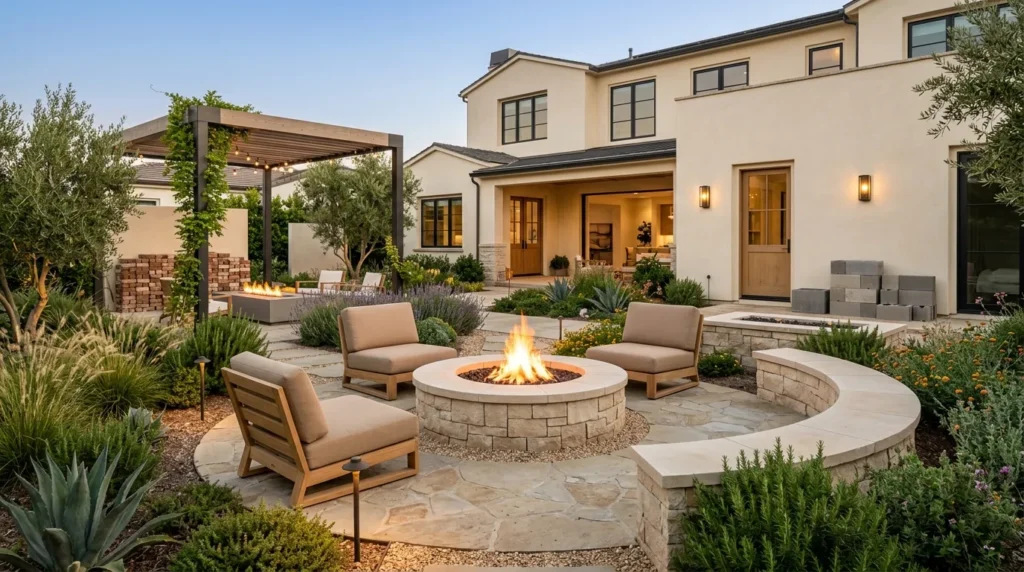
3. Square Paver Pit
Bring clean architectural lines to a modern backyard.
4. Sunken Fire Area
Create a dramatic destination by lowering the seating zone.
5. Concrete Block Pit
Use simple masonry materials for a streamlined DIY look.
6. Steel Bowl Feature
Combine a simple fire bowl with elevated landscaping.
7. Brick Fire Pit
Add classic warmth with traditional brick construction.
8. Retaining Wall Pit
Integrate the fire area into an existing landscape.
9. Rustic Stone Pit
Create an organic focal point with natural-looking stone.
10. Complete Fire Lounge
Design the entire area as a polished outdoor room.
1. Stone Circle Pit
Quick Benefits
- Timeless appearance
- Works with many backyard styles
- Creates a strong focal point
- Easy to coordinate with natural landscaping
- Can look substantial without elaborate construction
Why It Works
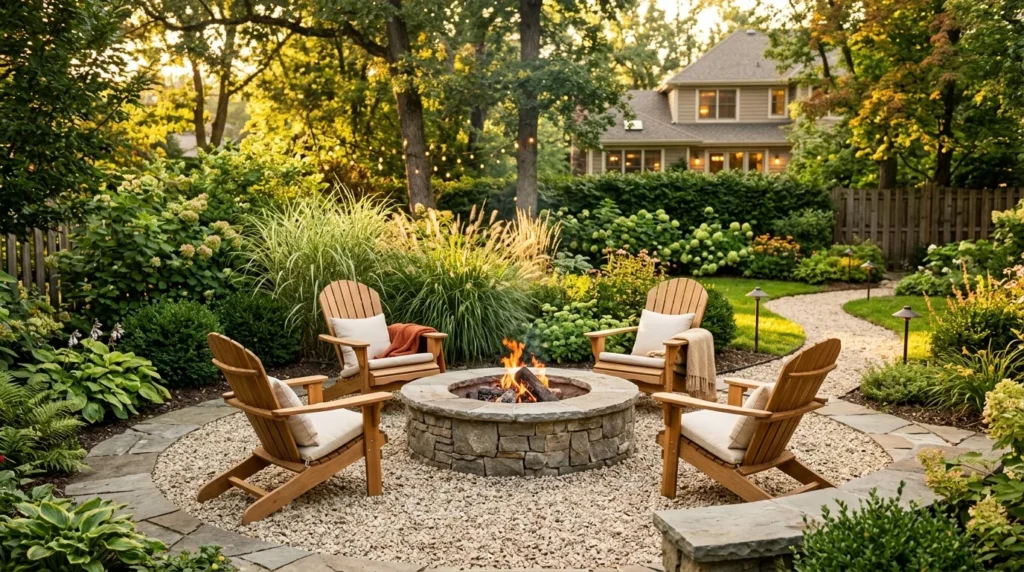
A circular stone fire pit has a classic quality that rarely feels dated.
The rounded shape naturally encourages conversation because everyone faces toward the center. It also works beautifully with the organic forms already present in most gardens.
The professional appearance comes from repetition and proportion.
Instead of using random stones of completely different sizes, choose compatible masonry units designed for outdoor applications. Consistent courses create a much cleaner result.
The surrounding surface matters, too.
A fire pit sitting directly on an uneven lawn can feel temporary. A properly prepared gravel, paver, or masonry area immediately makes the installation feel more intentional.
How To Style It
Choose a level location with appropriate clearance from buildings, trees, fences, and other combustible materials.
Build the pit according to the requirements of the fire-pit system and materials you’re using.
A compact circular gravel area can provide a simple foundation for surrounding chairs.
Use Adirondack-style chairs for a relaxed backyard look or streamlined outdoor chairs for a modern interpretation.
Add low landscape lighting around the perimeter.
Keep nearby planting controlled and positioned at a safe distance.
2. Gravel Fire Lounge
Quick Benefits
- Relatively affordable
- Easy to define visually
- Works in casual backyards
- Provides good contrast with greenery
- Can accommodate flexible seating
Why It Works
Sometimes the fire pit itself doesn’t need to be complicated.
The surrounding space can do the decorating.
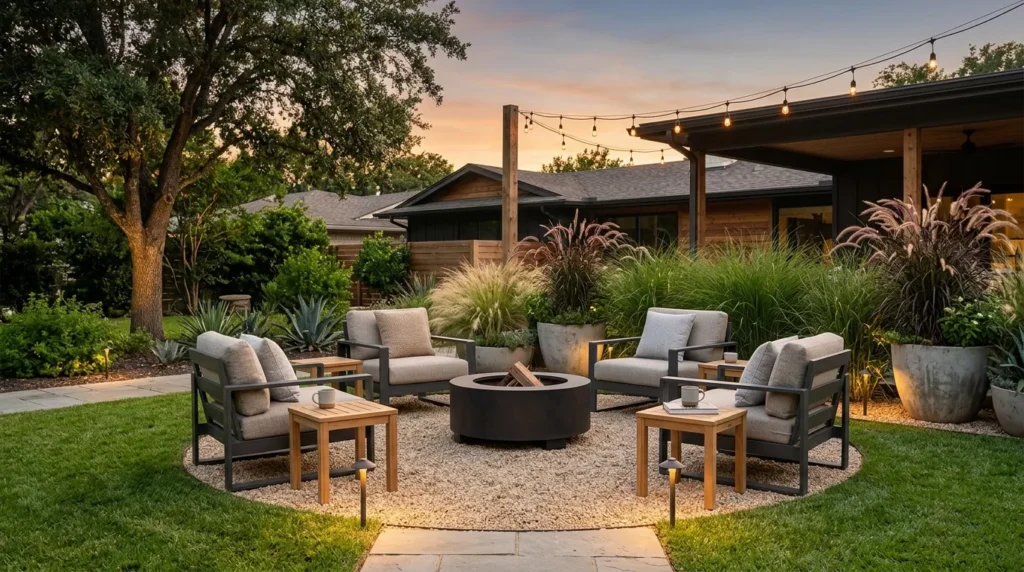
A clearly defined gravel circle or rectangle creates an outdoor room without requiring a large patio installation.
This is especially useful for homeowners who want a dedicated fire area but don’t want to commit to an expensive hardscape project.
Gravel also creates a visual transition between the fire zone and the rest of the backyard.
The key is making the area look deliberate rather than like a patch of loose stone placed around a fire pit.
How To Style It
Define the perimeter with appropriate edging.
Use a consistent gravel material throughout the zone.
Choose several comfortable chairs and arrange them evenly around the fire feature.
A small side table can provide a practical surface for drinks.
Use larger stones or pavers around the seating area where appropriate to create visual structure.
Keep the surrounding lawn neatly maintained.
A few large planters can soften the transition without crowding the fire zone.
3. Square Paver Pit
Quick Benefits
- Looks contemporary
- Creates clean lines
- Works well with modern homes
- Provides strong visual structure
- Pairs beautifully with geometric landscaping
Why It Works
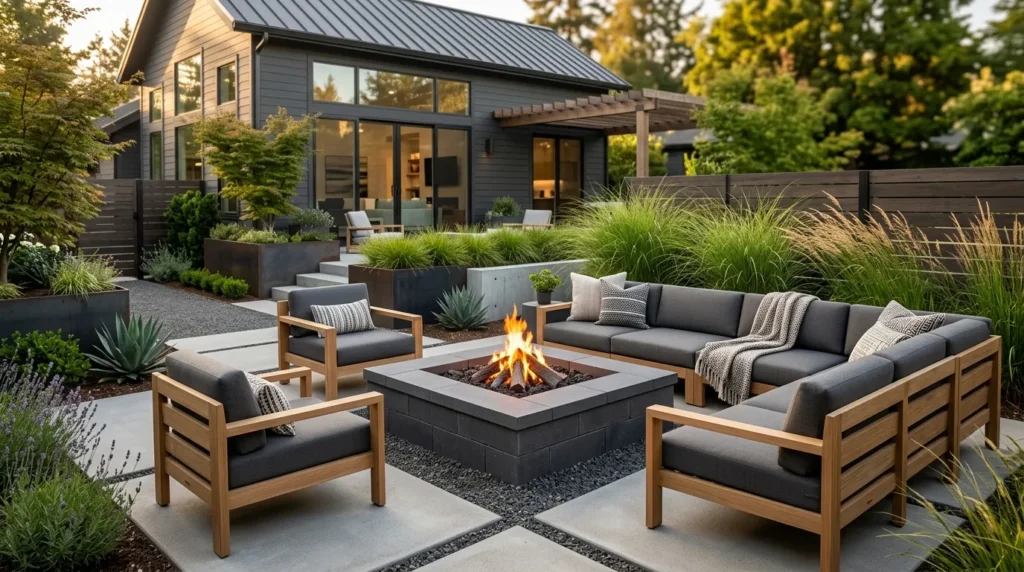
If your backyard has a contemporary design, a circular rustic fire pit may feel disconnected.
A square or rectangular fire feature can echo the architecture of the home.
Large-format pavers, concrete-look masonry, and clean-edged seating create a more sophisticated appearance.
The geometry provides structure while landscaping keeps the space from feeling overly rigid.
This style is especially effective when the patio, walkway, and garden beds already use straight lines.
How To Style It
Choose masonry colors that coordinate with the home’s exterior.
Warm gray, charcoal, beige, or natural stone tones can all work.
Use a square or rectangular layout with consistent spacing.
Pair the fire feature with streamlined outdoor furniture.
A low-profile sofa and two chairs can create a polished conversation area.
Add one large outdoor rug where appropriate and safe for the surrounding setup.
Use simple planters with architectural greenery to reinforce the modern aesthetic.
4. Sunken Fire Area
Quick Benefits
- Creates a dramatic focal point
- Feels like a dedicated destination
- Protects the seating area from some wind
- Encourages conversation
- Gives the backyard architectural character
Why It Works
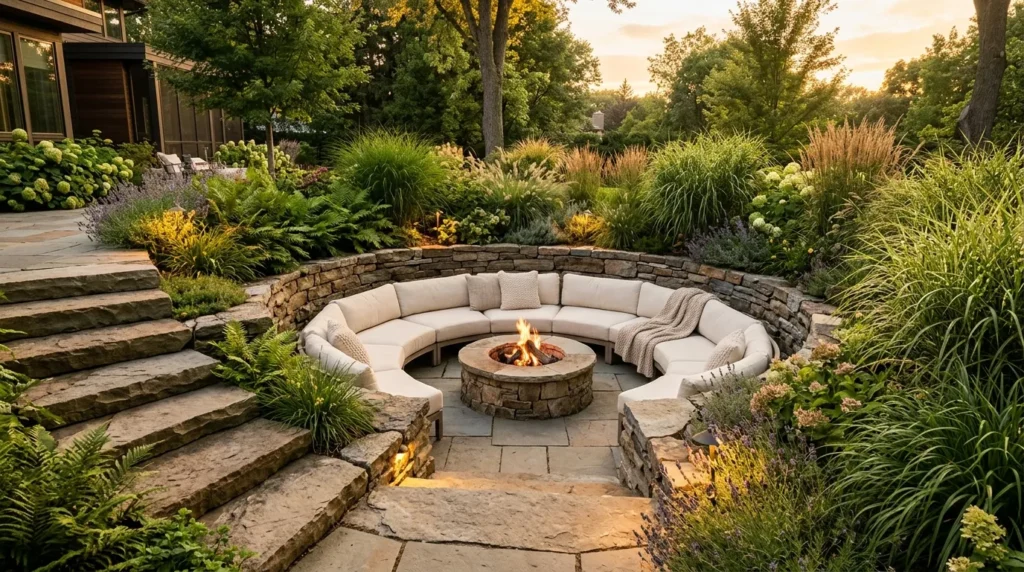
A sunken fire area creates the feeling of a separate outdoor room.
The change in elevation naturally distinguishes the fire zone from the rest of the landscape.
It can be particularly beautiful in larger backyards where a conventional fire pit might otherwise disappear visually.
However, this is also one of the more complex concepts on the list.
Excavation, drainage, retaining structures, safe access, and local requirements all need careful consideration.
How To Style It
Use a consistent material around the seating area.
Natural stone, pavers, or masonry can create a substantial appearance.
Build comfortable steps into the design rather than relying on an awkward drop.
Choose low-profile seating that follows the circular or geometric shape.
Use retaining walls where structurally appropriate.
Keep combustible landscaping and materials at safe distances.
For substantial excavation or retaining structures, professional guidance is a smart investment.
5. Concrete Block Pit
Quick Benefits
- Simple material profile
- Modern appearance
- Easy to coordinate
- Can work with DIY landscaping
- Offers a strong architectural shape
Why It Works
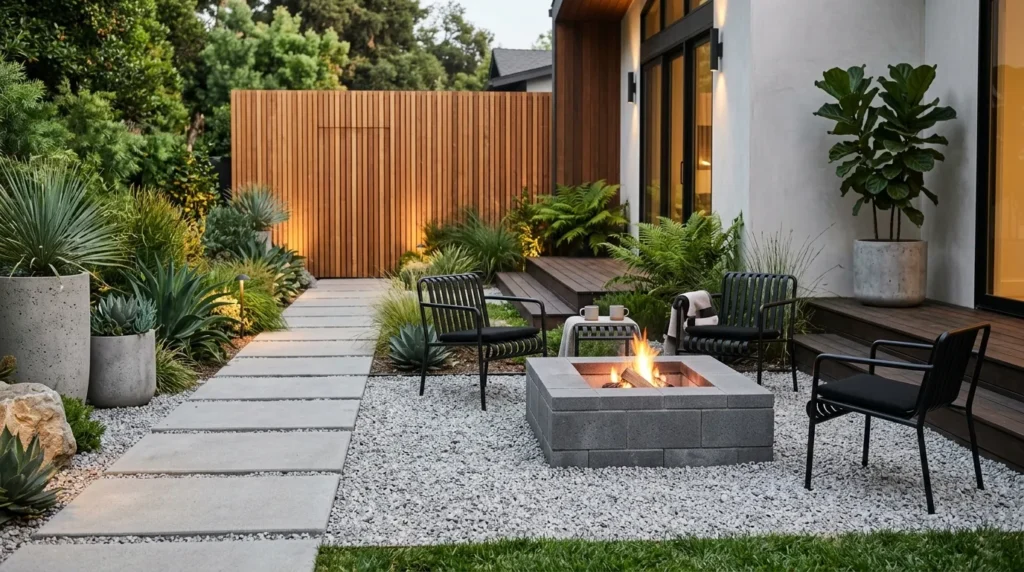
Simple masonry blocks can create a surprisingly polished appearance when the layout is clean.
The key is not hiding the simplicity of the material.
Instead, make the surrounding landscape intentional.
A smooth gravel base, modern seating, large planters, and restrained colors can turn a basic masonry fire feature into a contemporary focal point.
This approach works particularly well for homeowners who prefer clean lines and minimal decoration.
How To Style It
Use compatible masonry products specifically intended for outdoor fire-pit construction.
Follow the manufacturer’s installation requirements carefully.
Create a level base and maintain appropriate clearances.
Choose a monochromatic palette.
Gray masonry with black seating and green plants can look sophisticated.
Add a few warm wood accents to keep the space from feeling too stark.
Use large-scale planters rather than many tiny decorative objects.
6. Steel Bowl Feature
Quick Benefits
- Minimal construction
- Contemporary appearance
- Works in small spaces
- Easy to decorate around
- Creates a strong focal point
Why It Works
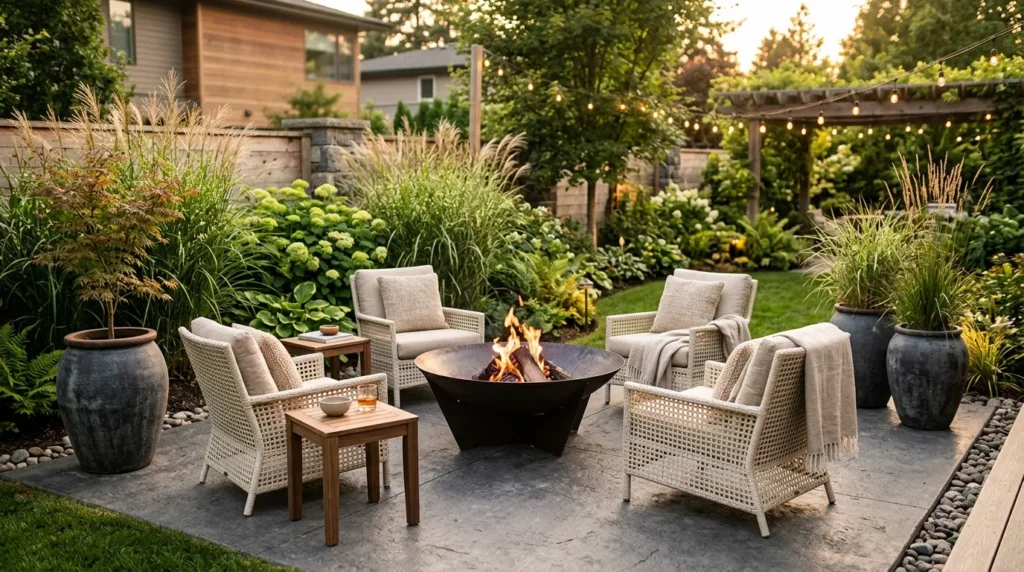
A fire bowl can be one of the simplest ways to achieve a designer-inspired appearance.
Instead of building the fire pit itself, you can make the surrounding landscape look custom.
A substantial steel bowl becomes a sculptural centerpiece.
Surround it with a carefully designed seating area, gravel, pavers, and plants.
This approach is particularly useful when you want a polished fire feature without constructing permanent masonry.
How To Style It
Choose a fire bowl designed and rated for outdoor use.
Place it on an appropriate noncombustible surface and follow the manufacturer’s clearance requirements.
Dark steel works beautifully with modern furniture and natural stone.
For a softer look, surround the area with warm wood furniture and neutral cushions.
Add oversized planters around the outer edge.
Keep the center visually uncluttered.
The simpler the fire bowl, the more important the surrounding composition becomes.
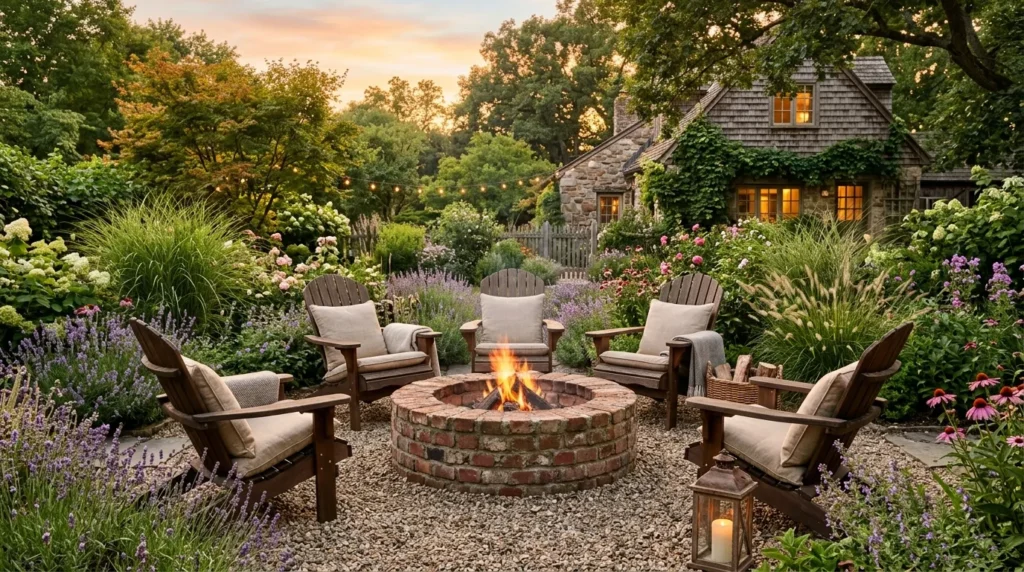
7. Brick Fire Pit
Quick Benefits
- Classic appearance
- Warm color and texture
- Works with traditional homes
- Pairs beautifully with gardens
- Can feel established and timeless
Why It Works
Brick brings warmth that can make an outdoor fire area feel instantly inviting.
It works particularly well in traditional American backyards, cottage gardens, farmhouse landscapes, and homes with brick exteriors.
A professionally built appearance comes from consistent brickwork.
The courses should look deliberate, and the surrounding surface should support the material.
Weathered brick can also make a newer fire area feel as though it has been part of the garden for years.
How To Style It
Coordinate the brick color with the house whenever possible.
Use warm-toned gravel or stone nearby.
Pair the fire pit with classic outdoor chairs or simple wooden benches.
Add garden beds around the outer perimeter.
Lavender, grasses, shrubs, and flowering perennials can soften the hardscape.
Warm lanterns or low landscape lights can emphasize the brick texture after sunset.
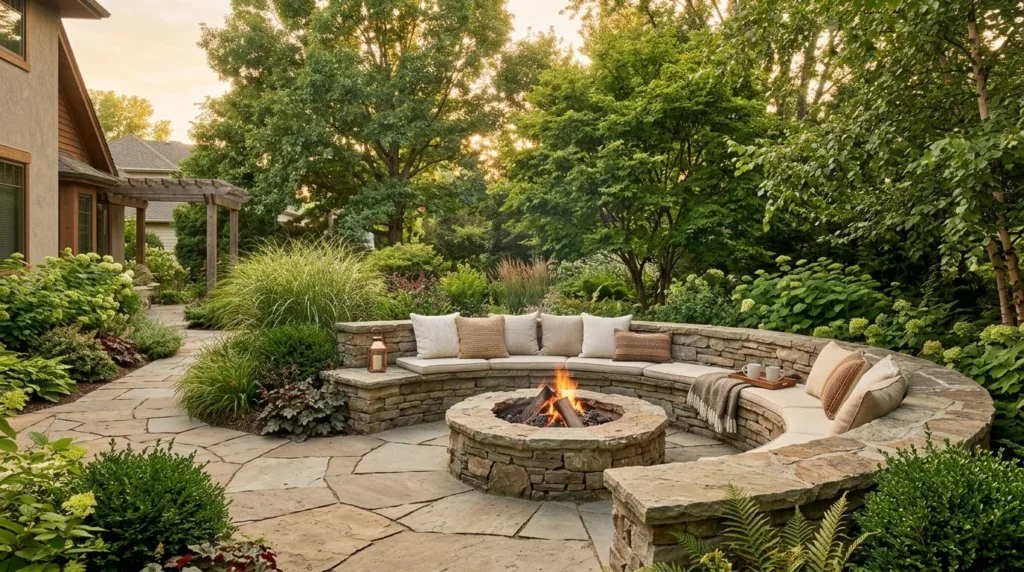
8. Retaining Wall Pit
Quick Benefits
- Integrates the fire area into the landscape
- Provides additional seating possibilities
- Works well on larger properties
- Creates strong architectural structure
- Can solve certain elevation challenges
Why It Works
A retaining-wall-inspired fire area can make the entire landscape feel custom designed.
Instead of thinking about the fire pit as an isolated object, the surrounding masonry becomes part of the architecture.
The walls can help define the seating zone and potentially provide informal seating surfaces where appropriately designed.
However, retaining structures can involve significant engineering considerations.
The appearance may be DIY-friendly, but the structural requirements should never be overlooked.
How To Style It
Use compatible retaining-wall materials and follow installation specifications.
Create a clear boundary between the fire area and surrounding lawn.
Use wide steps where elevation changes are involved.
Add comfortable cushions to appropriate built-in seating.
Keep plants away from the immediate fire zone.
Use taller greenery farther away to frame the area.
A simple palette of stone, gravel, wood, and greenery can make the space feel professionally landscaped.
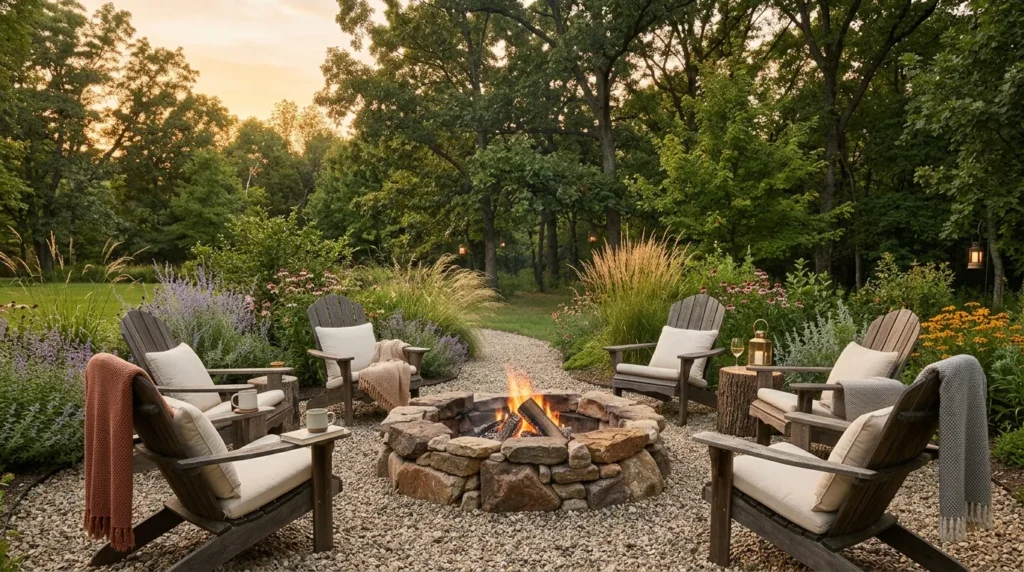
9. Rustic Stone Pit
Quick Benefits
- Blends with natural landscapes
- Creates an organic appearance
- Works with cottage gardens
- Adds texture
- Feels relaxed and welcoming
Why It Works
For homeowners who prefer an informal backyard, natural-looking stone can create the perfect fire pit.
Irregular textures and earthy colors help the structure blend into gardens rather than appearing like a manufactured feature.
The trick is choosing materials that are appropriate for fire-pit construction.
Not every attractive landscape stone is suitable for direct exposure to heat.
How To Style It
Use approved materials and follow the fire feature’s installation requirements.
Create a broad area around the pit with gravel or appropriate pavers.
Add weather-resistant wooden chairs.
Use natural linen-look cushions in cream, tan, or muted green.
Surround the outer perimeter with grasses and low shrubs.
A nearby wood storage area can become a practical decorative feature if it is positioned safely away from the fire.
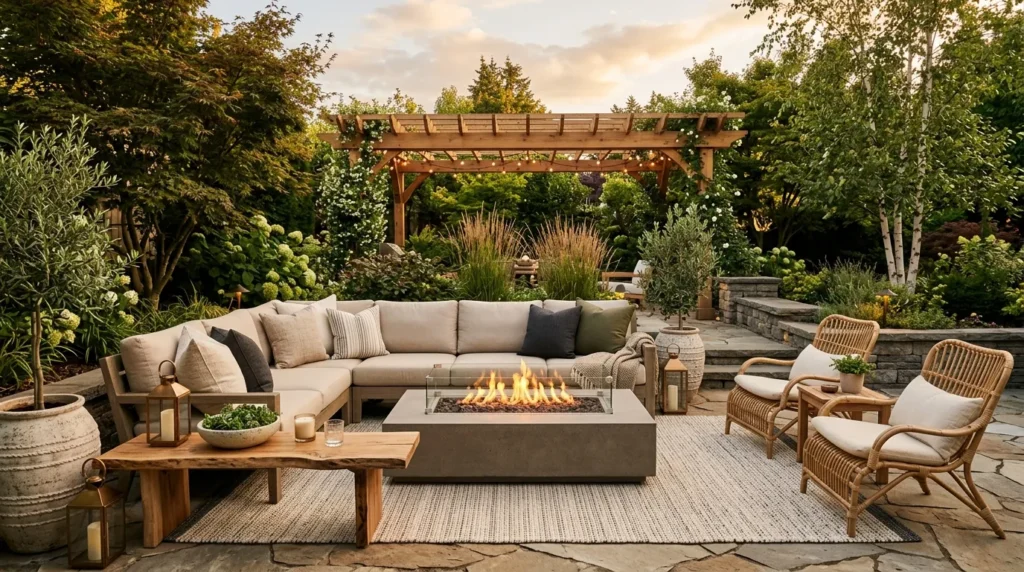
10. Complete Fire Lounge
Quick Benefits
- Creates a complete outdoor room
- Maximizes comfort
- Looks highly intentional
- Encourages entertaining
- Can increase backyard functionality
Why It Works
The most professional-looking fire pit isn’t always about the pit itself.
It’s about everything around it.
A complete fire lounge includes the fire feature, seating, ground surface, lighting, tables, planting, and circulation.
When all of these elements relate to one another, the area feels designed rather than assembled.
This is the approach to use if you want your backyard fire area to become a major outdoor destination.
How To Style It
Begin with the fire feature and establish a comfortable seating radius.
Use a mixture of chairs and benches if you want flexible seating.
Add a low coffee table or side tables.
Define the zone with gravel, pavers, or an appropriate outdoor surface.
Add warm lighting around the perimeter.
Use large planters to create visual boundaries.
If shade is needed during the day, consider a pergola positioned safely away from the fire feature.
Keep the overall palette cohesive with your home and existing landscape.
How To Make A DIY Fire Pit Look Professionally Built
The biggest secret is planning the entire zone rather than just the fire pit.
A professionally designed fire area usually has a clear purpose and visual boundary.
Start by deciding where people will sit.
Then determine how they will reach the area.
Think about the ground beneath their feet.
Consider where drinks will go.
Look at the view from the house.
Then choose the fire feature.
This order can prevent many common design mistakes.
Symmetry can also help.
If you have a circular fire pit, arrange seating around the same visual center.
If you have a rectangular fire feature, repeat those lines with the surrounding furniture or pavers.
Finally, don’t overcrowd the area.
A few substantial pieces generally look more polished than many small accessories.
Choosing The Right Fire Pit Location
Location should always come before aesthetics.
Keep the fire feature away from structures, fences, low branches, combustible materials, and other hazards according to applicable local regulations and the manufacturer’s instructions.
Consider wind direction.
Smoke can become uncomfortable if it consistently blows toward your seating or the house.
Think about drainage, too.
Water should not collect around the fire area.
Also consider access.
You don’t want guests walking across a muddy lawn every time they use the fire pit.
A stable, appropriate surface makes the space more comfortable and easier to maintain.
Before building, check local fire regulations, burn restrictions, permits, and HOA rules where applicable.
Seating Ideas For A Fire Pit
The seating arrangement can change the entire atmosphere.
Adirondack chairs create a relaxed traditional look.
Woven lounge chairs feel more resort-inspired.
Built-in masonry benches can provide a custom appearance.
A low outdoor sofa can create a more contemporary conversation area.
Whatever you choose, prioritize weather resistance and comfort.
Leave enough room for people to move around safely.
Avoid placing seating so close to the fire feature that it creates unnecessary heat or safety concerns.
Side tables are particularly useful.
They keep drinks and snacks from being placed on the ground and make the fire area feel more like an outdoor living room.
Fire Pit Safety Essentials
A beautiful fire pit should also be a responsible one.
Before using any DIY or purchased fire feature:
- Check local fire regulations.
- Check HOA restrictions if applicable.
- Follow the manufacturer’s installation and operating instructions.
- Maintain required clearance from structures and combustible materials.
- Use only appropriate fuel for the specific fire feature.
- Keep children and pets supervised.
- Keep suitable extinguishing equipment nearby.
- Never leave a fire unattended.
- Fully extinguish the fire before leaving the area.
- Avoid using a fire pit during conditions where local authorities prohibit outdoor burning.
For gas-powered systems, electrical work, permanent gas connections, or complex masonry, use appropriately qualified professionals where required.
FAQ
What is the easiest DIY fire pit idea?
A properly rated fire bowl or simple gravel fire area can be easier than constructing a permanent masonry fire pit. The surrounding landscape can provide most of the visual impact. Always choose a fire feature designed for outdoor use and follow its installation, clearance, and operating requirements.
How can I make a fire pit look expensive?
Focus on the surrounding area. Use a cohesive ground surface, comfortable seating, large planters, subtle lighting, and a clear layout. Repeating materials such as stone, wood, and metal throughout the space can make even a simple fire feature feel professionally designed.
What should I put around a DIY fire pit?
Depending on the design and local requirements, appropriate options may include gravel, pavers, masonry, or other suitable noncombustible surfaces. Comfortable outdoor seating can surround the area at a safe distance. Avoid placing combustible decorative materials too close to the fire.
Is gravel good around a fire pit?
Gravel can be useful for defining a fire-pit seating area and is popular for informal backyard designs. Choose a suitable material and prepare the base correctly. The specific surface and required clearances should also be appropriate for the fire feature you’re installing.
How far should a fire pit be from a house?
There isn’t one universal distance because requirements vary by location, fire-pit type, fuel source, manufacturer instructions, and local regulations. Always follow the stricter applicable requirement rather than relying on a generic internet measurement.
Can I build a fire pit myself?
Some homeowners can safely complete relatively simple projects, but the difficulty depends on the design. Permanent masonry, excavation, retaining walls, gas connections, and complex installations can involve significant safety and structural considerations. Follow local rules and seek professional help when the project exceeds your experience.
What is the best seating for a backyard fire pit?
Comfortable weather-resistant chairs, benches, or outdoor sofas can all work. Adirondack chairs are classic, woven seating creates a relaxed resort feel, and low-profile sofas suit contemporary spaces. Choose furniture based on the available space and maintain appropriate clearance around the fire feature.
Conclusion
A backyard fire pit can be much more than a place to build a fire.
Done thoughtfully, it becomes the center of an outdoor room where people naturally gather.
And creating that feeling doesn’t require an elaborate landscaping budget.
A simple stone circle can look timeless.
A gravel fire lounge can be affordable and relaxed.
A square paver design can complement a modern home.
A steel fire bowl can provide a sculptural focal point with minimal construction.
The biggest difference comes from everything surrounding the fire.
Choose comfortable seating.
Create a defined ground surface.
Add subtle lighting.
Introduce a few large planters.
Consider the path people will take to reach the area.
Most importantly, plan safety into the design from the beginning rather than treating it as an afterthought.
If you’re starting from scratch, begin with the location and intended use.
Once those decisions are settled, choose the fire feature that fits the space.
Then layer the surrounding landscape gradually.
The result can be a backyard gathering space that feels comfortable, cohesive, and intentionally designed — even when the project started as a simple DIY idea.
Related Articles
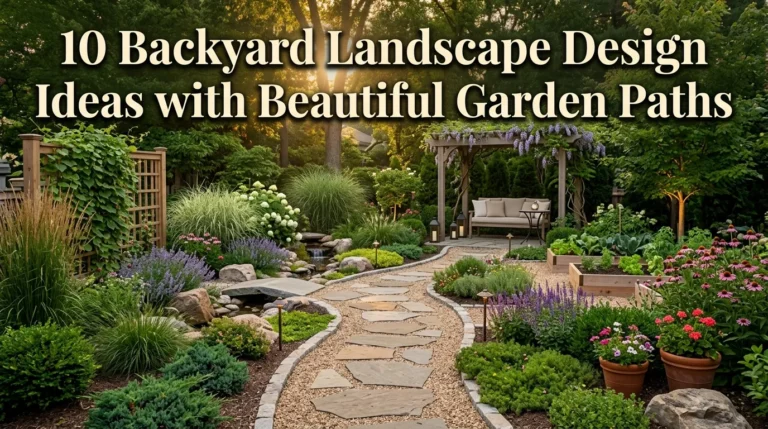
- 10 Backyard Landscape Design Ideas with Beautiful Garden Paths
- 10 Garden Decor Ideas That Transform Any Backyard
- 10 DIY Garden Projects for a Beautiful Backyard
- 10 Backyard Oasis Ideas for a Relaxing Outdoor Escape
- 10 Outdoor Decor Ideas for a Beautiful Backyard