

10 Aesthetic Bedroom Ideas with Warm Neutral Decor
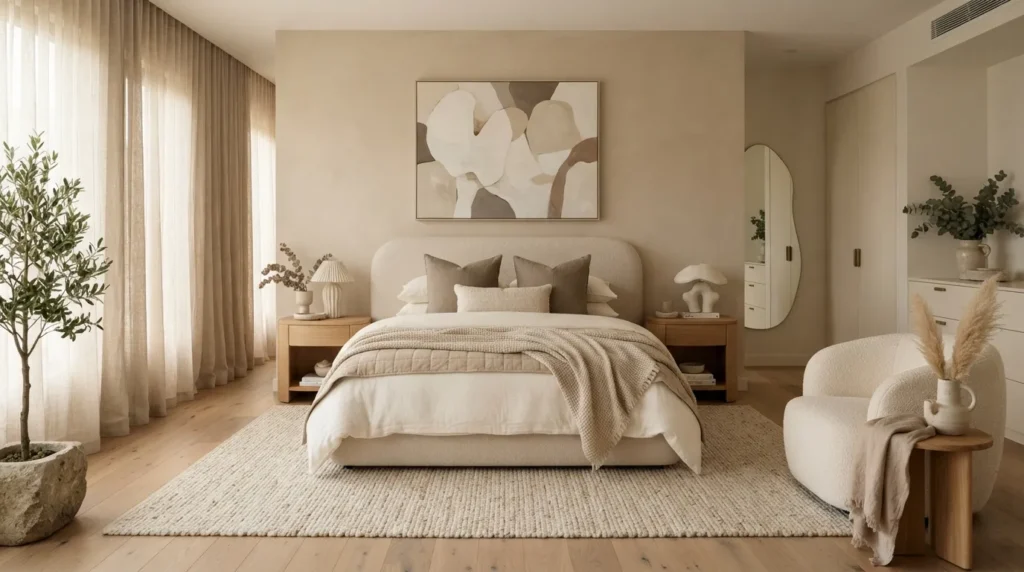
A bedroom can feel beautiful without being overly decorated. In fact, some of the most inviting bedrooms rely on a quiet combination of warm neutrals, soft textures, natural materials, and thoughtful lighting.
Warm neutral decor works particularly well when you want a bedroom to feel calm but not cold. Instead of using stark white throughout the room, you can layer shades such as creamy ivory, oatmeal, beige, taupe, warm gray, caramel, and soft brown. These colors create depth while keeping the overall atmosphere relaxed.
The best part is that this style doesn’t require a complete bedroom makeover.
You can often create the look by changing a few high-impact elements: bedding, curtains, lighting, rugs, wall art, or accent furniture. A simple wood nightstand paired with linen bedding can completely change the feeling of a room. Add a textured throw, warm lamp, and a few carefully selected accessories, and suddenly the bedroom feels much more intentional.
I’ve noticed that warm neutral bedrooms tend to look especially polished when they aren’t too perfectly matched. Mixing materials is what keeps the palette from becoming flat. Think woven baskets beside smooth ceramic, linen beside boucle, light oak beside darker wood, and matte finishes beside subtle metallic accents.
This approach also works across different decorating styles. It can lean modern, organic, minimalist, transitional, Scandinavian, farmhouse, or even softly luxurious depending on the furniture and accessories you choose.
If your bedroom currently feels plain, chilly, or visually disconnected, these ideas can help you create a space that feels layered, comfortable, and personal without relying on bold colors.
Table of Contents
1. Layered Cream Bedding
Create a soft foundation with multiple warm neutral textiles.
2. Natural Wood Accents
Bring warmth and visual depth through natural wood.
3. Textured Neutral Walls
Add subtle dimension without overwhelming the room.
4. Soft Ambient Lighting
Use warm lighting to create a relaxed atmosphere.
5. Woven Bedroom Details
Introduce natural texture through baskets and accessories.
6. Taupe Accent Furniture
Use deeper neutrals to anchor the room.
7. Linen Window Treatments
Soften windows with lightweight natural fabrics.
8. Cozy Neutral Rug
Add warmth and comfort underfoot.
9. Minimal Earthy Decor
Keep accessories simple and connected to nature.
10. Warm Layered Styling
Bring every element together for a finished look.
1. Layered Cream Bedding
Quick Benefits
- Creates an instantly cozy foundation
- Makes the bedroom feel softer
- Adds depth without bold colors
- Works with many decorating styles
- Makes seasonal updates easy
Why It Works
Bedding takes up a large visual portion of the bedroom, so changing it can have a bigger impact than adding lots of small accessories.
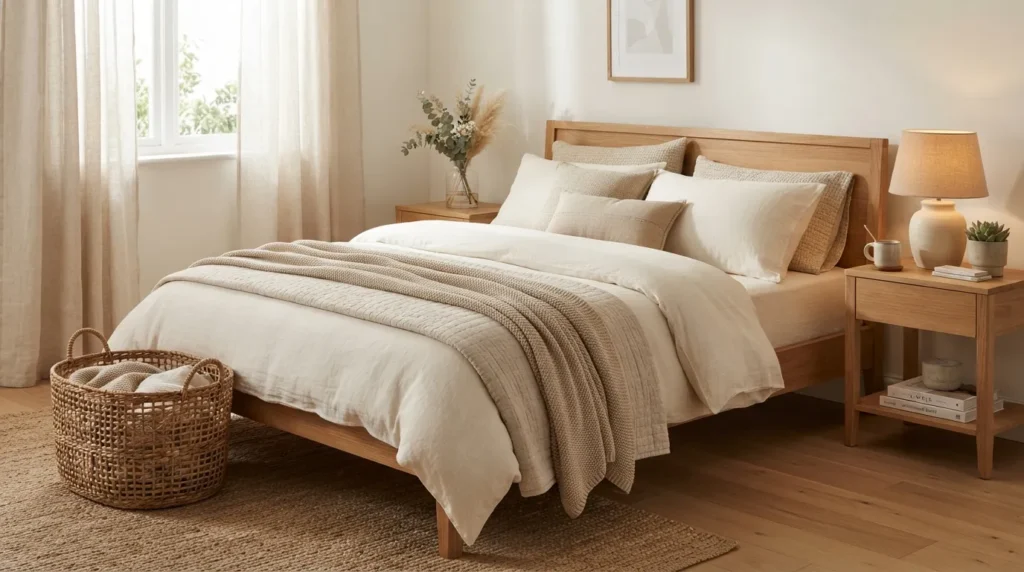
Cream, ivory, oatmeal, and warm beige bedding create a gentle foundation that feels relaxed rather than stark. Layering several shades within the same neutral family also prevents the bed from looking flat.
Instead of choosing one perfectly matching comforter and sheet set, combine slightly different tones and textures. The subtle variation makes the bed feel more collected and inviting.
In my experience, this is one of the easiest ways to make a bedroom look intentionally styled without making it feel overly decorated.
How To Style It
Start with warm ivory or cream sheets.
Add an oatmeal duvet or quilt, then layer a beige coverlet or textured blanket near the foot of the bed.
Use two or three pillow textures rather than filling the entire bed with decorative pillows.
Linen, cotton, waffle-knit, boucle, and lightweight woven fabrics work beautifully together.
For a polished appearance, keep the colors close in tone while allowing the textures to provide contrast.
Finish with one folded throw casually placed across the bottom corner.
2. Natural Wood Accents
Quick Benefits
- Adds warmth to neutral colors
- Creates natural visual contrast
- Works with modern and traditional interiors
- Makes the bedroom feel grounded
- Adds organic character
Why It Works
A warm neutral bedroom can sometimes feel too pale if every surface is upholstered, painted, or covered in fabric.
Natural wood solves that problem.
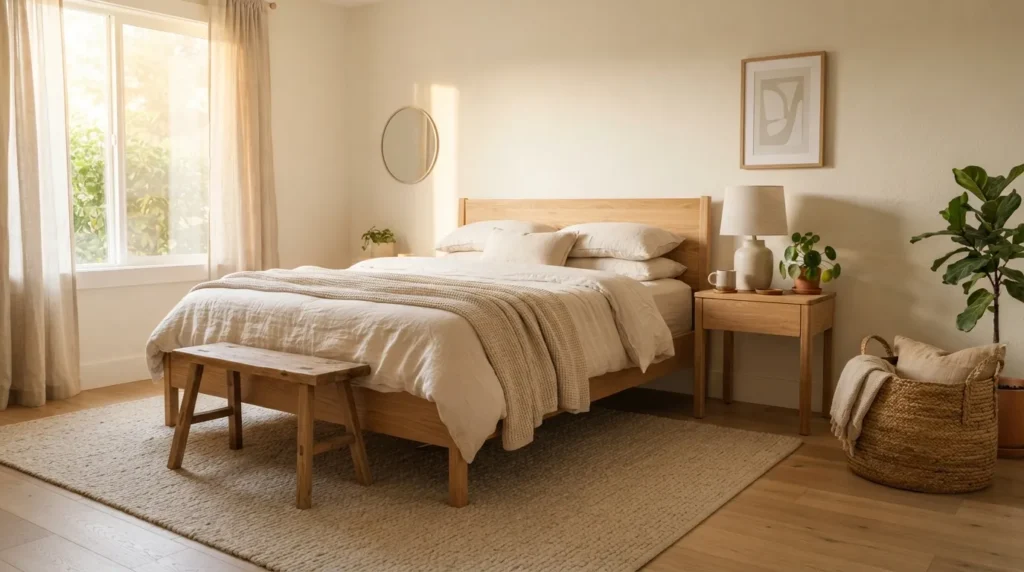
Wood introduces warmth, texture, and subtle variation while maintaining a calm color palette. A light oak nightstand can brighten the room, while walnut or medium-toned wood can create a richer, more sophisticated effect.
You don’t need a matching bedroom furniture set.
Actually, mixing wood tones carefully can make the room feel more collected and less like a showroom.
How To Style It
Choose one primary wood tone for larger furniture pieces.
For example, use an oak bed frame with a slightly darker wooden nightstand.
Add smaller wood elements through picture frames, trays, stools, or decorative bowls.
Avoid introducing too many dramatically different wood colors.
If your room already has wood flooring, use that finish as your starting point.
Pair natural wood with cream bedding and warm beige walls for an organic, timeless combination.
3. Textured Neutral Walls
Quick Benefits
- Adds dimension without strong color
- Creates a sophisticated backdrop
- Makes simple furniture stand out
- Works well in rental-friendly designs
- Supports layered decor
Why It Works
Neutral walls don’t have to be boring.
The secret is choosing a warm undertone and introducing texture or subtle visual variation.
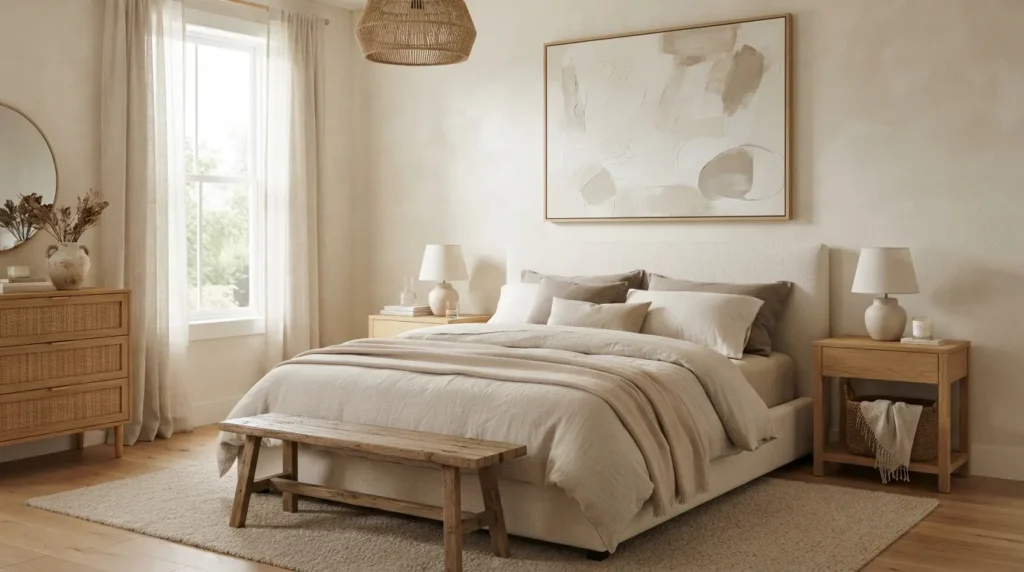
A creamy painted wall can look beautiful on its own, but adding linen-style artwork, plaster-inspired finishes, woven wall decor, or textured panels can make the room feel more dimensional.
If you’re renting, you can create much of the same effect with removable wallpaper, oversized textile art, or a large framed print.
The wall should support the bedroom rather than compete with it.
How To Style It
For a soft look, choose warm white, ivory, beige, or light greige.
Hang one oversized piece of textured artwork above the bed instead of covering the wall with many small pieces.
Natural canvas, linen, woven fibers, or muted abstract art can work beautifully.
If you prefer architectural detail, consider removable molding or renter-friendly wall treatments where appropriate.
Keep the artwork within the same neutral family so the room feels cohesive.
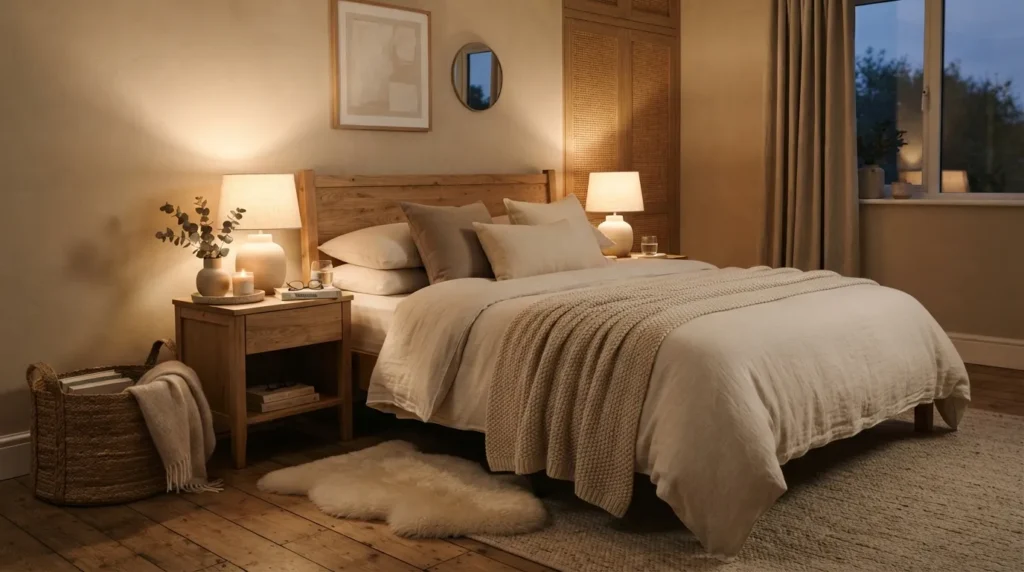
4. Soft Ambient Lighting
Quick Benefits
- Makes neutral colors feel warmer
- Creates a relaxing evening atmosphere
- Adds visual layers
- Improves bedside functionality
- Highlights textures
Why It Works
Lighting can completely change how warm neutrals look.
A beige bedroom under harsh overhead lighting can feel flat and uninspiring. The same room under layered, warm-toned lighting can feel cozy and sophisticated.
Instead of relying on one ceiling fixture, create several smaller points of light.
Bedside lamps, wall sconces, floor lamps, and softly shaded accent lights allow you to control the atmosphere throughout the evening.
How To Style It
Place matching or complementary lamps on the nightstands.
Choose shades that diffuse the light rather than exposing a bright bulb.
Warm-toned bulbs can help create a comfortable evening environment; always follow the fixture and bulb manufacturer’s recommendations.
Add a small floor lamp in an empty corner if space allows.
For a particularly cozy effect, use a softly illuminated reading area with a comfortable chair and small side table.
The goal is gentle layers rather than a brightly illuminated room.
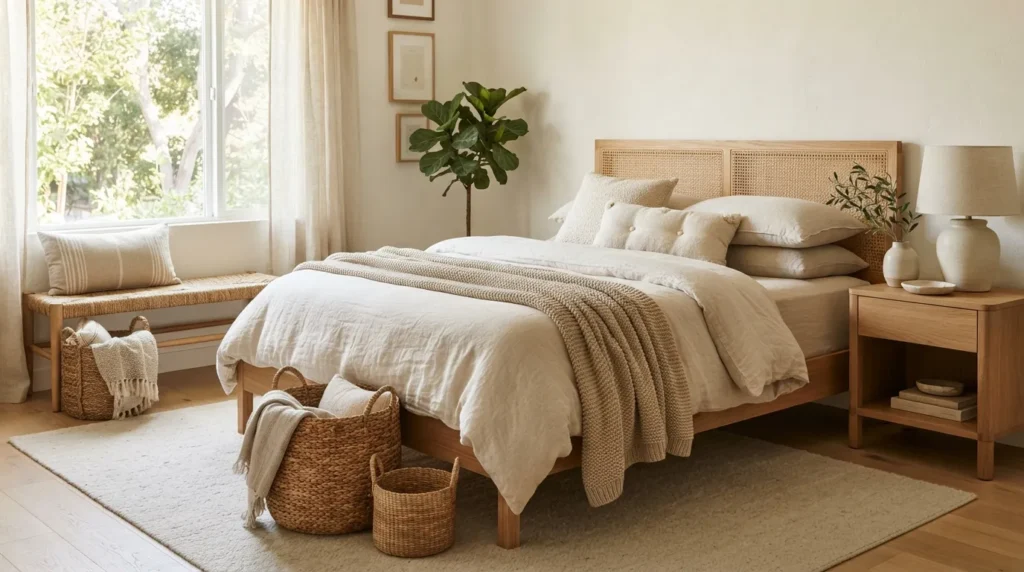
5. Woven Bedroom Details
Quick Benefits
- Adds natural texture
- Breaks up smooth surfaces
- Provides practical storage
- Supports organic styling
- Creates a relaxed atmosphere
Why It Works
Texture is essential when working with a restrained color palette.
Without texture, several shades of beige can begin to look almost identical.
Woven materials provide the contrast you need without introducing a new strong color.
Think rattan, seagrass, cane, jute, wicker, and natural fibers.
These materials also have a practical advantage because baskets can store blankets, laundry, accessories, or extra pillows.
How To Style It
Place one large woven basket beside the bed for blankets.
Add a smaller basket near a dresser or reading chair.
A rattan bench at the foot of the bed can provide both seating and texture.
Don’t use woven accessories everywhere.
Two or three strategically placed pieces are usually enough.
Pair them with smooth ceramics, linen textiles, and natural wood for a balanced composition.
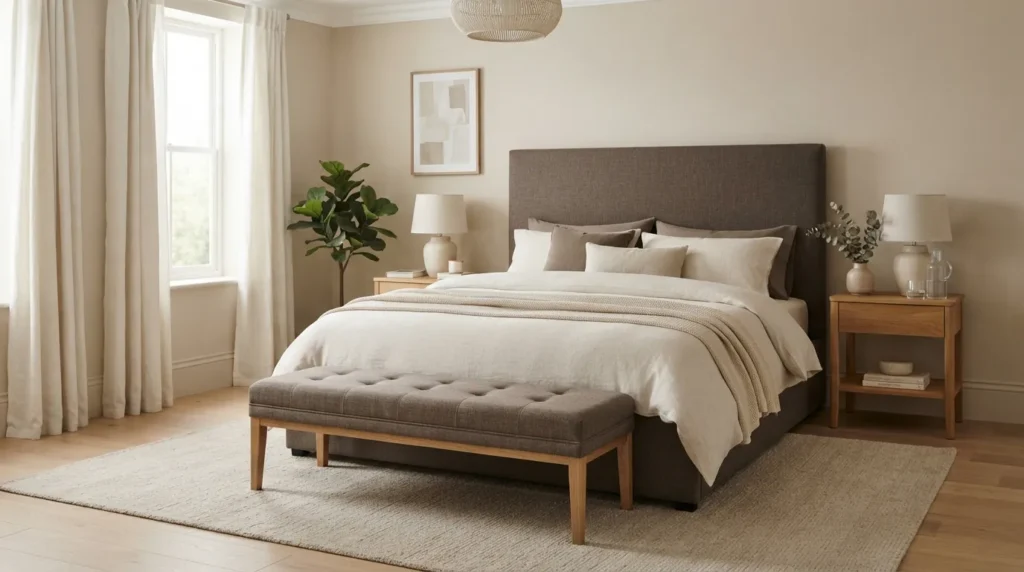
6. Taupe Accent Furniture
Quick Benefits
- Adds depth to light bedrooms
- Creates a sophisticated contrast
- Keeps the palette neutral
- Helps anchor large spaces
- Works with warm and cool accents
Why It Works
If an all-cream bedroom feels too pale, introduce a slightly deeper neutral.
Taupe is particularly useful because it sits between gray and brown, giving you depth without the heaviness of dark furniture.
A taupe upholstered headboard, accent chair, bench, or dresser can visually anchor the room while keeping the overall atmosphere soft.
This is especially helpful in larger bedrooms where very light furniture can sometimes feel disconnected from the space.
How To Style It
Choose one larger taupe element rather than scattering small taupe objects everywhere.
An upholstered headboard is an excellent option.
You could also use a taupe bench at the foot of the bed or a comfortable accent chair near a window.
Balance the darker neutral with cream bedding, warm wood, and lighter curtains.
If the taupe has a gray undertone, repeat a subtle warm gray elsewhere so it feels intentional.
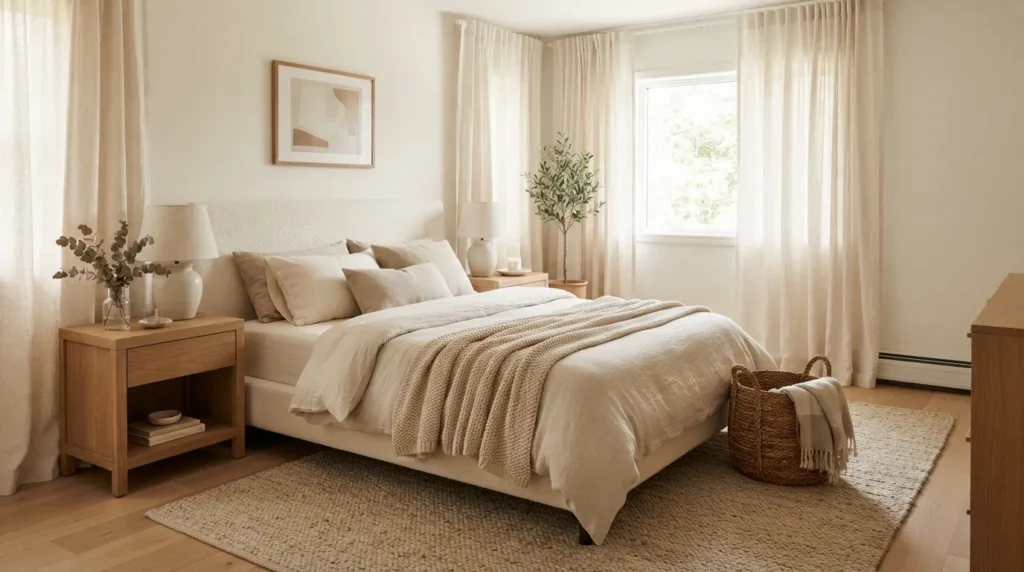
7. Linen Window Treatments
Quick Benefits
- Softens natural light
- Adds movement and texture
- Makes windows feel finished
- Supports a relaxed aesthetic
- Creates privacy
Why It Works
Windows can easily become an overlooked part of bedroom styling.
Heavy, visually dominant curtains can make a small room feel enclosed, while completely bare windows may leave the space feeling unfinished.
Lightweight linen-look or linen curtains provide a middle ground.
They soften the natural light and introduce another layer of texture without overpowering the warm neutral palette.
How To Style It
Choose ivory, warm white, oatmeal, or soft beige curtains.
For a more spacious appearance, install the curtain rod higher than the window frame when the room and installation conditions allow.
Let the panels extend beyond the sides of the window so they frame the opening without blocking unnecessary natural light.
Pair them with simple shades or blinds when additional privacy or light control is needed.
Natural daylight filtering through neutral fabric creates one of the most beautiful effects in this style of bedroom.
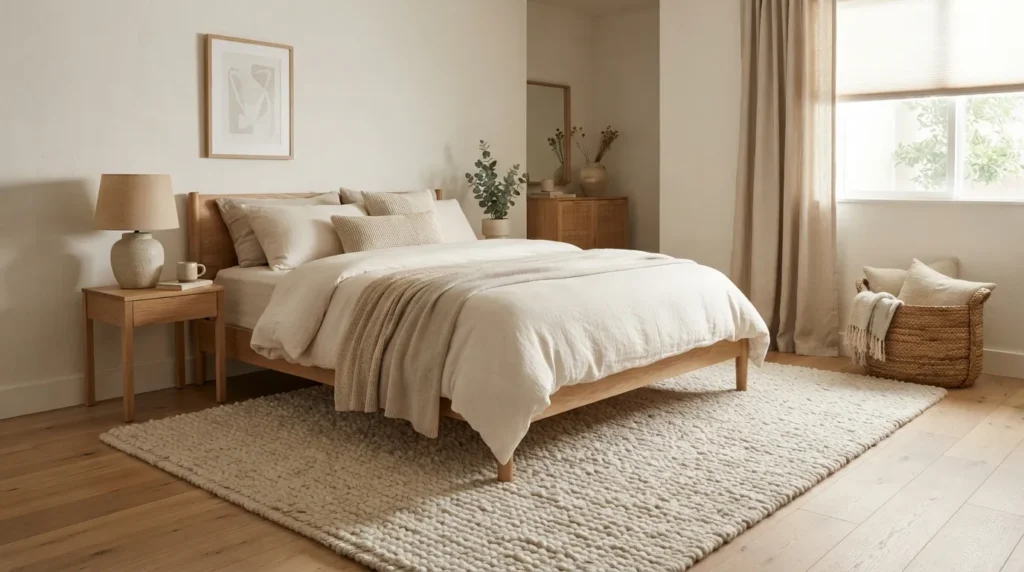
8. Cozy Neutral Rug
Quick Benefits
- Adds softness underfoot
- Defines the sleeping area
- Reduces visual harshness
- Introduces another texture
- Makes the bedroom feel finished
Why It Works
A rug can visually connect the bed and surrounding furniture while making the room feel warmer.
In a neutral bedroom, texture matters more than dramatic pattern.
A cream, oatmeal, beige, or subtle taupe rug can create a soft foundation while allowing the bedding and furniture to remain the focus.
A rug also makes the bedroom more comfortable during colder mornings, particularly over hard flooring.
How To Style It
Choose a rug large enough to extend beyond the sides and lower portion of the bed where the room allows.
For a king or queen bed, a generously sized area rug can create a balanced foundation.
If the room is tight, runners or smaller rugs on each side of the bed can work.
Look for low-pile or medium-pile options that are practical for your household.
Subtle patterns can help hide everyday wear while maintaining the neutral aesthetic.
9. Minimal Earthy Decor
Quick Benefits
- Keeps surfaces calm
- Adds personality
- Prevents visual overload
- Connects the room to nature
- Makes cleaning easier
Why It Works
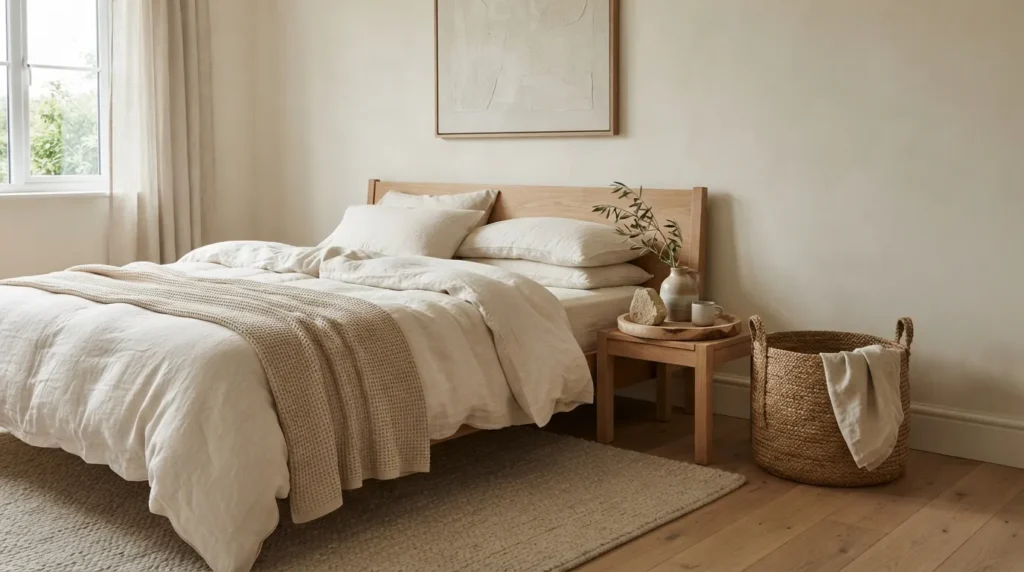
Warm neutral decor doesn’t require dozens of accessories.
In fact, a few carefully chosen pieces often look more sophisticated than a room filled with decorative objects.
Earthy accessories such as ceramic vessels, dried branches, stone-inspired objects, wooden bowls, and simple greenery can add personality without disrupting the palette.
The key is restraint.
Your bedroom should feel like a place to rest, not a display shelf.
How To Style It
Choose three or four decorative categories.
For example:
A ceramic vase.
A small plant.
A wooden tray.
One piece of artwork.
Place these items across different surfaces rather than grouping everything on one dresser.
Vary heights and shapes.
Keep some empty space around the objects.
This negative space allows each piece to look intentional.
10. Warm Layered Styling
Quick Benefits
- Pulls the room together
- Creates a designer-inspired finish
- Balances color and texture
- Makes the space feel personal
- Works across decorating styles
Why It Works
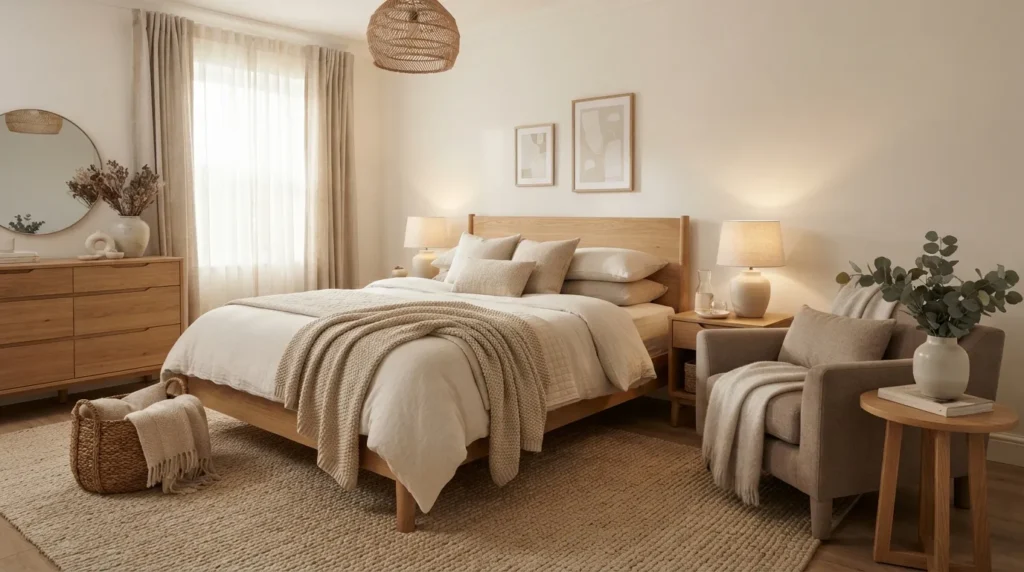
The difference between a room that feels simply neutral and one that feels beautifully styled often comes down to layering.
Instead of relying on one beige color, combine several related shades and materials.
Cream bedding can sit against a warm beige wall.
Natural wood can contrast with soft linen.
A taupe accent can anchor the room.
A woven basket can add texture.
Warm lighting can tie everything together after sunset.
The individual pieces don’t have to match perfectly.
They simply need to belong to the same visual family.
How To Style It
Start with your largest surfaces: walls, flooring, bed, and window treatments.
Then add furniture.
Next, introduce textiles.
Finish with lighting and a small number of accessories.
Use the 60-30-10 concept loosely rather than rigidly: let one dominant neutral carry most of the room, a secondary neutral create contrast, and a small accent tone provide interest.
Warm brown, muted olive, dusty clay, or brushed brass can work beautifully as subtle accents.
How To Choose A Warm Neutral Color Palette
The easiest way to create a cohesive warm neutral bedroom is to choose a small family of colors before buying accessories.
Start with one dominant shade.
This might be warm white, ivory, beige, or light greige.
Then choose a secondary shade that is slightly darker.
Taupe, oatmeal, camel, or warm gray can work well.
Finally, introduce one accent color.
This doesn’t have to be bright.
Muted sage, dusty terracotta, soft brown, or antique brass can add enough contrast to keep the room interesting.
Before committing to paint or large furnishings, test colors in your actual bedroom lighting. A shade can look dramatically different in morning daylight, afternoon sun, and evening lamp light.
How To Make Warm Neutrals Look Expensive
A sophisticated bedroom isn’t necessarily about expensive furniture.
It is often about proportion, texture, and editing.
Choose fewer decorative pieces but make each one count.
Use curtains that extend elegantly around the window.
Choose bedding with substantial texture.
Keep nightstands relatively uncluttered.
Repeat materials subtly.
For example, if you use natural oak furniture, repeat that wood tone in a small frame or tray.
If your bedding is cream, repeat that color in the curtains or rug.
And don’t underestimate empty space.
Leaving part of a dresser clear can make the entire room feel more luxurious.
Common Warm Neutral Bedroom Mistakes
Using only one beige
One shade throughout the entire bedroom can look flat.
Choosing too many similar textures
Texture is useful, but excessive repetition can make the room feel busy.
Ignoring undertones
Warm beige beside a strongly blue-gray neutral can look disconnected.
Overdecorating surfaces
Neutral rooms still need visual breathing room.
Using harsh lighting
Cool or overly bright lighting can make warm colors appear less inviting.
Matching everything perfectly
A collected room usually feels more natural than a perfectly coordinated furniture set.
FAQ
How do I make a neutral bedroom look cozy?
Layer different textures and warm shades rather than relying on one neutral color. Combine cream bedding, linen curtains, natural wood, woven baskets, a soft rug, and warm ambient lighting. Small earthy accessories can add personality while keeping the room calm and uncluttered.
What colors work with warm neutral bedroom decor?
Warm white, ivory, beige, oatmeal, taupe, camel, warm gray, soft brown, muted sage, and dusty terracotta can all complement a warm neutral bedroom. Natural wood and subtle brass accents can also add warmth without overwhelming the palette.
How do I make a beige bedroom look less boring?
Use texture and tonal variation. Combine smooth ceramics with woven baskets, linen bedding with chunky throws, natural wood with upholstered furniture, and several related neutral shades. A small amount of greenery or muted earthy color can also prevent the room from feeling flat.
What bedding looks best in a warm neutral bedroom?
Cream, ivory, oatmeal, beige, and warm taupe bedding work particularly well. Instead of matching everything exactly, layer different fabrics such as cotton, linen, waffle-knit, quilted materials, and lightweight woven blankets to create depth.
Can warm neutral decor work in a small bedroom?
Yes. Warm neutrals can make a small bedroom feel calm and cohesive when used thoughtfully. Keep larger surfaces relatively light, use mirrors strategically, avoid excessive furniture, and choose storage that blends with the room rather than adding visual weight.
How can I add color without ruining a neutral bedroom?
Introduce color in small, muted doses. Soft sage, dusty terracotta, muted olive, warm brown, or aged brass can provide contrast while maintaining the peaceful quality of the neutral palette. Use one accent color across a few small elements rather than spreading many colors throughout the room.
What makes a bedroom look professionally styled?
Professional-looking bedrooms usually have a cohesive palette, varied textures, balanced furniture placement, layered lighting, appropriately scaled artwork, and intentional empty space. The room doesn’t need to be expensive; proportion, editing, and consistency often have the greatest visual impact.
Conclusion
Warm neutral decor is one of the easiest ways to create a bedroom that feels calm, timeless, and inviting.
The secret isn’t choosing one perfect shade of beige.
It’s layering.
Cream bedding becomes more interesting when paired with linen and textured throws. Natural wood adds warmth against soft walls. Woven baskets bring organic texture. Taupe furniture creates depth. A neutral rug softens the floor, while warm lighting changes the atmosphere once the sun goes down.
You don’t need to change everything at once.
Start with the bed because it usually has the greatest visual impact.
Then consider the lighting, curtains, rug, and one or two natural accessories.
If your room already has furniture you love, work around it instead of replacing it simply to follow a trend.
The most beautiful bedrooms often feel personal rather than perfectly coordinated.
Choose warm neutrals that make you feel comfortable, add textures you genuinely enjoy, and leave enough empty space for the room to breathe.
Whether your style leans modern, minimalist, organic, farmhouse, Scandinavian, or softly luxurious, these ideas can be adapted to fit your home.
Start with one layer, then build gradually.
The result can be a bedroom that feels peaceful in the morning, cozy at night, and beautiful enough to make you want to linger a little longer.
Related Articles
- 10 Cozy Aesthetic Bedroom Ideas You’ll Love
- 10 Modern Aesthetic Bedroom Ideas for Adults
- 10 Modern Bedroom Ideas with Cozy Minimalist Style
- 10 Bedroom Wall Decor Ideas That Add Luxury on a Budget
- 10 Ideas on How to Make a Small Bedroom Look Expensive