10 Backyard Landscape Design Ideas with Beautiful Garden Paths
A beautiful backyard path can do much more than connect one part of your yard to another.
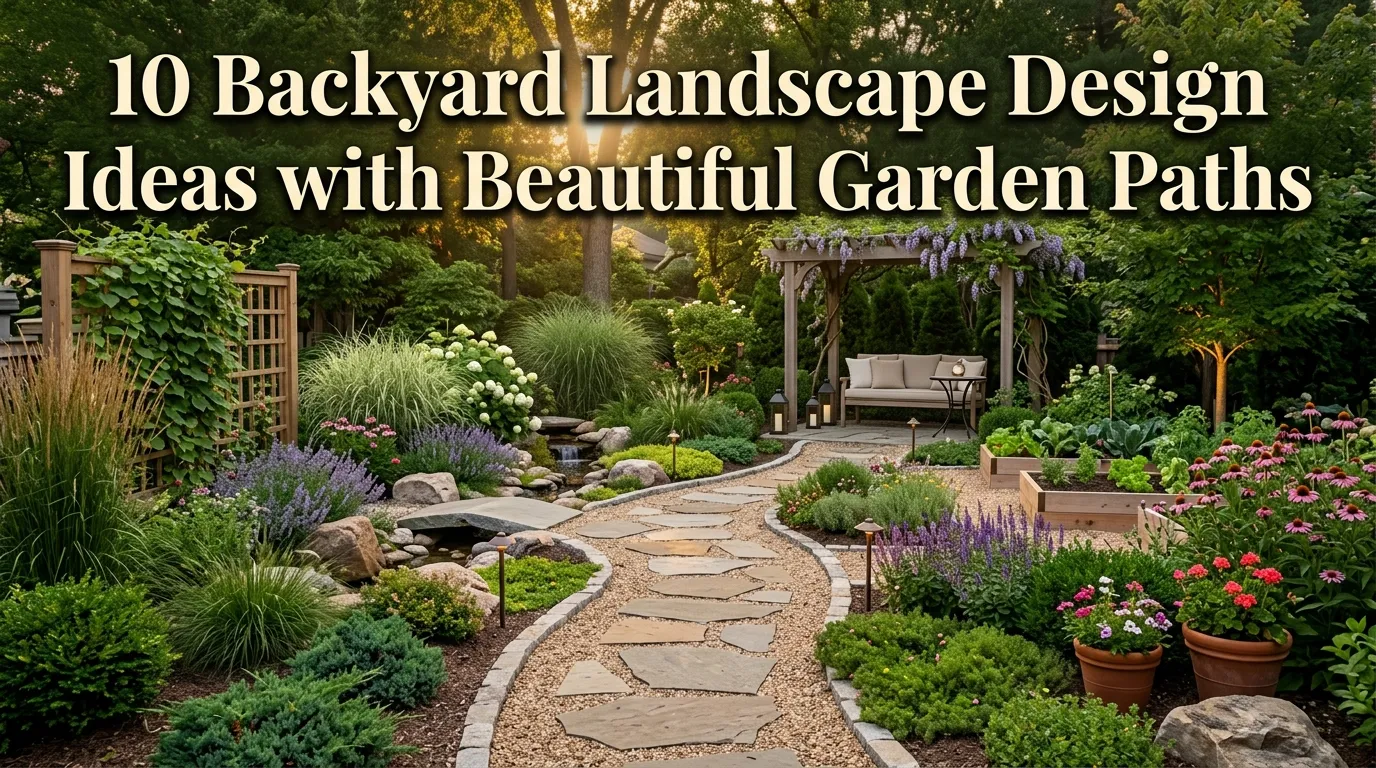
The right garden path can give the landscape structure, guide people toward a patio or garden, create a sense of discovery, and make even a modest backyard feel intentionally designed.
I’ve noticed that paths are often treated as an afterthought. Homeowners choose plants and furniture first, then add a walkway wherever there happens to be leftover space. But when the path is considered part of the landscape from the beginning, it can become one of the most attractive features in the entire yard.
You don’t need a huge property or an expensive landscaping project to create that effect.
A simple gravel walkway can feel relaxed and cottage-inspired. Large stepping stones can create a modern look. Brick can add timeless character, while natural stone can blend beautifully with gardens and mature planting.
The surrounding plants matter just as much.
Ornamental grasses, flowering perennials, shrubs, ground covers, and small trees can soften hard edges and make a path feel established.
For many American homeowners, a backyard path also needs to be practical. It should handle normal foot traffic, provide reasonable drainage, and remain comfortable to use in different weather conditions.
That’s why the most successful designs balance beauty with function.
Whether you’re refreshing an existing backyard, creating a garden from scratch, or simply looking for an affordable weekend project, these ideas can help you design a walkway that feels connected to the rest of your outdoor space.
The goal isn’t simply to create a path.
It’s to create a journey through the garden.
Table of Contents
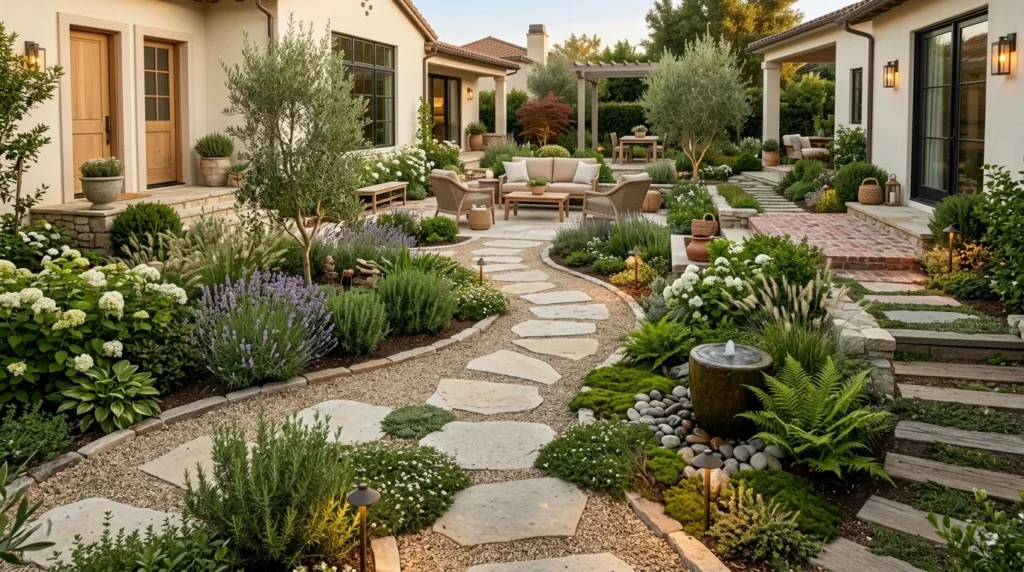
1. Curved Stone Path
Use gentle curves to create a natural garden journey.
2. Gravel Garden Walk
Create an affordable, relaxed walkway with loose stone.
3. Large Stepping Stones
Add modern structure with oversized individual stones.
4. Brick Garden Path
Bring timeless character with traditional brick.
5. Cottage Flower Border
Soften the walkway with colorful garden planting.
6. Modern Concrete Walkway
Create clean lines with contemporary concrete.
7. Wood Chip Trail
Add an inexpensive natural path for casual gardens.
8. Natural Stone Steps
Connect different elevations with beautiful stone.
9. Lush Green Edging
Frame the walkway with layers of greenery.
10. Destination Garden Path
Lead the eye toward a meaningful backyard feature.
1. Curved Stone Path
Quick Benefits
- Creates a natural flow
- Makes the garden feel larger
- Adds visual movement
- Works with informal landscapes
- Creates a sense of discovery
Why It Works
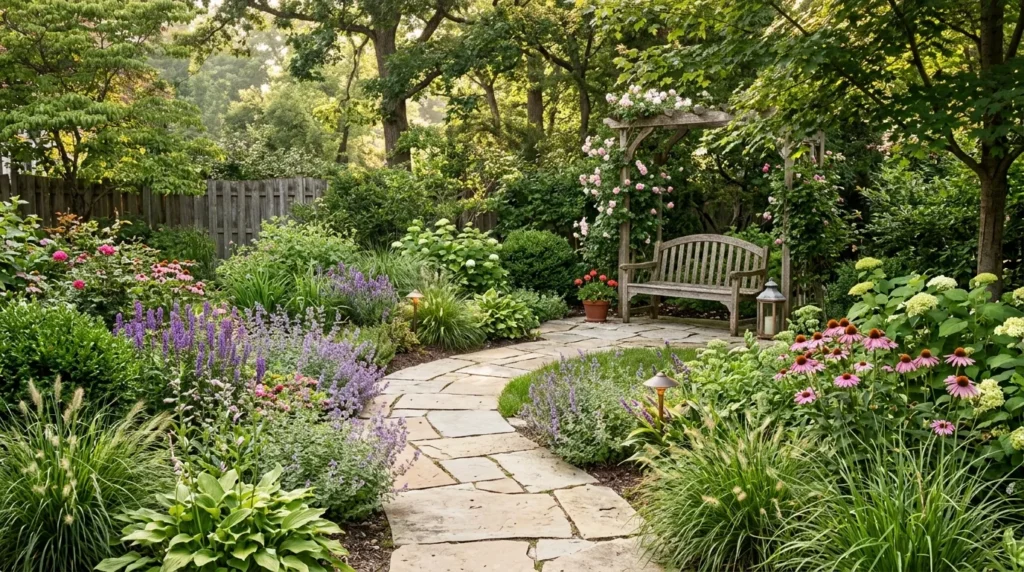
Straight paths are practical, but curves can make a backyard feel much more natural.
A gently winding stone walkway encourages the eye to move through the landscape rather than seeing the entire destination immediately.
This is particularly effective in gardens with mature plants, shrubs, or trees because the curve can partially conceal what lies ahead.
The path becomes an experience.
Natural stone is especially attractive because each piece has subtle differences in color and shape.
Instead of looking perfectly manufactured, it can blend into the planting around it.
How To Style It
Keep the curves broad enough for comfortable walking.
Avoid extremely tight bends that make the path difficult to navigate.
Use irregular natural stone for a relaxed garden appearance.
Surround the edges with low-growing plants, ornamental grasses, or mulch.
For a more formal look, use evenly cut stone pieces with consistent spacing.
A gentle curve leading toward a patio, bench, fire pit, or garden gate can create a beautiful destination.
2. Gravel Garden Walk
Quick Benefits
- Relatively affordable
- Easy to customize
- Creates a relaxed atmosphere
- Works with cottage and farmhouse gardens
- Provides good visual texture
Why It Works
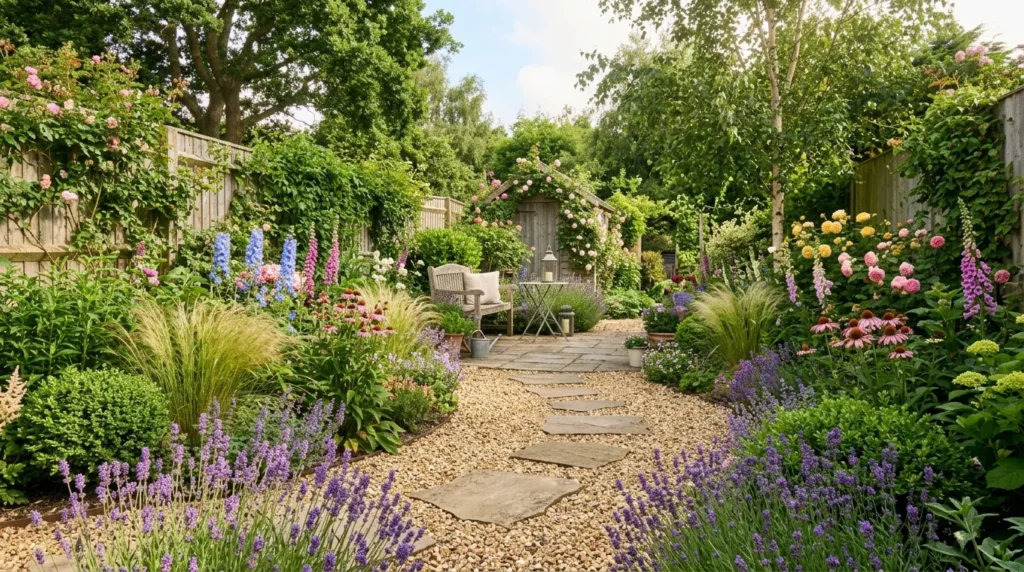
Gravel is one of the most versatile materials for backyard pathways.
It can look casual and rustic or surprisingly refined depending on the surrounding landscape.
Its texture contrasts beautifully with green foliage.
Gravel also allows you to create a walkway without the visual heaviness of a solid concrete surface.
For homeowners working with a limited landscaping budget, it can be an attractive option.
The key is using proper preparation and edging so the gravel stays where it belongs.
How To Style It
Choose gravel that complements the colors already present in your yard.
Warm tan or beige stone works beautifully with cottage-style planting.
Gray gravel can create a more contemporary appearance.
Use a defined edge to prevent the material from spreading into lawns and planting beds.
Consider larger stepping stones through the center for a more structured appearance.
Add flowering plants, lavender, ornamental grasses, or low shrubs along the edges.
Keep the planting slightly informal for a natural look.
3. Large Stepping Stones
Quick Benefits
- Creates a contemporary appearance
- Uses less hardscape material
- Works well in small yards
- Provides visual rhythm
- Easy to combine with ground cover
Why It Works
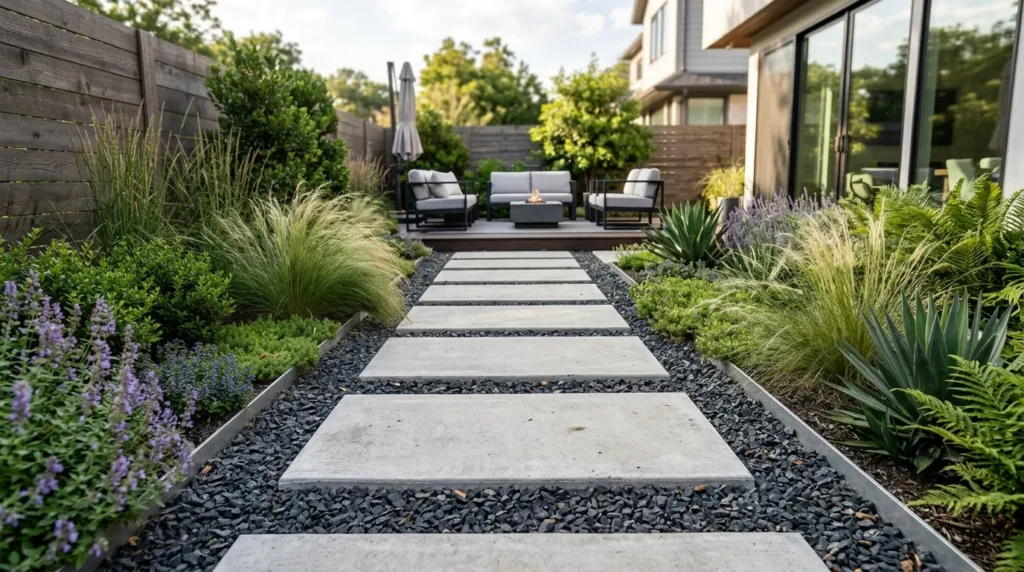
Large stepping stones can make a backyard path feel architectural without requiring a fully paved walkway.
The space between the stones becomes part of the design.
You can leave it as gravel, fill it with low-growing ground cover, or allow carefully managed grass to grow between individual stones.
Oversized stones are especially effective in modern landscapes because their simple shapes create a strong contrast against organic planting.
How To Style It
Choose stones large enough to provide comfortable footing.
Place them at a natural walking distance.
For a modern design, use large rectangular concrete or stone slabs.
For a more organic garden, use irregular natural stones.
Keep the surrounding planting low enough that the stones remain clearly visible.
A combination of dark gravel and pale stepping stones can create striking contrast.
Use repetition to make the path feel intentional.
4. Brick Garden Path
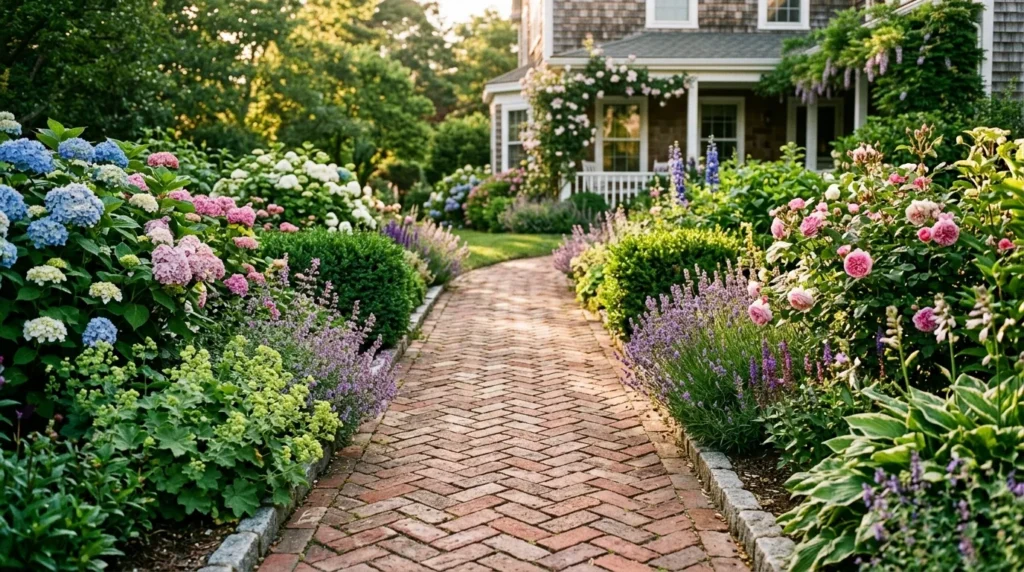
Quick Benefits
- Adds timeless character
- Durable and practical
- Works with traditional homes
- Creates visual warmth
- Offers many laying patterns
Why It Works
Brick has a classic quality that fits beautifully into American backyard landscapes.
It works particularly well around traditional, cottage, farmhouse, and Colonial-inspired homes.
The warm red, brown, tan, or weathered tones can complement greenery and flowering plants.
Brick also gives you flexibility.
A simple running-bond pattern feels relaxed.
Herringbone creates more visual interest.
A border can make the walkway appear more formal.
How To Style It
Choose brick colors that complement your home’s exterior.
Weathered brick can give a mature garden an established appearance.
For a more modern interpretation, consider neutral or gray-toned pavers.
Add a contrasting border around the path.
Use planting beds on both sides to soften the hard edges.
Brick looks especially beautiful with roses, hydrangeas, boxwood, lavender, and other classic garden plants.
5. Cottage Flower Border
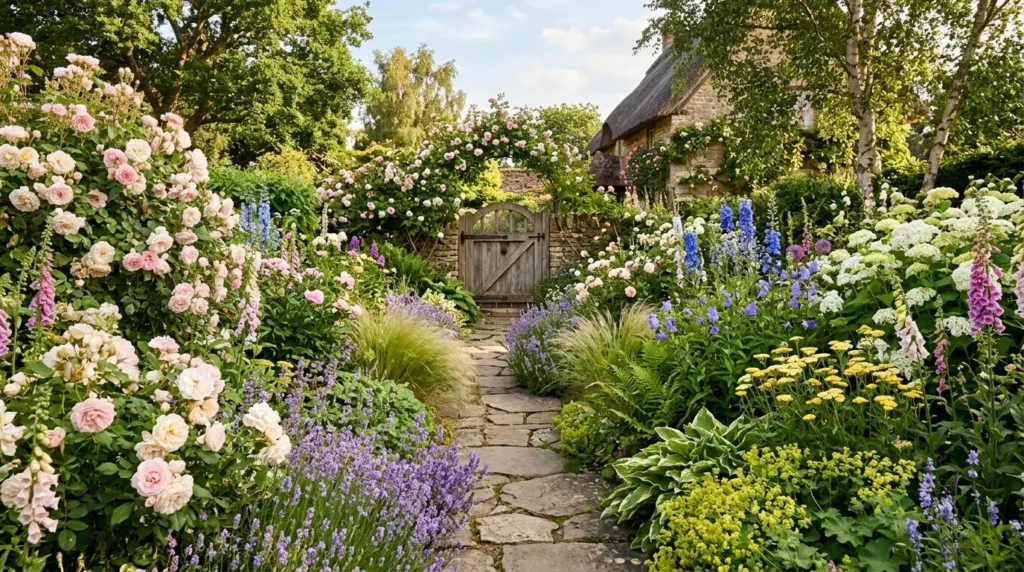
Quick Benefits
- Adds seasonal color
- Softens hardscape
- Creates a romantic appearance
- Supports pollinator-friendly planting
- Makes paths feel established
Why It Works
Even the simplest walkway can become memorable when surrounded by flowers.
A cottage-style border creates the feeling that the path has always belonged to the garden.
Instead of planting everything at the same height, use layers.
Low plants sit near the path.
Medium flowers create the middle layer.
Taller perennials or grasses provide height farther behind.
This makes the walkway feel abundant without necessarily requiring expensive materials.
How To Style It
Choose plants suited to your local growing conditions.
Combine different bloom periods so the border remains interesting throughout the growing season.
Use repeating colors for cohesion.
White, lavender, pink, yellow, and blue can all work beautifully depending on your overall garden style.
Leave enough room between plants and the path for maintenance.
Avoid placing aggressive spreaders directly beside the walkway unless you’re prepared to manage them.
6. Modern Concrete Walkway
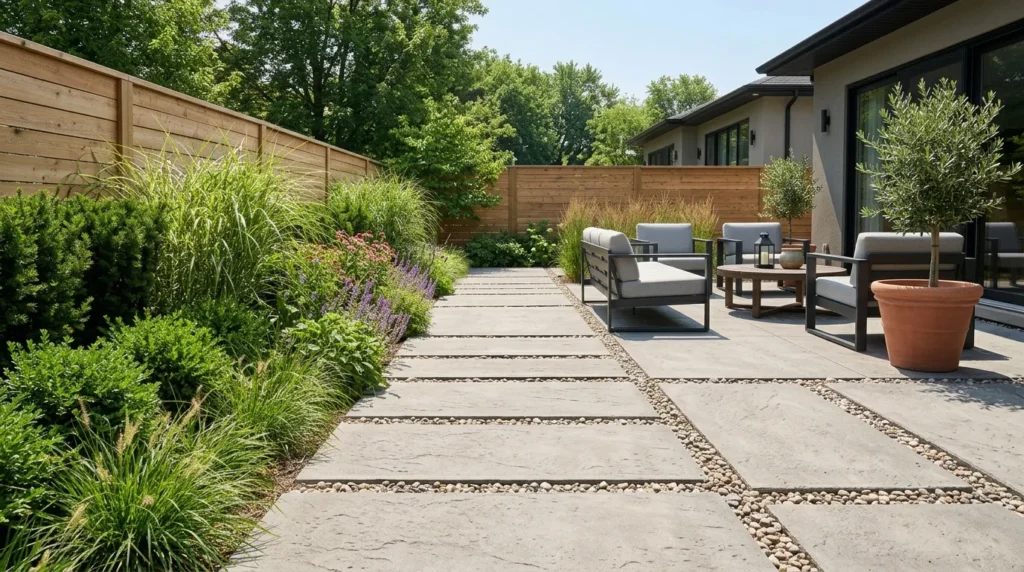
Quick Benefits
- Creates clean lines
- Offers a contemporary appearance
- Easy to combine with modern architecture
- Provides a stable walking surface
- Works with minimalist landscaping
Why It Works
Concrete doesn’t have to look cold.
With thoughtful proportions and surrounding planting, it can become a sophisticated landscape feature.
Large rectangular slabs create a modern architectural rhythm.
Combining concrete with gravel or greenery can soften the appearance.
This style works particularly well around contemporary homes, minimalist patios, and modern outdoor entertaining areas.
How To Style It
Use large-format slabs rather than many small pieces.
Create consistent spacing if you want a strong geometric appearance.
Fill the gaps with gravel or low ground cover.
Pair the walkway with ornamental grasses, clipped shrubs, sculptural plants, or simple evergreen planting.
Keep the color palette restrained.
Warm gray concrete paired with green foliage and natural wood can feel surprisingly welcoming.
7. Wood Chip Trail
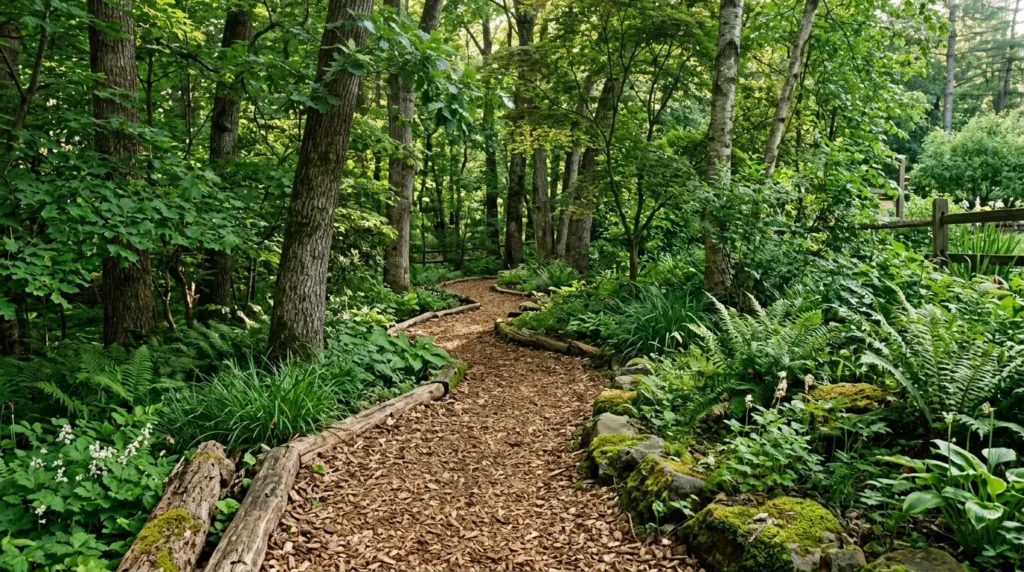
Quick Benefits
- Budget-friendly
- Natural appearance
- Easy to install
- Works well in informal gardens
- Creates a soft woodland feeling
Why It Works
Wood chips can be a practical choice for casual backyard paths, particularly in areas where a formal walkway isn’t necessary.
They create a natural transition between planting areas and can work beautifully beneath trees.
The material has a softer visual appearance than concrete or stone.
It also makes it easy to change the path later if your garden layout evolves.
How To Style It
Create a clearly defined route before spreading the material.
Use landscape edging where necessary to keep the chips contained.
Choose a reasonably consistent material for a cohesive appearance.
Wood chips work especially well with woodland gardens, native planting, informal vegetable gardens, and cottage landscapes.
Add simple stepping stones through particularly wet areas if needed.
Keep branches and overgrown plants trimmed back so the path remains comfortable to use.
8. Natural Stone Steps
Quick Benefits
- Connects different elevations
- Adds architectural character
- Creates a strong focal point
- Blends naturally into gardens
- Can improve backyard circulation
Why It Works
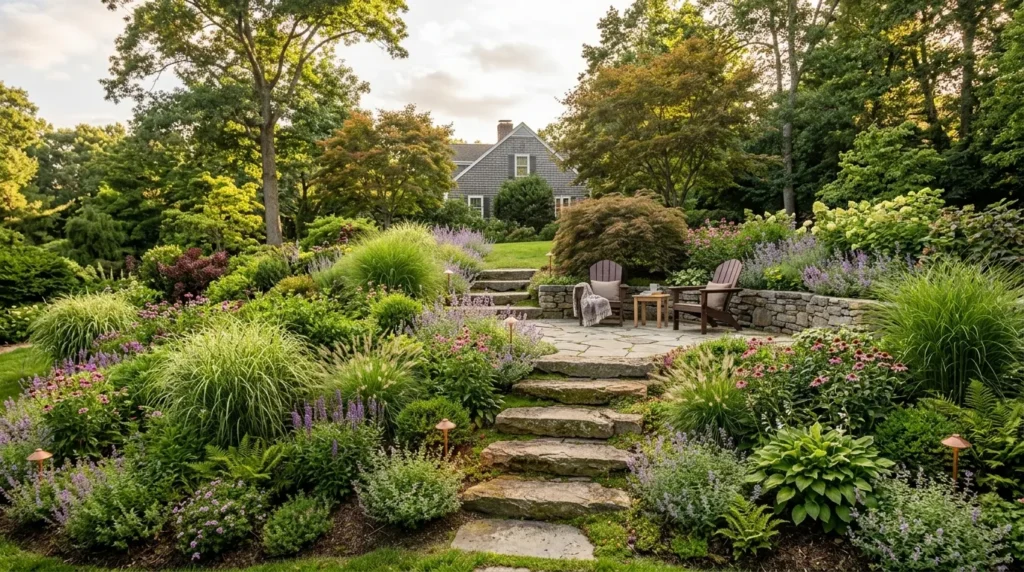
If your backyard has a slope, a change in elevation doesn’t have to be a landscaping problem.
It can become an opportunity.
Stone steps can turn an awkward transition into one of the most memorable parts of the garden.
Natural stone works particularly well because it doesn’t look overly engineered.
The irregular edges and variations in color help the steps blend into surrounding planting.
How To Style It
Design steps with comfortable proportions and appropriate drainage.
Use consistent tread dimensions where possible.
Add low planting along the sides rather than directly blocking the walking surface.
Low landscape lighting can help make steps easier to navigate after dark.
Use retaining walls or additional landscape structures when necessary for the specific site.
For significant slopes or structural changes, professional landscape or construction guidance may be appropriate.
9. Lush Green Edging
Quick Benefits
- Softens hardscape
- Creates a garden-like atmosphere
- Adds texture
- Makes paths look established
- Connects the walkway to surrounding planting
Why It Works
Sometimes the material of the path isn’t what makes it beautiful.
It’s the planting around it.
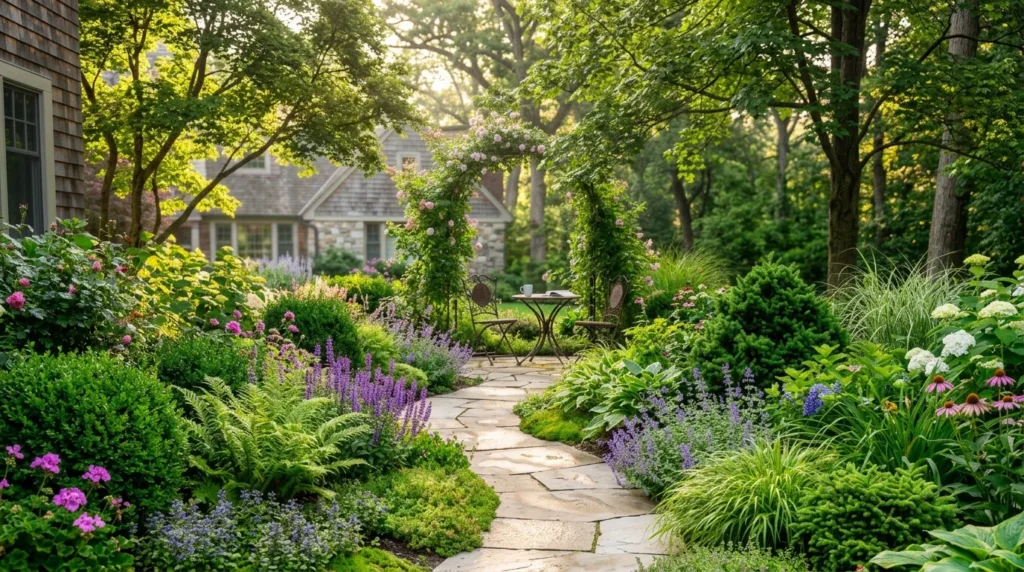
A simple concrete or stone walkway can look dramatically different when framed by lush greenery.
Low grasses, ground covers, herbs, ferns, and compact shrubs can create a soft transition between hardscape and garden.
The result feels layered rather than divided.
How To Style It
Choose plants based on sunlight, moisture, soil, and climate.
Use low-growing plants immediately beside the walkway.
Add slightly taller plants farther back.
Repeat several varieties instead of using one plant continuously.
This creates a more natural composition.
For a contemporary garden, use ornamental grasses and structured shrubs.
For a cottage garden, combine flowering perennials with soft foliage.
Keep plants trimmed away from the actual walking surface.
10. Destination Garden Path
Quick Benefits
- Creates a sense of purpose
- Guides visitors through the yard
- Makes the garden feel larger
- Highlights special features
- Encourages outdoor use
Why It Works
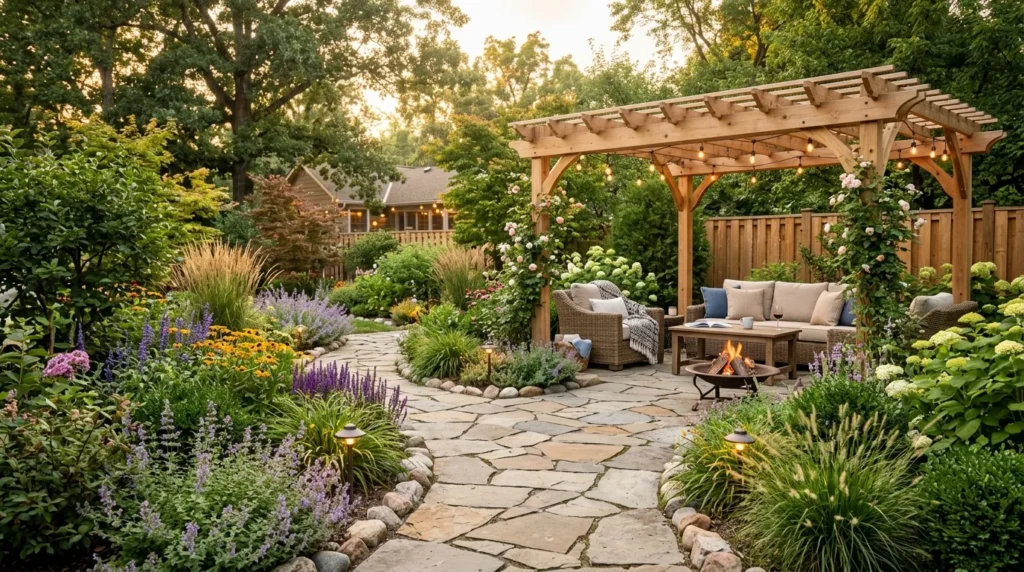
A path becomes much more interesting when it leads somewhere worth discovering.
Instead of stopping in the middle of the yard, design the walkway around a destination.
That destination could be a fire pit, pergola, outdoor dining area, garden bench, fountain, vegetable garden, greenhouse, or small seating nook.
The path then becomes part of the backyard’s overall layout.
How To Style It
Decide what feature you want to emphasize.
Then position the path so it naturally leads toward it.
Use planting to frame the journey.
A slightly narrower section can create anticipation before opening into the destination area.
At the end of the path, place a strong visual element such as a bench, tree, fountain, or architectural structure.
Lighting can highlight the route at night.
The result is a backyard that feels more like a series of connected outdoor rooms.
How To Choose The Best Garden Path Material
The right material depends on more than appearance.
Consider how often the path will be used.
A primary route from the house to a patio generally needs a more stable walking surface than a decorative trail through a garden.
Think about maintenance as well.
Gravel may require occasional raking and replenishment.
Wood chips need periodic replacement.
Pavers and stone can offer a more permanent solution but generally require more planning and installation.
Also consider drainage.
Water should not collect along the walkway or flow toward the home’s foundation.
Your climate matters, too.
Freeze-thaw conditions, heavy rainfall, heat, and soil movement can all affect how different materials perform.
How To Make A Garden Path Look Expensive
Luxury landscaping isn’t necessarily about expensive materials.
It’s often about consistency and proportion.
Choose one primary path material.
Repeat it elsewhere in the yard when possible.
Use defined edges.
Keep the planting organized.
Add lighting where it improves both appearance and usability.
Avoid mixing too many materials without a clear reason.
For example, a gravel path with natural stone stepping slabs and coordinated stone edging can feel much more intentional than five unrelated materials.
The surrounding landscape should support the path.
Think about what the walkway looks like from the house, patio, or windows.
Good landscape design considers the view from multiple angles.
Garden Path Lighting Ideas
Lighting can make a path useful after sunset while adding atmosphere.
Low path lights can illuminate the walking surface without creating excessive glare.
Warm illumination generally works well for residential outdoor spaces.
Place fixtures so they guide rather than overwhelm.
You can also use subtle uplighting near trees or architectural features.
Avoid placing too many lights in a perfectly straight line unless you’re intentionally creating a formal design.
A slightly varied arrangement can feel more natural.
For safety and installation, follow local electrical requirements and use outdoor-rated equipment appropriate for the location.
FAQ
What is the best material for a backyard garden path?
The best material depends on your budget, climate, maintenance preferences, and how heavily the path will be used. Gravel, brick, concrete, pavers, and natural stone can all work well. For a primary walkway, prioritize a stable, well-drained surface. Decorative garden trails can use more informal materials such as wood chips.
How can I make a garden path look more expensive?
Focus on clean edges, appropriate scale, cohesive materials, and thoughtful planting. Use one main path material and repeat related colors elsewhere in the landscape. Adding lighting, lush borders, and a clear destination can also make a simple walkway feel more professionally designed.
Are gravel paths good for backyards?
Yes. Gravel can be attractive and relatively affordable, especially for informal gardens and secondary pathways. Proper base preparation and edging are important for keeping the material stable and contained. Larger stepping stones can also make the path easier to navigate.
What plants look good along a garden path?
Low-growing ground covers, ornamental grasses, flowering perennials, herbs, compact shrubs, and ferns can all work. Choose plants based on your area’s climate, soil, moisture, and sunlight. Keep aggressive spreaders and plants with thorny growth away from the immediate walking area.
Should a garden path be straight or curved?
Both can work. Straight paths are efficient and tend to suit formal or contemporary landscapes. Curved paths feel more natural and can create a sense of discovery. The best choice depends on the home’s architecture, garden style, yard size, and destination you’re trying to connect.
How wide should a backyard garden path be?
A primary walking path should generally provide enough room for comfortable passage and the way you expect people to use it. Secondary decorative paths can be narrower. Consider whether two people need to walk side by side, whether outdoor furniture or equipment will pass through, and how the path will be maintained.
Can I create a garden path myself?
Many small paths can be DIY projects, particularly gravel, simple stepping stones, and wood-chip trails. More complicated projects involving significant grading, retaining structures, drainage, masonry, or electrical work may require specialized knowledge or professional assistance.
Conclusion
A beautiful backyard path can completely change the way a garden feels.
It can guide visitors toward a patio, create structure around planting beds, connect outdoor living spaces, or simply make a walk through the yard more enjoyable.
And you don’t have to spend a fortune to create that effect.
Gravel can provide an affordable starting point.
Stepping stones can create a modern look.
Brick adds timeless charm.
Natural stone brings an organic quality.
Wood chips work beautifully for informal garden trails.
The planting around the path is just as important as the surface itself.
Use flowers, grasses, shrubs, ground covers, and trees to soften hard edges and create layers.
Then consider lighting so the path remains useful and attractive after sunset.
Most importantly, design the walkway around how you actually use your backyard.
A path should make the garden easier to navigate, not simply fill empty space.
Start with one destination and work backward.
Maybe you want to create a route from the back door to a fire pit.
Maybe you want a winding trail through a flower garden.
Or perhaps you simply need a practical walkway to a shed or vegetable garden.
Whatever the purpose, thoughtful proportions, cohesive materials, and beautiful planting can turn an ordinary backyard walkway into one of the most memorable features of the landscape.
Related Articles
- 10 DIY Garden Projects for a Beautiful Backyard
- 10 Small Balcony Ideas with Cozy Lounge Seating
- 10 DIY Garden Projects with Raised Beds
- 10 Backyard Oasis Ideas for a Relaxing Outdoor Escape
- 10 Outdoor Decor Ideas for a Beautiful Backyard