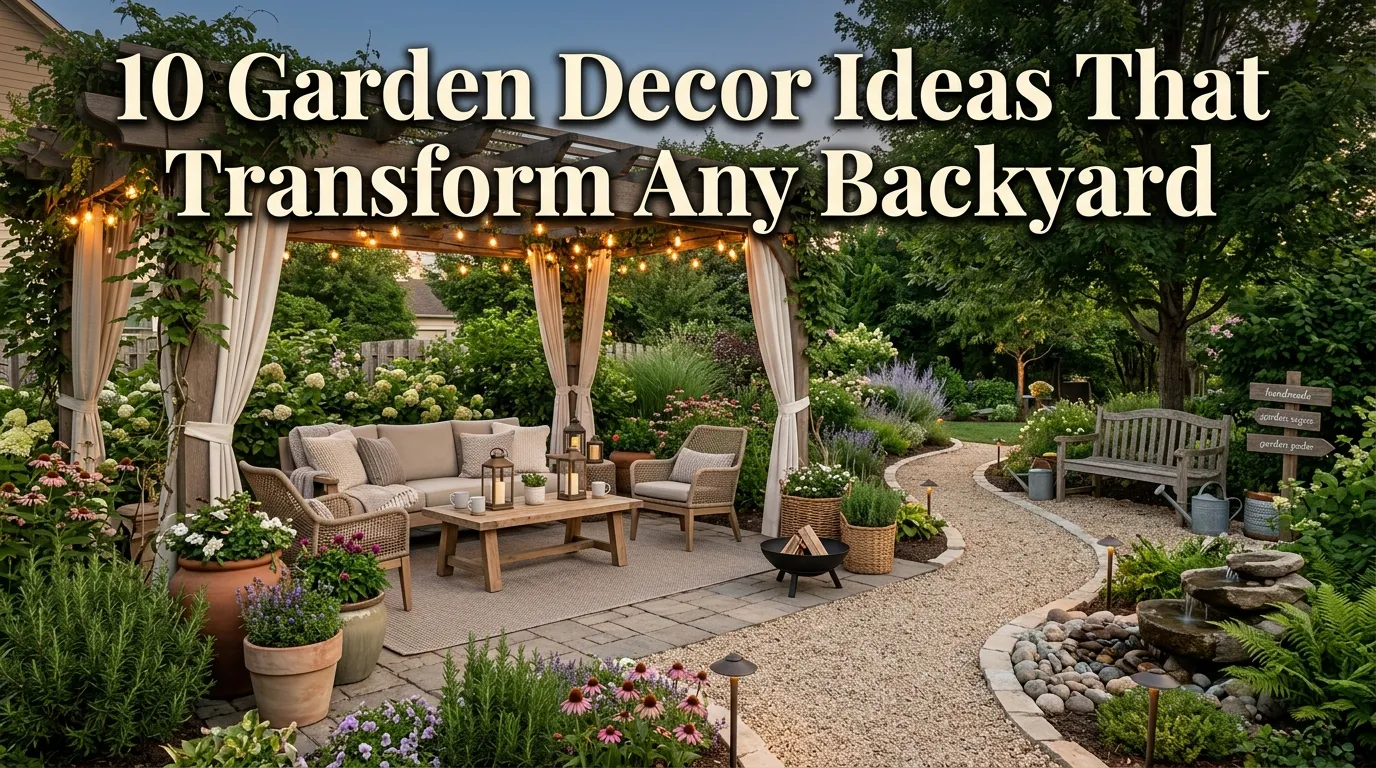
10 Garden Decor Ideas That Transform Any Backyard
A backyard doesn’t need a complete landscape renovation to feel beautiful, welcoming, and finished.
Sometimes, a few well-chosen decorative details can completely change how an outdoor space looks and functions. A plain patio can become an inviting outdoor room with comfortable seating and layered lighting. An empty garden corner can become a destination with a bench, fountain, or collection of planters. Even a small backyard can feel more intentional when decor is arranged with the same care you would use inside your home.
I’ve noticed that the most successful outdoor spaces aren’t necessarily the ones with the biggest budgets. They are usually the spaces where the homeowner has thought about how people will actually use the yard.
Where will you sit?
Where will you entertain?
Which view should become the focal point?
Where could a little shade make the afternoon more comfortable?
These questions can guide your decorating choices far better than simply buying outdoor accessories because they look attractive in a store.
The best garden decor also works with the landscape instead of competing with it. Natural wood, stone, woven materials, aged metal, ceramic planters, soft outdoor textiles, and warm lighting can add personality while allowing flowers and greenery to remain the stars.
You can also build the look gradually. Start with one area, such as a patio or garden corner, then add complementary details over time.
Whether you have a large suburban backyard, a compact garden, or a simple outdoor entertaining area, these ideas can help you create a space that feels comfortable, personal, and Pinterest-worthy without requiring a major renovation.
Table of Contents
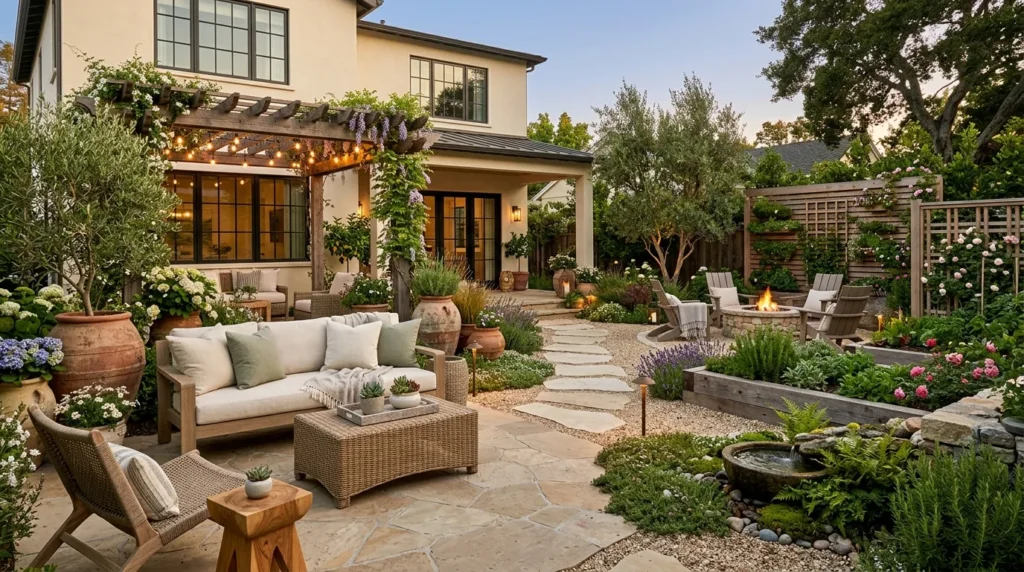
1. Outdoor Lounge
Create a comfortable garden seating area that feels like an extension of the home.
2. Decorative Planters
Use containers to add color, height, and personality throughout the backyard.
3. Garden Lighting
Create atmosphere and extend the usability of the yard after sunset.
4. Garden Fountain
Add soothing movement and a beautiful focal point with water.
5. Pergola Retreat
Build an inviting destination with shade, greenery, and outdoor furniture.
6. Vintage Accents
Bring personality into the garden with weathered and collected pieces.
7. Outdoor Rug
Define an outdoor room and make patio furniture feel more connected.
8. Garden Arch
Create a dramatic entrance or vertical focal point with an attractive arch.
9. Decorative Privacy
Combine screening with plants and stylish outdoor details.
10. Cozy Fire Area
Create a backyard destination designed for relaxing and entertaining.
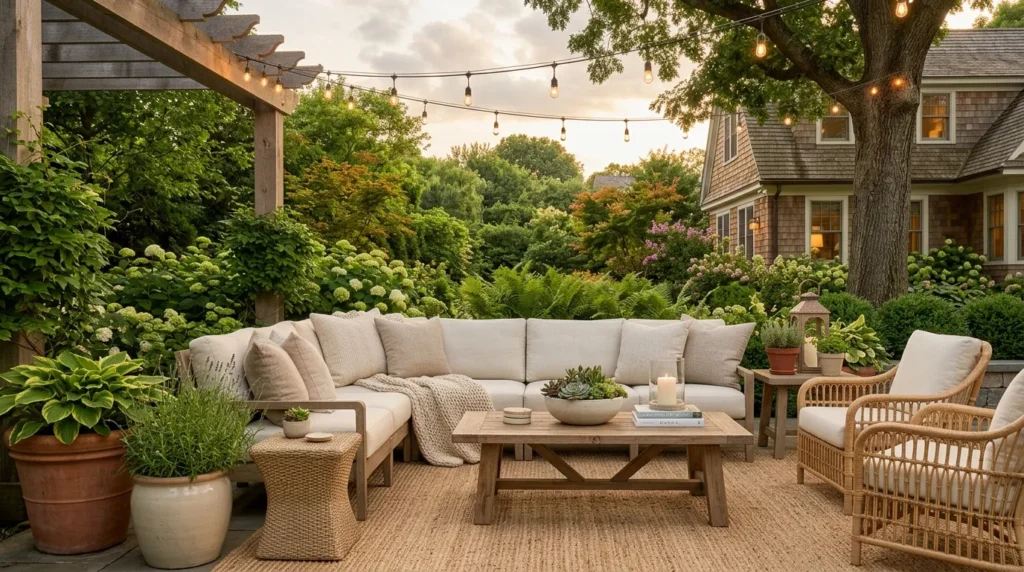
1. Outdoor Lounge
Quick Benefits
- Creates a dedicated relaxation area
- Makes the backyard more functional
- Adds indoor-style comfort outdoors
- Encourages entertaining
- Works in large and small spaces
Why It Works
One of the fastest ways to transform a backyard is to create a place where people actually want to stay.
An outdoor lounge turns an undefined section of the yard into a purposeful space. Instead of simply having a patio with a few chairs, you create the feeling of an outdoor living room.
Comfort is especially important.
A beautiful chair that nobody wants to sit in isn’t doing much for the garden.
Look for weather-resistant seating with supportive cushions, then layer in textiles and small tables that make the area practical.
The goal is to create a natural destination between the house and garden.
How To Style It
Start with the largest furniture pieces first.
A compact outdoor sofa works well on a patio, while two lounge chairs can be better for smaller spaces.
Add a coffee table or outdoor side tables so drinks and books have somewhere to go.
Use cushions in neutral colors such as cream, taupe, olive, or warm gray, then introduce one or two accent shades.
An outdoor rug can visually anchor everything.
Finish with potted plants, lanterns, and warm lighting.
Keep enough space between furniture pieces for comfortable movement.
If the lounge sits beneath a tree or pergola, use the existing shade as part of the design.
2. Decorative Planters
Quick Benefits
- Adds instant color
- Introduces height
- Works in small yards
- Easy to rearrange
- Provides seasonal flexibility
Why It Works
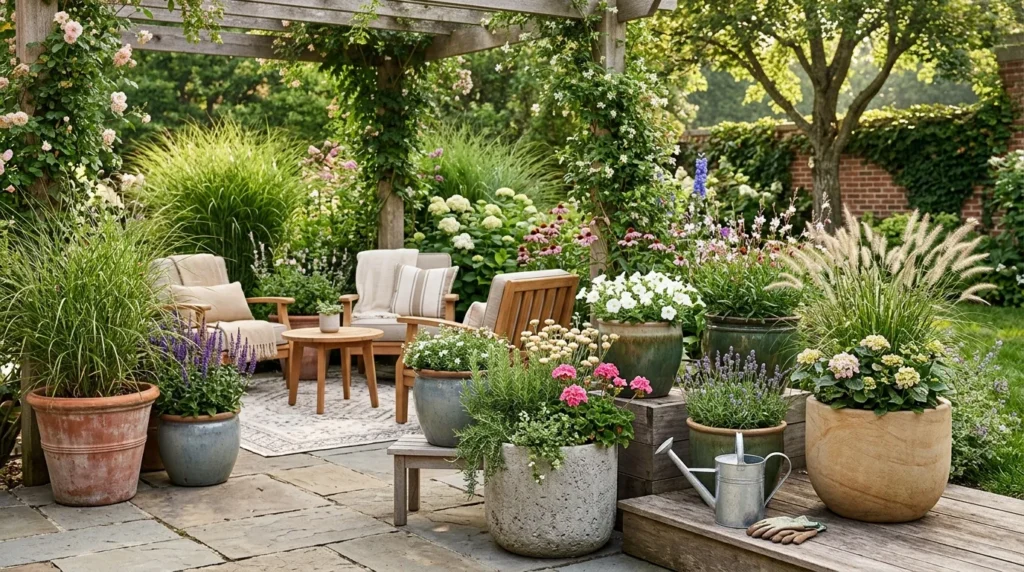
Planters are one of the easiest ways to add personality without permanently changing the landscape.
They can define entrances, frame patios, fill empty corners, and introduce plants where traditional garden beds aren’t practical.
The best part is flexibility.
You can change containers as your style evolves or move them around when the backyard layout changes.
Large planters can also create the visual weight that smaller decorative objects cannot.
I’ve found that grouping containers usually creates a more polished appearance than scattering individual pots randomly around the yard.
How To Style It
Use a combination of heights.
Place one large planter next to two smaller containers rather than using five identical pots.
Choose materials that complement your home’s exterior.
Terracotta works beautifully with cottage and Mediterranean-inspired gardens.
Black, charcoal, or concrete-look planters can suit modern landscapes.
Natural stone and weathered finishes work well with organic garden styles.
Mix upright plants with trailing varieties.
Use seasonal flowers for color or evergreen plants for year-round structure.
Keep the container palette consistent if you want the overall garden to feel coordinated.
3. Garden Lighting
Quick Benefits
- Extends outdoor enjoyment
- Highlights landscape features
- Improves nighttime visibility
- Creates a warm atmosphere
- Makes the garden feel more finished
Why It Works
A backyard can look completely different after sunset.
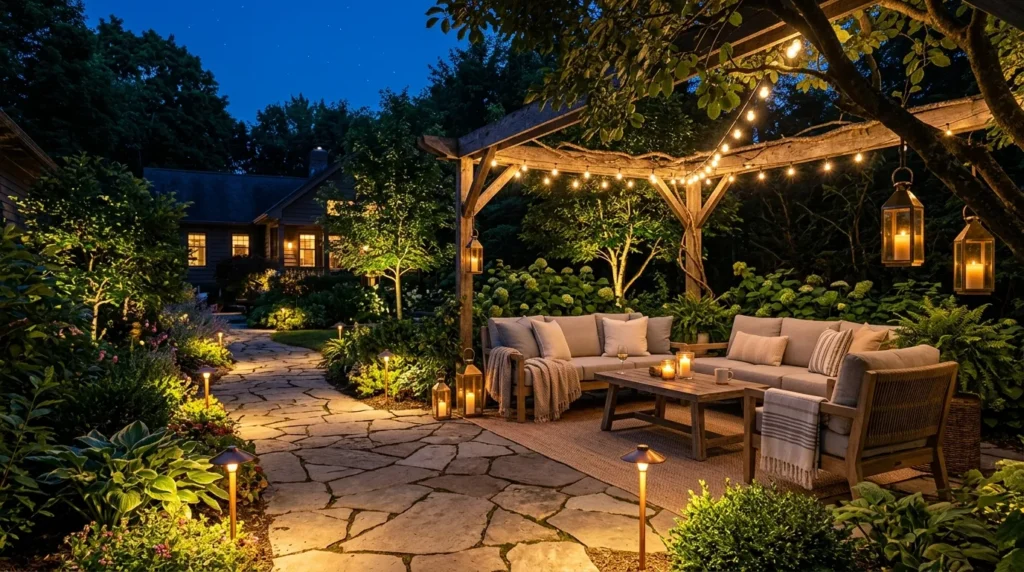
Without lighting, beautiful planting and outdoor furniture can disappear into darkness. With thoughtfully placed illumination, the same space can become warm, inviting, and atmospheric.
Garden lighting doesn’t need to be extremely bright.
In fact, softer illumination often feels more sophisticated.
The goal is to guide movement and highlight interesting features rather than illuminate every inch of the yard.
Lighting can also make an outdoor seating area feel more like a real room.
How To Style It
Use several types of lighting rather than relying on one source.
Path lights can guide people through the garden.
String lights can create a relaxed entertaining atmosphere.
Lanterns can add decorative warmth around seating.
Uplights can emphasize trees, walls, or architectural features.
Keep fixtures visually simple.
Warm-toned lighting generally works well for residential outdoor spaces.
Avoid placing identical lights at perfectly uniform intervals unless you’re intentionally creating a formal design.
For electrical installations, use outdoor-rated equipment and follow applicable local requirements.
4. Garden Fountain
Quick Benefits
- Creates a focal point
- Adds soothing water movement
- Brings visual interest
- Works in many garden styles
- Can enhance quiet corners
Why It Works
Water has a natural ability to make an outdoor space feel more peaceful.
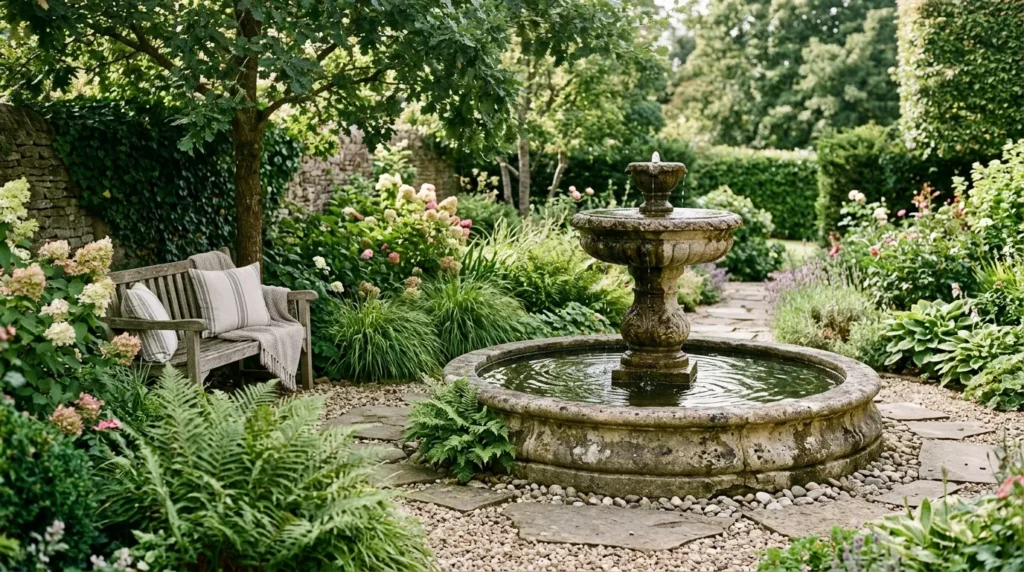
A fountain can transform an otherwise overlooked garden corner into a destination.
It doesn’t have to be enormous.
A compact wall fountain, bowl fountain, or freestanding water feature can provide enough movement and sound to make the area feel different.
The design should complement the rest of the garden.
A sleek concrete fountain can suit a modern yard.
A weathered stone feature can feel more natural.
A decorative ceramic fountain can work beautifully in a colorful garden.
How To Style It
Position the fountain where it can be seen from a seating area or frequently used part of the yard.
Surround it with plants rather than leaving it isolated.
Use low greenery near the base and taller plants behind it if appropriate.
Natural stone, gravel, or mulch can help integrate the feature into the landscape.
Make sure the location has suitable access to water and power if required.
Consider maintenance before choosing a design.
A beautiful water feature is much easier to enjoy when cleaning and upkeep are manageable.
5. Pergola Retreat
Quick Benefits
- Creates architectural interest
- Provides partial shade
- Defines an outdoor room
- Supports climbing plants
- Creates a strong backyard focal point
Why It Works
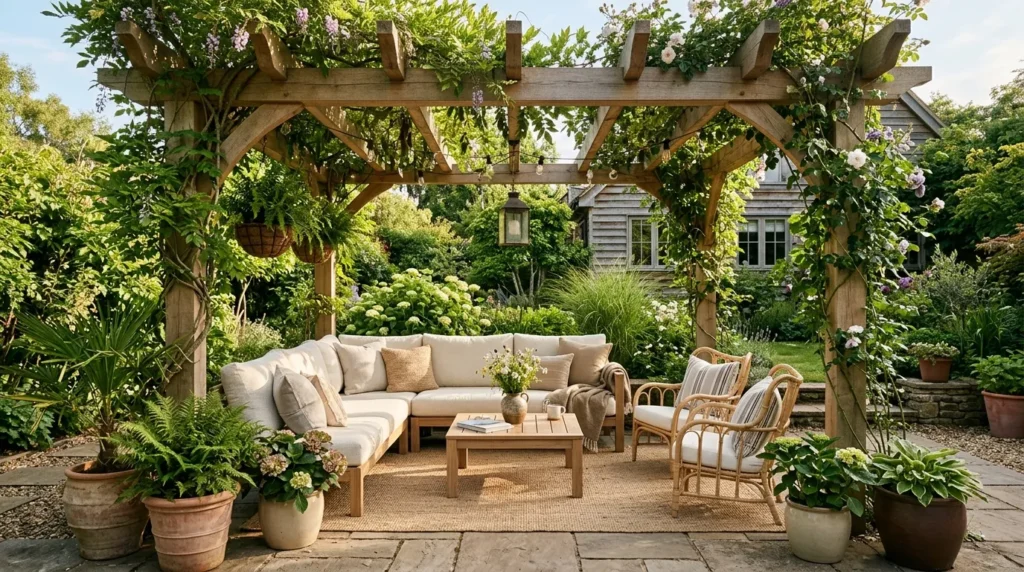
A pergola can give an open backyard a sense of structure.
It creates a visual ceiling without completely closing off the garden.
This makes it particularly useful for outdoor dining, lounging, or entertaining.
Over time, climbing plants can soften the structure and make it feel integrated with the landscape.
Even before plants grow in, the pergola provides a strong architectural feature.
How To Style It
Start by deciding what the pergola will be used for.
For dining, place an outdoor table and comfortable chairs underneath.
For relaxing, use a sofa or lounge chairs.
Add outdoor curtains if appropriate for the structure and climate.
String lights can provide evening ambiance.
Large planters around the posts can introduce greenery while vines mature.
Choose furniture that complements the pergola material.
Natural wood works beautifully with woven furniture and neutral textiles.
For a modern yard, a dark-painted structure can pair well with streamlined furniture and concrete surfaces.
6. Vintage Accents
Quick Benefits
- Adds personality
- Makes the garden feel collected
- Creates visual contrast
- Works with cottage styles
- Encourages creative DIY decorating
Why It Works
A backyard can sometimes feel too coordinated.
Everything matches, but nothing feels personal.
Vintage garden accents solve that problem by introducing history, texture, and visual character.
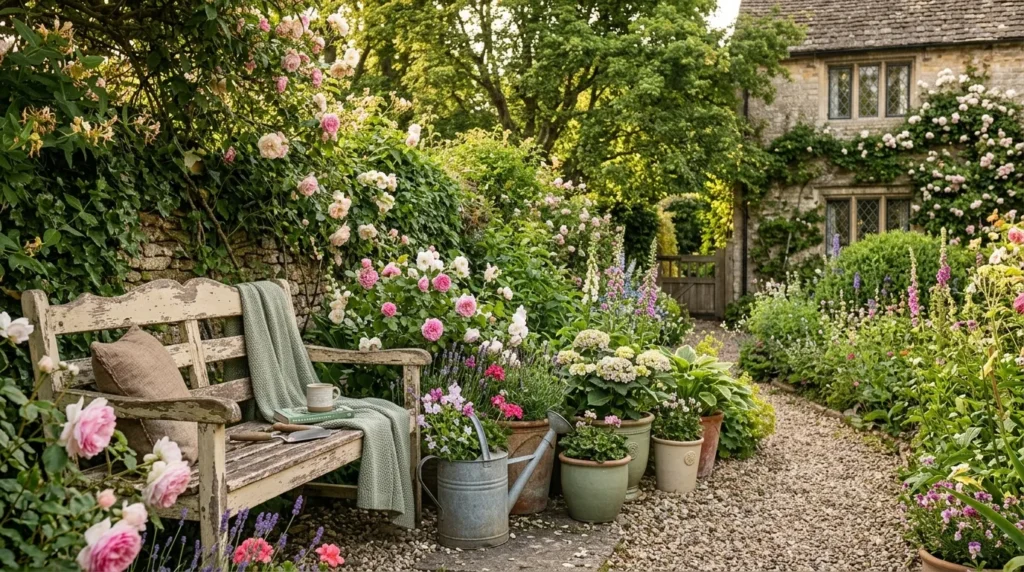
An old-style bench, weathered watering can, antique-inspired sign, vintage pot, or reclaimed garden ornament can make a space feel collected over time.
The goal isn’t to fill the yard with objects.
A few carefully selected pieces are usually more effective.
How To Style It
Choose one vintage element as a focal point.
For example, place an aged wooden bench beneath a mature tree.
Use an old metal container as a planter.
Display a weathered watering can near a potting area.
Mix vintage pieces with newer furniture so the garden doesn’t feel themed.
Natural wear can be attractive, but outdoor objects should still be structurally sound and suitable for their environment.
Repeat one material or color to connect the pieces with the rest of the landscape.
7. Outdoor Rug
Quick Benefits
- Defines an outdoor room
- Adds softness
- Introduces pattern
- Connects furniture visually
- Makes patios feel more inviting
Why It Works
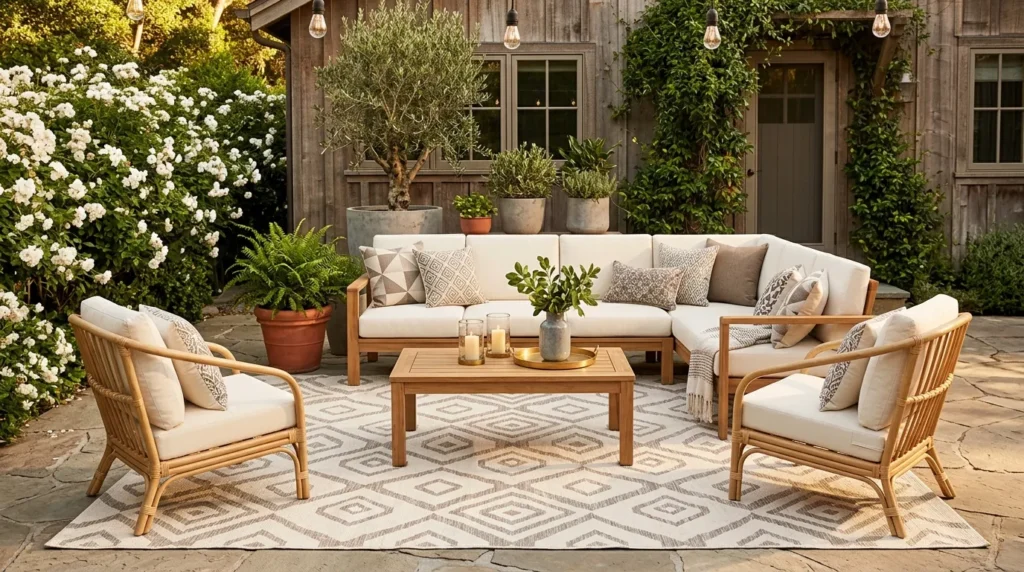
An outdoor rug can make a dramatic difference because it visually groups furniture together.
Without one, chairs, sofas, and tables can look like separate objects.
With a rug underneath them, the area starts to feel like an intentional outdoor room.
This is particularly useful on large patios where furniture can otherwise appear scattered.
Rugs also provide an opportunity to introduce a pattern or color without committing to permanent changes.
How To Style It
Choose a rug large enough to connect the primary furniture pieces.
Ideally, the front legs of seating should sit comfortably on the rug.
For a neutral garden, try an understated geometric pattern.
For a colorful cottage garden, consider a subtle botanical-inspired design.
Choose materials specifically designed for outdoor use.
Allow the rug to dry properly after heavy rain and follow the manufacturer’s cleaning recommendations.
Coordinate the rug with cushions and nearby planters without making every element identical.
8. Garden Arch
Quick Benefits
- Creates a beautiful entrance
- Adds vertical interest
- Supports climbing plants
- Defines garden zones
- Creates a memorable focal point
Why It Works
Vertical elements are powerful in a garden because they draw the eye upward.
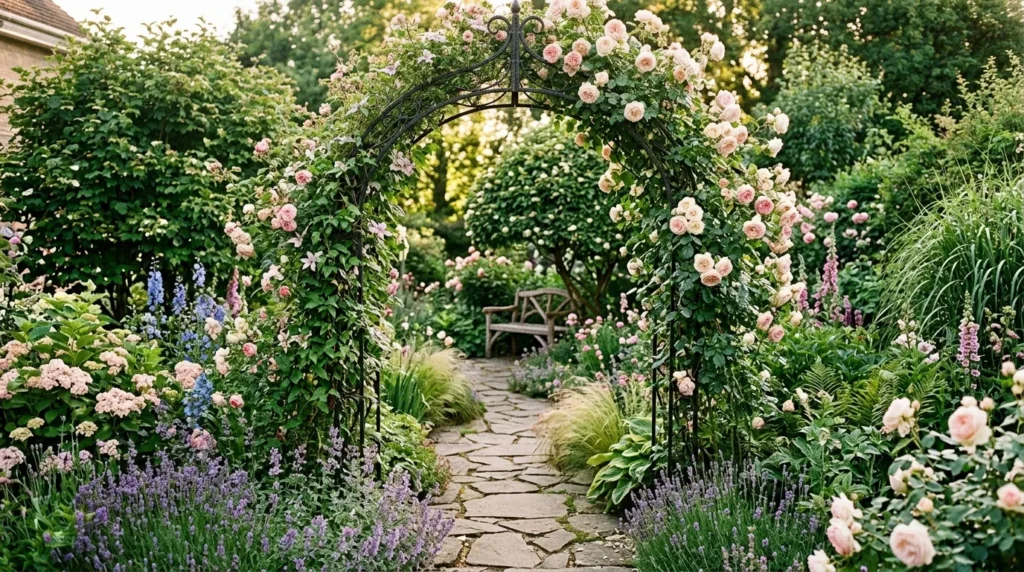
A garden arch can mark the entrance to a vegetable garden, flower bed, patio area, or secluded seating nook.
Once climbing roses, jasmine, clematis, or other suitable vines grow over it, the structure can become one of the most romantic features in the yard.
Even without plants, the arch gives the garden architectural definition.
How To Style It
Position the arch where you want to create a transition.
It could mark the entrance from a lawn into a garden area.
Choose a material that complements your home’s style.
Wood can create a relaxed cottage feeling.
Black metal feels more traditional and structured.
A simple modern frame can work in contemporary landscapes.
Train suitable climbing plants along the structure.
Don’t overcrowd the base.
Allow the arch itself to remain visible while the plants establish.
9. Decorative Privacy
Quick Benefits
- Creates a more private retreat
- Adds architectural interest
- Can define outdoor rooms
- Supports vertical planting
- Makes seating areas more comfortable
Why It Works
Privacy is one of the most valuable features a backyard can offer.
But a tall solid fence isn’t always the most attractive solution.
Decorative screening can provide separation while becoming part of the garden design.
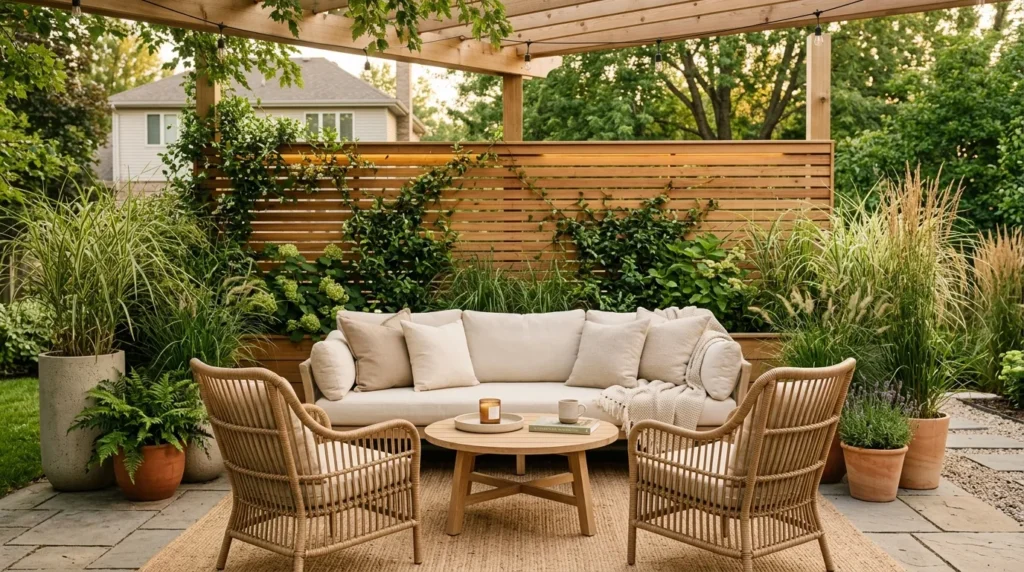
Slatted wood panels, lattice, trellises, tall planters, pergola extensions, and layered planting can all create privacy without making the yard feel enclosed.
This is especially helpful for suburban homes where neighboring properties are relatively close.
How To Style It
Start with the direction from which privacy is needed.
Don’t automatically screen the entire yard.
Focus on the seating or dining area.
A vertical slatted screen can create a modern backdrop.
A trellis covered with vines can create a softer cottage appearance.
Tall planters can provide flexible screening in smaller spaces.
Combine structures with plants for a layered effect.
Use warm wood tones, natural greenery, and neutral furniture to create a calm outdoor retreat.
10. Cozy Fire Area
Quick Benefits
- Creates a backyard destination
- Extends seasonal use
- Encourages conversation
- Adds visual warmth
- Works for entertaining
Why It Works
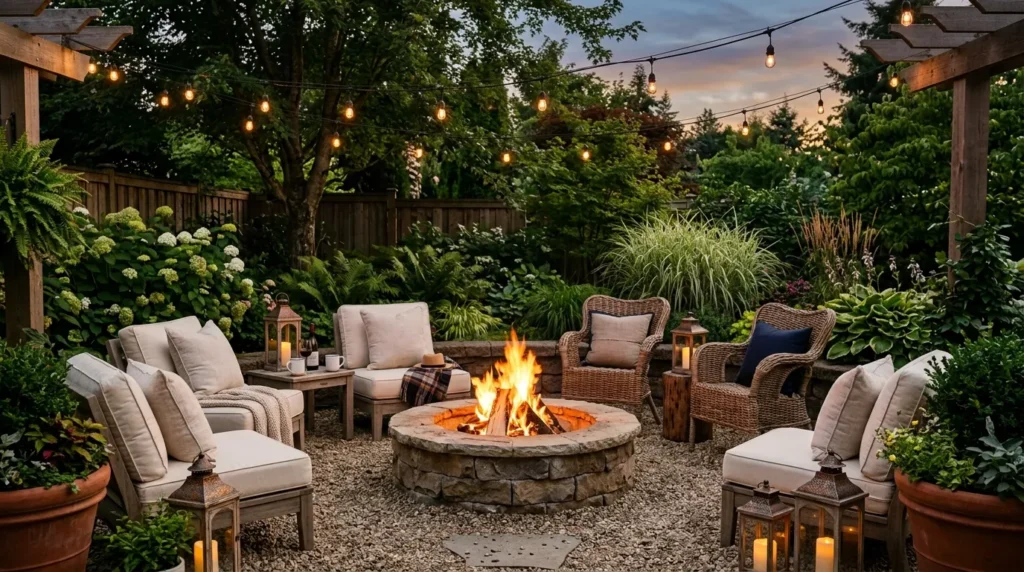
A fire area gives the backyard a reason to be used after the sun goes down.
Instead of simply decorating the yard, you’re creating an experience.
A fire pit naturally becomes a gathering point.
People tend to arrange seating around it, which makes planning the surrounding space relatively straightforward.
It can work in a large backyard or a compact patio, provided local regulations, clearances, and safety requirements are considered.
How To Style It
Choose seating that encourages conversation.
Arrange chairs or benches around the fire feature rather than pointing everything toward the house.
Add a nearby table for drinks and snacks.
Use outdoor cushions and throws when appropriate for the season.
Surround the area with gravel, pavers, stone, or another suitable noncombustible surface based on the fire feature and local requirements.
Add low landscape lighting around the perimeter.
Keep the surrounding decor simple so the fire remains the focal point.
How To Make Backyard Decor Look Expensive
You don’t need to buy the most expensive outdoor furniture or accessories.
The biggest difference often comes from editing.
Choose a clear style.
Then repeat a few materials and colors throughout the yard.
For example, natural wood, warm beige, matte black, and green foliage can create a cohesive palette.
If you use several different metal finishes, furniture styles, and planter colors without a plan, the garden can feel visually chaotic.
Think about scale as well.
A tiny planter beside a large patio can disappear.
A substantial planter can create the visual weight needed to balance a large seating area.
The same principle applies to lighting, rugs, artwork, and garden structures.
You want the decor to be proportional to the space.
How To Decorate A Small Backyard
Small yards can actually be easier to decorate because there are fewer areas competing for attention.
Start by choosing one main function.
Maybe the backyard is primarily for dining.
Maybe it is a quiet garden retreat.
Maybe you want a compact entertaining area.
Once you know the purpose, choose decor that supports it.
Use vertical elements whenever possible.
A garden arch, trellis, wall planter, hanging planter, or tall container can add interest without consuming much floor space.
Choose furniture that serves multiple purposes.
A bench can provide seating and storage.
A small side table can double as a plant stand.
Foldable chairs can be stored when you’re not entertaining.
Keep pathways clear and avoid filling every corner.
A small backyard generally feels larger when the eye has somewhere to move.
How To Mix Garden Decor With Plants
Plants should remain an important part of the composition.
If the garden is already lush, choose simpler decor.
If the landscape is mostly lawn, decorative elements can provide more visual structure.
Use plants to soften furniture edges.
Place containers around seating areas.
Allow vines to climb trellises.
Use low greenery around fountains and sculptures.
Think about the view from inside your home, too.
A decorative tree, fountain, arch, or planter can become a beautiful focal point when viewed through a kitchen or living-room window.
This is one of the easiest ways to make the backyard feel connected to the house.
Seasonal Garden Decor Ideas
Outdoor decor doesn’t have to remain exactly the same all year.
Spring is a natural time for fresh planters, flowering containers, and lighter textiles.
Summer can emphasize outdoor dining, colorful cushions, lanterns, and entertaining spaces.
Fall provides opportunities for warm-toned planters, seasonal foliage, pumpkins, and cozy textiles.
Winter calls for simpler arrangements, evergreen containers, weather-resistant lanterns, and subtle lighting in areas where the climate permits outdoor use.
You don’t need to redecorate the entire backyard every season.
Changing a few small elements can create the feeling of a completely refreshed space.
FAQ
How can I decorate my backyard on a budget?
Start with one high-impact area instead of trying to decorate the entire yard. Add comfortable seating, large planters, string lights, an outdoor rug, or a DIY garden feature. Thrift stores, local garden centers, and secondhand marketplaces can also be useful sources for outdoor furniture and decorative pieces.
What makes a backyard look expensive?
A cohesive color palette, appropriately scaled furniture, layered lighting, large planters, natural materials, and carefully edited accessories can make a backyard feel much more expensive. Repeating a few materials throughout the space usually creates a more polished result than mixing many unrelated styles.
What are the best garden decorations?
The best decorations depend on how you use your yard. Popular options include planters, fountains, garden arches, pergolas, outdoor rugs, lanterns, sculptures, benches, fire features, and decorative screens. Choose pieces that improve both the appearance and function of the space.
How can I make a small backyard look beautiful?
Focus on vertical design and multifunctional pieces. Use trellises, arches, wall planters, tall containers, and climbing plants to draw the eye upward. Choose compact furniture and keep pathways open. One strong focal point is usually more effective than many small decorations.
How do I make my backyard feel cozy?
Create a defined seating area and add layers of comfort. Outdoor cushions, an appropriate rug, warm lighting, planters, side tables, and shade can make a patio feel like an outdoor living room. A fire feature can add another gathering point when it is appropriate and permitted for your property.
What colors work best for backyard decor?
Natural neutrals such as beige, cream, warm gray, brown, black, and green are versatile choices. You can add seasonal colors through cushions, flowers, planters, and accessories. Keeping the main palette restrained makes it easier to change accents without redesigning the entire space.
How can I decorate my backyard without making it cluttered?
Choose a few large, intentional pieces instead of filling every empty area. Group similar items together, maintain clear walking paths, and repeat colors or materials for cohesion. Leave negative space around focal points so the garden can breathe visually.
Conclusion
Beautiful backyard decor doesn’t have to mean a complete landscape overhaul.
Sometimes the transformation begins with one comfortable seating area, a few large planters, or a string of warm lights.
The important thing is to think about the backyard as an outdoor room.
Give each area a purpose.
Create a place to sit.
Add shade where you need it.
Use plants to soften structures.
Introduce lighting for evening atmosphere.
Choose decorative elements that reflect the style of your home.
If your backyard feels unfinished, don’t try to solve everything at once.
Start with the area you use most.
A patio can become a cozy lounge.
An empty corner can become a garden retreat.
A plain fence can become a beautiful backdrop for greenery.
A simple path can lead toward a destination.
And a few carefully selected accessories can make the entire landscape feel more intentional.
The best garden decor is ultimately decor that encourages you to spend more time outside.
Start small, layer gradually, and allow your backyard to evolve with the seasons.
With thoughtful placement and a cohesive style, even an ordinary yard can become a comfortable, beautiful extension of your home.
Related Articles
- 10 Backyard Landscape Design Ideas with Beautiful Garden Paths
- 10 DIY Garden Projects for a Beautiful Backyard
- 10 DIY Garden Projects with Raised Beds
- 10 Backyard Oasis Ideas for a Relaxing Outdoor Escape
- 10 Small Balcony Ideas with Cozy Lounge Seating